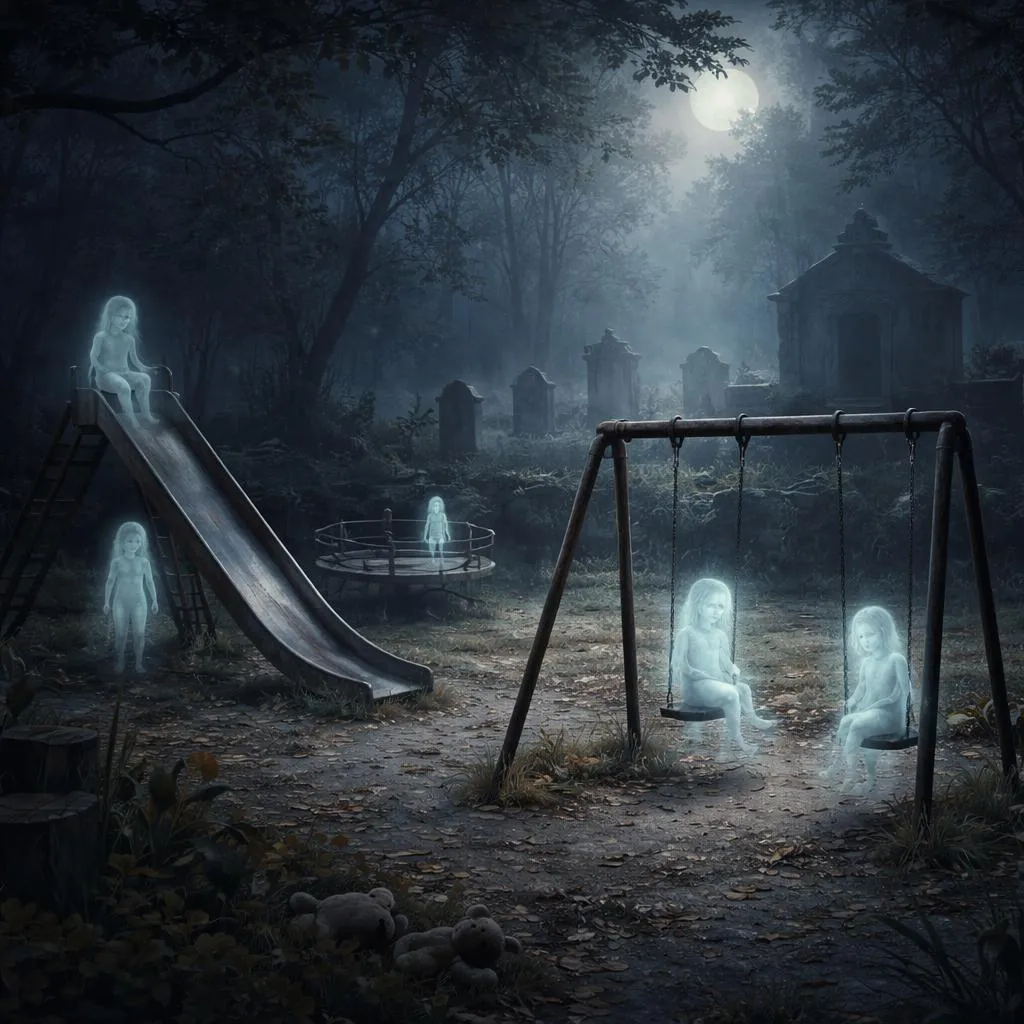

What Is the Dead Children's Playground Story? Let us explore this urban legend with appropriate caution and context. The dead children's playground story is a modern folklore tale. It tells of a playground where children's ghosts are said to appear. The story typically claims the playground was built on a cemetery. Or that children died there in some tragic event. At night, the swings move by themselves, people say. Children's laughter echoes in the darkness when no one is there. The ghosts of children play on the equipment after midnight. Some versions say the ghosts are friendly and playful. Others warn that the spirits are sad or restless. This type of story exists in many communities across the country. Each town often has its own version of this legend.
The Dead Children's Playground in Huntsville The most famous version of this story is in Huntsville, Alabama. Maple Hill Cemetery is one of the oldest cemeteries in the state. A playground sits near the cemetery's edge in Huntsville. Local legend says the playground was built on cemetery land. People claim to see ghosts of children playing at night. Swings move without anyone pushing them, witnesses say. Laughter and voices echo in the evening hours. Some say the ghosts are children buried in the cemetery. They just want to play like living children do. The story has been told for many generations in Huntsville. It has become a local legend known throughout the area.
Meaning and Purpose of Such Stories These stories serve several purposes in communities and culture. They create shared local identity and traditions. People who know the story feel connected to their place. The stories also provide harmless thrills and excitement. Telling spooky stories is a form of entertainment. These tales also explore big ideas about death and the afterlife. Children process these concepts through stories. The legends often teach respect for the dead and cemeteries. They remind people to treat burial places with reverence. The stories also become warnings about safety. "Don't go to the playground alone at night." This caution protects children while wrapped in story form.
Common Elements in Playground Ghost Stories We can identify several elements common to these legends. A playground located near or on an old cemetery appears. The proximity to graves creates the ghostly connection. Children's spirits are said to be the ghosts involved. This makes the story more poignant and affecting. Nighttime is when the ghosts supposedly appear. Darkness adds mystery and fear to the tale. Swings moving by themselves is a common claim. The motion suggests invisible children playing. Laughter or voices heard when no one is there. Auditory evidence adds to the ghostly atmosphere. Tragic backstory often explains why the children died. Illness, accident, or fire are common explanations.
Vocabulary Learning From Urban Legends Urban legends introduce rich vocabulary for discussion. Legend means a traditional story sometimes regarded as historical. Ghost means the spirit of a dead person appearing to the living. Spirit means the non-physical part of a person that lives on. Haunt means to appear regularly as a ghost. Cemetery means a large burial ground for dead people. Grave means a hole where a dead body is buried. Tombstone means a stone marker on a grave. Supernatural means attributed to something beyond scientific understanding. Urban legend means a modern folklore story told as true. We can teach these words with examples from local legends. Use them in sentences about community stories children know.
Critical Thinking About Ghost Stories Dead children's playground stories provide excellent critical thinking opportunities. Children can learn to question extraordinary claims. What evidence exists for these ghostly appearances? Has anyone actually seen the ghosts clearly? Could there be natural explanations for moving swings? Wind, animals, or people playing tricks? Why do such stories appear in many different places? What makes people want to believe in ghosts? How do stories change as they are told and retold? These questions develop analytical thinking skills. Children learn to examine claims before accepting them. Healthy skepticism is a valuable life skill. Stories become teaching tools for critical thought.
Grammar Patterns in Legend Telling Legend stories model useful grammar for storytelling naturally. Past tense tells what supposedly happened. "Children died at the playground many years ago." Present tense describes what witnesses claim now. "People say the swings move by themselves at night." Future tense warns what might happen. "If you go at midnight, you will hear them laughing." Questions drive investigation and discussion. "Have you ever seen a ghost?" "What causes the swings to move?" Commands appear in warnings about the place. "Don't go there alone!" "Stay away after dark!" Descriptive language builds atmosphere and mood. "The dark, silent playground seemed to wait for something." Prepositional phrases describe locations. "At the cemetery, near the swings, in the darkness." We can point out these patterns during discussion.
Daily Life Connections Through Legend Stories Legend stories connect to children's experiences in meaningful ways. Children share spooky stories with friends naturally. Sleepovers often include ghost story telling. Curiosity about death and what happens after is universal. Children wonder about these big questions. Local landmarks become more interesting with attached stories. A ordinary playground becomes mysterious and special. Nighttime changes how familiar places feel. Darkness transforms the ordinary into something unknown. Shared stories create bonds between people. Telling stories together builds community and friendship. We can point out these connections during discussion. "Have you ever told a scary story with friends?" "Does your neighborhood have any stories like this?"
Learning Activities for Legend Stories Many activities deepen understanding of urban legends. Research the history of local legends in your area. Interview older residents about stories they heard as children. Compare different versions of the same legend. Notice how details change in each telling. Write your own version of a local legend. Add details that make it interesting and spooky. Create a map showing locations mentioned in legends. Mark where events supposedly happened. Discuss why people create and share ghost stories. What purpose do these tales serve? Separate fact from fiction in the legend. What parts might be true? What parts are imagination? These activities build research and critical thinking skills.
Printable Materials for Legend Discussion Printable resources support deep engagement with legend themes. Create a legend comparison chart for different story versions. List elements that stay same and change across versions. Design a fact vs. fiction worksheet for examining claims. List story elements, decide if they could be true. Make vocabulary cards with legend-related words and definitions. Legend, ghost, haunt, cemetery, supernatural, urban legend included. Create a story mapping page for analyzing legend structure. Characters, setting, plot, explanation, warning elements. Design a local legend research form for interviewing. Questions to ask older community members about stories. Make a creative writing template for original legends. Title, setting, characters, spooky events, explanation included. These printables structure legend exploration activities effectively.
Educational Games About Urban Legends Games make legend learning playful and interactive. Play "Legend Telephone" where a story gets passed around. See how details change with each retelling. Create "Fact or Fiction" cards with legend claims. Decide whether each claim could be true or not. Play "Legend Map" marking where different legends come from. See how stories cluster in certain areas. Design "Story Elements Bingo" with legend components. Ghost, cemetery, nighttime, mystery, warning, twist included. Play "Legend Investigator" where children interview each other. Practice asking questions about supposed experiences. Create "Compare the Legends" sorting similar stories together. Group stories by common themes and elements. These games build legend awareness through active participation.
Teaching Respect for Cemeteries Dead children's playground stories can teach cemetery respect. Cemeteries are sacred places where people are buried. They deserve quiet respect, not late-night adventures. Real families visit graves of loved ones there. Real children are buried in cemeteries everywhere. Their spirits deserve peace, not disturbance. The stories can lead to discussions about proper behavior. Why is it important to be respectful in cemeteries? How would you feel if someone disturbed a loved one's grave? What does respect for the dead look like? These conversations build character and sensitivity. The legend becomes a starting point for important values.
The Psychology of Ghost Stories Understanding why people believe ghost stories is fascinating. Humans naturally seek explanations for strange events. We want to understand the unexplained. Stories provide comforting explanations for mysteries. Fear releases adrenaline that some find exciting. Safe scares are thrilling and enjoyable. Shared beliefs create community bonds. People who believe the same things feel connected. Stories help process difficult topics like death. They make the unknown less frightening. Children can learn about these psychological factors. Understanding why we tell stories deepens appreciation. The stories become more interesting, not less, with understanding.
Keeping Stories Age-Appropriate Dead children's playground stories need careful handling with children. Some children are more sensitive to scary content. Gauge each child's comfort level with spooky topics. Focus on the storytelling aspect, not frightening details. Emphasize that these are just stories, not real. Discuss why people enjoy telling such tales. Use the stories to teach critical thinking, not create fear. Ensure children feel safe and know fiction from reality. Follow their lead; if they seem uncomfortable, stop. The goal is learning, not frightening. Handled well, these stories enrich understanding of folklore. They become teaching tools, not sources of nightmares.