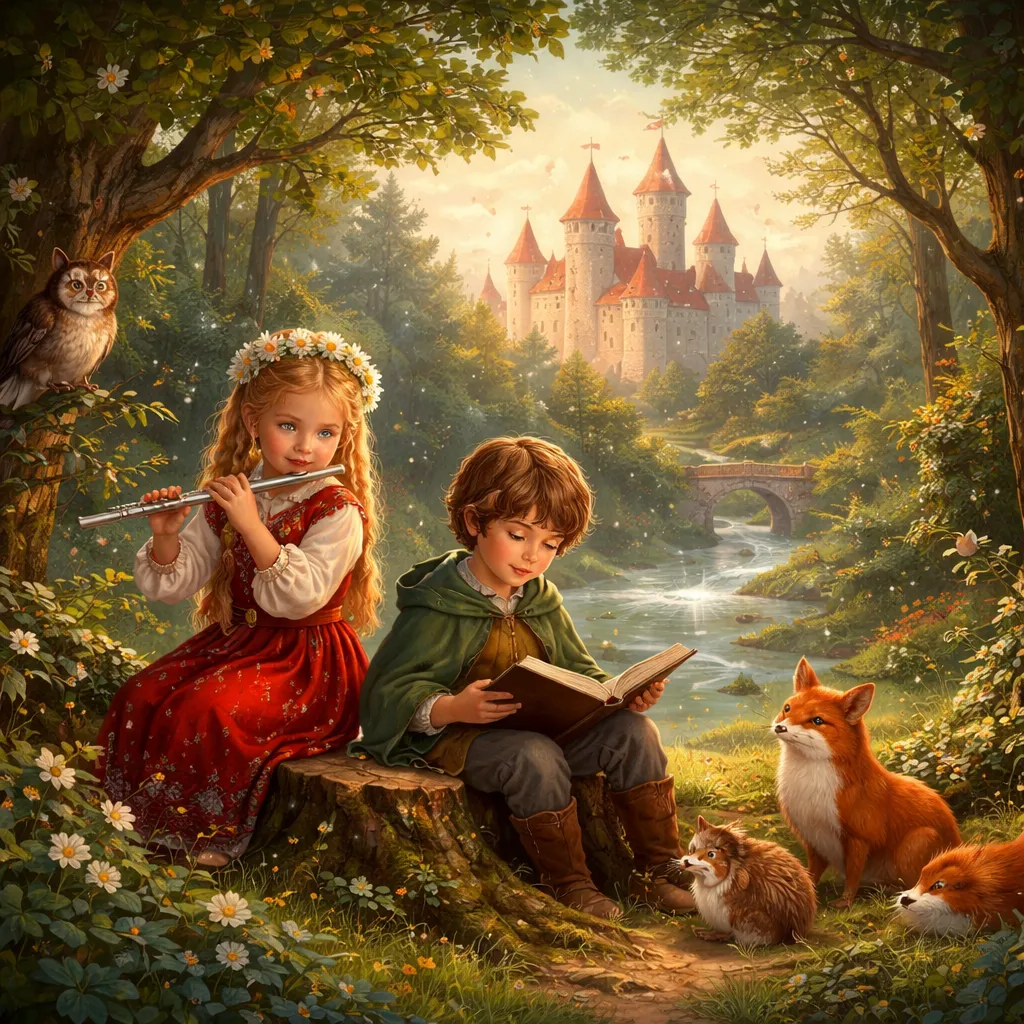

A Friendly Hello and First Impressions
Sveika! (SVAY-kah) 每 to a girl or woman. Sveiks! (SVAYKS) 每 to a boy or man. This is a friendly "Hello". Paldies! (PAHL-dyes). This is a warm "Thank you". People say it with a sincere smile. Learning reading about Latvia starts with these melodic, Baltic words.
Latvia is a country in Northern Europe. Its shape looks like a wide, curved leaf. The leaf floats on the eastern shore of the Baltic Sea. The country is in Europe. Estonia, Russia, and Lithuania are its neighbors. The Baltic Sea is to the west. The land is flat and covered in pine forests. It is a land of countless lakes, rivers, and sandy beaches. People call it the "Land of Blue Lakes".
Another beautiful name is the "Singing Nation". Singing is a huge part of the soul here. Are you ready to walk into an endless green forest and hear a song?
Deep Dive into Culture and Stories
Echoes of History
A peaceful revolution changed the country. It was the "Singing Revolution". This happened in the late 1980s. Latvia was part of the Soviet Union. People wanted freedom. They did not fight with weapons. They gathered in huge crowds. They sang forbidden folk songs. Their voices were their power. In 1991, Latvia became free again. This story is a key part of learning reading about Latvia. It is a story of freedom through song.
Long before that, German knights built castles here. They formed a state called Livonia. The capital, Riga, became a rich trading city. It was part of the Hanseatic League. This history gave Latvia its beautiful old town.
A World of Music and Light
Latvia gives the world a model of choral music. The Latvian Song and Dance Festival is huge. Thousands of singers perform together. It is a UNESCO cultural treasure. Latvia also gave the world a useful item. Jacob W. Davis, a Latvian immigrant, helped invent blue jeans. He added metal rivets to make them stronger. This mix of culture and practicality is a key part of learning reading about Latvia.
A Land of Forests and Sea
Latvia's geography is gentle and green. The land is mostly a flat plain. Thick forests cover half the country. There are thousands of lakes and rivers. The coast has long, white sand beaches. The landscape is peaceful and natural.
The climate has four distinct seasons. Summers are mild and pleasant. Winters are cold and snowy. The environment shapes life. People grow rye, potatoes, and barley. They also grow flax. Forests provide wood and mushrooms. Traditional wooden houses are often painted in cheerful colors. The main exports are wood, machinery, and food products.
A special animal is the white wagtail. It is the national bird. The national animal is the white wagtail. The national insect is the two-spot ladybird. The national flower is the oxeye daisy. It is white and yellow. The national tree is the oak and the linden. They are symbols of strength and love.
Landmarks of Brick and Amber
Visit Old Riga. It is the historic heart of the capital. The streets are cobblestone. The buildings have red tile roofs. You can see the House of the Blackheads. It is a beautiful guild hall. A fun legend says it was for unmarried merchants. The old town is full of cozy cafes and secrets.
See the Gauja National Park. It is often called "Latvian Switzerland". It has deep river valleys and sandstone cliffs. You can see the Turaida Castle. It is a red brick medieval castle. A sad local legend tells of the "Rose of Turaida". She was a beautiful girl. She chose death over dishonor. The park is perfect for hiking and exploring.
Another wonder is the Jurmala Beach. It is a long stretch of white sand. The Baltic Sea is calm here. People build small houses from driftwood. The air smells of pine and sea. It is a favorite summer escape.
Festivals of Light and Song
The biggest festival is J芋?i. This is the Midsummer celebration. It happens on the night of June 23-24. It celebrates the summer solstice. People leave the cities for the countryside. They make wreaths from oak leaves and flowers. They light giant bonfires.
They sing special folk songs called "ligo". They eat special cheese with caraway seeds. They stay up all night. They believe this is a magical night. The festival is about nature, light, and fertility. The feeling is joyful and ancient.
Another important day is Independence Day. It is on November 18th. It marks the proclamation of the Republic in 1918. There is a big military parade in Riga. People lay flowers at the Freedom Monument. Concerts are held. The national flag is everywhere. The colors are maroon and white. The day is about national pride and remembrance.
Food and Flavors
A national dish is Pel言kie zir?i ar spe?i. These are grey peas with bacon. The peas are large and grey. They are served with fried onions and crunchy bacon. People eat it in winter. It is hearty, savory, and delicious. It is a traditional comfort food.
You must try Rupjmaize. It is dark rye bread. It is very dark, dense, and slightly sour. People eat it with almost every meal. They spread butter or cheese on it. A good rye bread is moist, flavorful, and healthy. It is the true taste of Latvia.
A Culture of Song and Craft
Singing is in the Latvian DNA. Almost everyone sings in a choir. The big Song Festival happens every five years. Thirty thousand singers can perform at once. This love for harmony is a joyful part of learning reading about Latvia. It brings people together.
Latvians are also master craftspeople. They work with wool, linen, and amber. Amber is fossilized tree resin. It is called "Baltic gold". You can find it on the beach after a storm. Jewelry made from amber is beautiful.
Tips for Young Explorers
Cultural Manners Matter
Latvians can seem quiet and reserved at first. A handshake is a common greeting. Say "Sveika" or "Sveiks" with eye contact. People are polite and value personal space. Do not stand too close. This is their way.
Punctuality is very important. Be on time for meetings. Being late is considered rude. Call if you are delayed. This shows respect. When visiting a home, bring a small gift. Flowers, chocolates, or good wine are nice. Give an odd number of flowers. Take off your shoes at the door.
Dress neatly. Latvians take pride in their appearance. Casual is fine, but clean and tidy is best. This shows you made an effort.
A Note on Staying Safe
Latvia is a very safe country. But be careful in big cities at night. Watch for pickpockets in tourist areas. Keep your bag closed. Use common sense. The forests are safe, but tell someone where you are going. Do not wander off alone.
The weather changes quickly. A sunny day can become rainy. Always carry a light rain jacket or umbrella. This keeps you dry and happy. In winter, dress very warmly. Good boots, a hat, and gloves are a must.
Be careful in the Baltic Sea. The water is often cold. Only swim in marked areas. Obey warning flags. Never swim alone.
A Tasty Stop
Look for "spe?a p貝r芋dzi?i" at a market. They are small baked pastries. They are filled with diced bacon and onions. They are golden and flaky. Eat them warm. The pastries are savory, salty, and delicious. They are a popular snack.
Healthy and Happy Travels
Tap water is safe to drink everywhere. It is clean and fresh. Carry a refillable bottle. This saves plastic and money. You can refill it anywhere.
Walk a lot. Latvian towns and forests are perfect for walking. Wear comfortable shoes. You will explore beautiful old towns and nature trails. Your feet will thank you.
Protect yourself from ticks. In forests and tall grass, wear long pants. Check your skin after a day outdoors. Ticks can carry disease. This is a simple, smart precaution.
Your Invitation to Explore
Start your journey with sound. Listen to a Latvian folk song or choir. Hear the beautiful harmonies. Try to hum along. Or, read a Latvian folk tale about animals. Imagine the deep, dark forest. This is a wonderful way of learning reading about Latvia.
Visit a market. Look for Latvian rye bread or a piece of amber. Taste the dark, rich bread. Hold the warm amber to the light. See the tiny insect maybe trapped inside. You can also try braiding a simple crown from paper or grass. Imagine celebrating Midsummer.
The world is a big, open book. Each country is a different chapter. Latvia's chapter is about serene forests, powerful songs, and resilient spirit. Open it with curiosity. Read about its history, harmonies, and love for nature. Your curiosity is your guide.
Latvian families gather for a big Midsummer feast. Friends sing together in a community choir. Children search for mushrooms in the autumn forest. We all know these feelings. We love celebrating seasons with family. We enjoy making music with friends. We have fun exploring nature. Learning about Latvia shows us this. Our global family shares the same joys. Keep exploring, one page, one country, at a time. Your adventure has just begun.