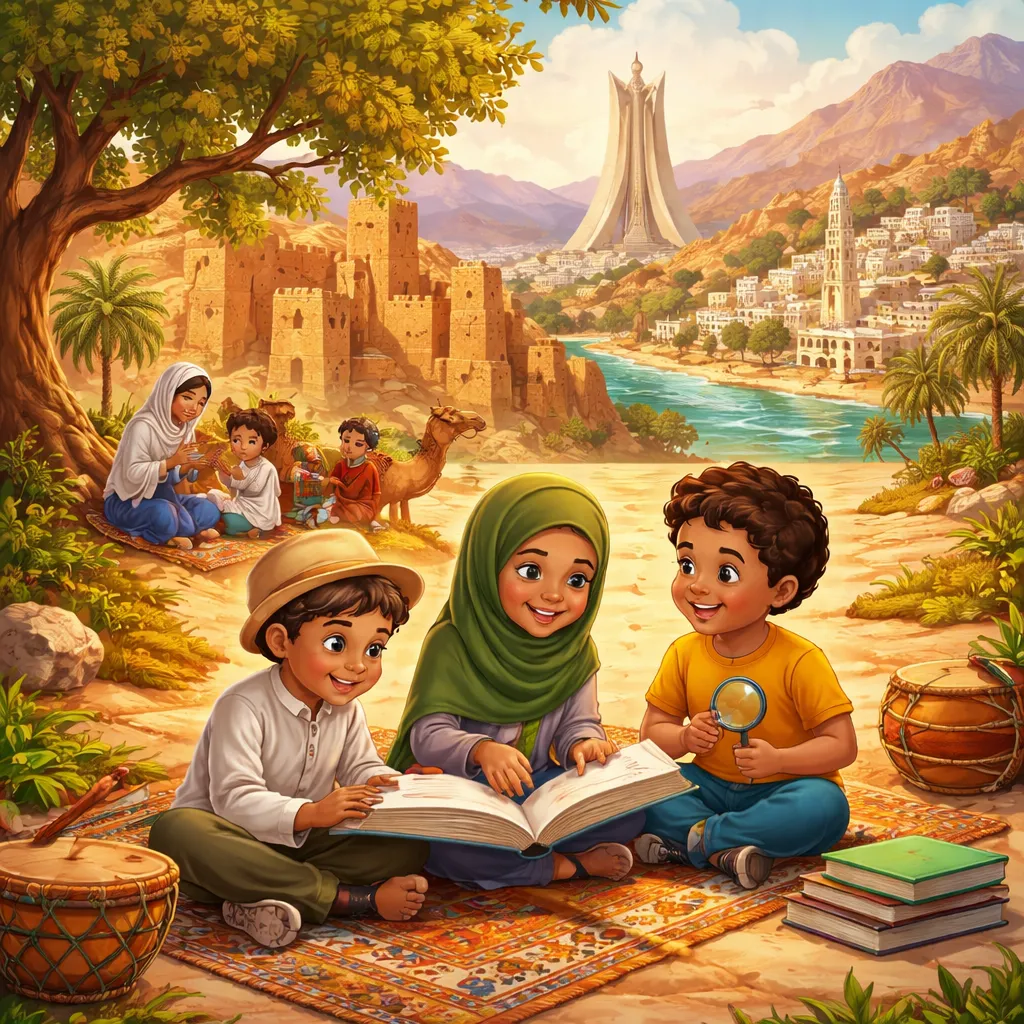

A Friendly Hello and First Impressions
As-salamu alaykum! (ah-sah-LAH-moo ah-LAY-koom). This Arabic greeting means "Peace be upon you". Azul! (ah-ZOOL). This Berber word means "Hello". People use it in the mountains. Shukran! (SHOOK-rahn). This means "Thank you". Learning reading about Algeria starts with these warm words.
Algeria is a giant country. It is the largest in Africa. Look at a map. It looks like a huge door. This door sits between Europe and Africa. The bright blue Mediterranean Sea is to the north. The vast, golden Sahara Desert fills the south.
Algiers, the capital, is called "Algiers the White". Many buildings are painted white. They shine in the sun near the sea. The city looks dazzling and clean. The nickname captures this beautiful sight.
Are you ready to explore this land of sea and sand?
Deep Dive into Culture and Stories
Echoes of History
Long ago, Algeria had a brave leader. His name was Emir Abdelkader. He lived 200 years ago. He was a scholar and a warrior. He united tribes to fight for freedom. He was also a man of mercy. He protected people of other faiths. His values of courage and honor are remembered today.
Algeria's history is very ancient. The Numidian Kingdom was here. King Masinissa was a famous ruler. He was a friend of Rome. Later, the Romans built great cities here. You can see their ruins in the desert. Then came Arab, Ottoman, and French influences. Each left a mark on the culture.
The country holds ancient treasures. The Tassili n'Ajjer plateau has cave art. The drawings are over 10,000 years old. They show animals and people. This art is a library of stone. It tells stories of a green Sahara. It shows the first human thoughts. It is a gift to world history.
A Land of Two Worlds
Algeria has two main parts. The north has a long coastline. Green hills and mountains rise there. The climate is Mediterranean. Summers are hot and dry. Winters are mild and rainy. People grow olives, grapes, and citrus fruits. Many cities are near the sea.
The south is the mighty Sahara Desert. It is the largest hot desert on Earth. It covers over 80% of Algeria! Days are extremely hot. Nights can be freezing cold. Rain almost never falls. Life needs an oasis. An oasis is a green spot with water. Date palms grow there.
A special animal lives in the desert. It is the fennec fox. It is tiny and very cute. It has enormous ears. The ears help it stay cool. It hears insects under the sand. The fox is a symbol of desert survival. The date palm is the tree of life. Its sweet fruit feeds people and animals. Its leaves make roofs and baskets.
Landmarks of Stone and Sand
Visit the Casbah of Algiers. It is a maze-like old city. "Casbah" means fortress. White houses climb steep hills. Narrow, winding streets connect them. It is a UNESCO World Heritage site. People say pirates once lived here. They hid treasures in secret rooms. Today, families live in the Casbah. They hang laundry between buildings.
Travel south to the M'zab Valley. It is in the heart of the Sahara. The Mozabite people built five towns there. They are called "ksour". Each town is on a hilltop. Houses are packed close together. They are all made of clay. This design protects people from the heat. The towns are like sandcastles. But they are real and very old.
Another wonder is the Roman ruins of Djemila. It is in the northern mountains. The city's name means "Beautiful". It has temples, arches, and a theater. The amazing fact is its location. Romans built a full city high in the mountains. They brought their lifestyle to a new land. It shows their great engineering power.
Celebrations and Flavors
The most important celebration is Ramadan. It is a holy month for Muslims. People do not eat or drink from sunrise to sunset. They focus on prayer and family. Each evening, families share a meal called Iftar. They eat dates and soup first. The nights are full of joy.
The festival ends with Eid al-Fitr. Everyone wears beautiful new clothes. Children receive gifts and money. Families visit each other. They eat special sweets. The smell of pastries fills the air. It is a time of forgiveness and gratitude. People thank God and help the poor.
Food brings everyone together. The national dish is couscous. It is tiny balls of steamed semolina wheat. People serve it with a rich stew. The stew has vegetables and meat. Families eat it every Friday. It is a social meal. Everyone shares from one big plate. It tastes like home and community.
Try a pastry called Baklava. It is layers of thin, flaky dough. The dough is called "warqa". It means "leaf". The layers hold chopped nuts. Sweet honey or syrup soaks everything. It is very sweet and crunchy. People eat it on happy occasions. It tastes like a honey nut party.
A Culture of Words and Light
Algeria has a rich tradition of storytelling. Poets and singers were very important. They passed down history through spoken word. This tradition is called "oral literature". Stories taught lessons and preserved culture. Even today, elders tell tales to the young. This is a key part of learning reading about Algeria.
The country also has a strong film industry. It is one of the best in Africa and the Arab world. Movies tell stories of history and daily life. They win big international awards. Making films is like telling a story with light. It is a powerful way to share culture.
Algeria is now looking to the sun. The Sahara Desert has endless sunshine. The country is building huge solar power farms. They use mirrors to catch the sun's heat. This creates clean electricity. It is like using a giant magnifying glass. It turns sunlight into power for cities. This is smart innovation.
Tips for Young Explorers
Cultural Manners Matter
Hospitality is a sacred rule. Guests receive the best of everything. Always accept an offer of mint tea. It is a sign of friendship. The host will pour it from high up. This makes a nice foam on top. Drink it slowly. Say "Sahtain!" (sah-TAYN) after drinking. It means "To your health!".
Use your right hand for eating and giving. The left hand is for personal hygiene. This rule is very important. Eat couscous with your right hand. Roll it into a small ball. Then pop it into your mouth. It is fun and polite.
Greetings are warm but formal. Shake hands and smile. Ask about a person's family and health. This shows you care. Do not rush the greeting. Rushing seems rude. A good conversation starts with a good hello.
A Note on Staying Safe
Parts of Algeria, especially the deep south, have security risks. Always check travel advice before planning a trip. It is best to visit with a professional tour group. They know the safe areas and routes. The desert is very beautiful but also vast and empty. Never travel there alone.
In cities, be careful in crowded places. Keep your belongings close. Traffic can be busy and fast. Always use marked crossings. Respect all local laws and customs. Dress modestly, especially outside tourist areas. This shows respect for the culture.
A Tasty Stop
You must try Mahjouba on the street. It is a delicious, thin pancake. It is made from semolina. The pancake is stuffed with tomatoes, onions, and spices. Vendors cook it on a hot griddle. It is soft, warm, and a little spicy. Eat it right away. The fresh, savory taste is amazing.
Healthy and Happy Travels
The desert sun is extremely strong. Always wear a high SPF sunscreen. Wear a wide-brimmed hat and sunglasses. Protect your skin and eyes. This lets you enjoy the sights.
Drink bottled water only. Do not drink tap water. This simple step keeps you healthy. Wash all fruits and vegetables before eating. Eat food that is freshly cooked and hot. This is the safest way.
Wear comfortable, loose-fitting clothes. Natural fabrics like cotton are best. They keep you cool. Good walking shoes are essential. The Casbah has many stone steps. Comfort helps you explore longer.
Your Invitation to Explore
Start your adventure at a library. Find a book about the Sahara Desert. Learn about the Tuareg people. They are the "Blue Men of the Desert". Or, try a fun cooking project. Make a simple semolina couscous at home. Add your favorite vegetables. Imagine you are at a family Iftar. This makes learning reading about Algeria tasty.
Use a tool like Google Earth. Fly over the Sahara. See the vast sea of sand. Look for the green dots of oases. Then visit the coastal city of Algiers. See how the white buildings shine. The world is a book. Each country is a chapter. Your curiosity is the key.
Algerian families gather for couscous. Children play in courtyard homes. People share stories and sweet mint tea. These moments connect us all. We all love family meals. We enjoy celebrating holidays. We share hopes and dreams. Learning about Algeria shows us this shared human story. Keep turning the pages. Your global journey has just begun.