
A Friendly Hello and First Impressions
Shalom! (shah-LOME). This is a peaceful "Hello" in Hebrew. It also means "peace". Toda! (toh-DAH). This is a warm "Thank you". People say it with a smile. Learning reading about Israel starts with this meaningful wish for peace.
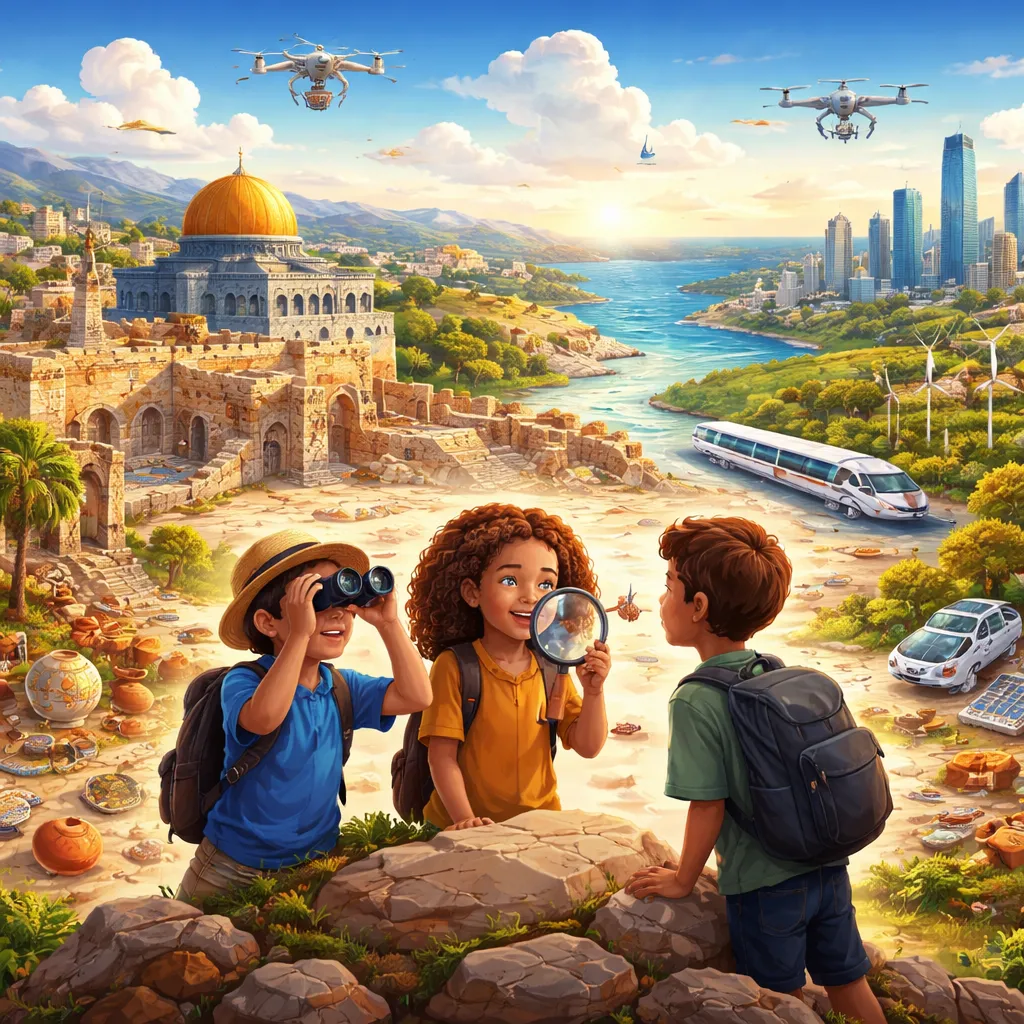
Israel is a small country in the Middle East. Its shape looks like a long, thin leaf. The leaf curves along the eastern Mediterranean coast. The country is in Asia. Lebanon, Syria, Jordan, and Egypt are its neighbors. The Mediterranean Sea is to the west. The land is very diverse. It has beaches, mountains, and a desert. It is a land of ancient history and new ideas.
People call it the "Holy Land". Three major religions began here. They are Judaism, Christianity, and Islam. Another nickname is the "Startup Nation". Israel creates many new technology companies. Are you ready to walk through thousands of years of history?
Deep Dive into Culture and Stories
Echoes of History
A great king united the tribes long ago. His name was King David. He lived around 1000 BCE. He was a shepherd and a poet. He fought the giant Goliath. He became king of Israel. He made Jerusalem the capital. His son, King Solomon, built the First Temple. Their story is a key part of learning reading about Israel. It is a story of foundation and faith.
A modern founding father was David Ben-Gurion. He was the first prime minister. He declared the independence of Israel in 1948. This was a very important and difficult moment. His leadership helped build the new state.
A World of Water and Technology
Israel gives the world solutions for dry lands. The country invented drip irrigation. This system gives water directly to plant roots. It saves a lot of water. Israel also creates many medical and computer technologies. This spirit of innovation is a key part of learning reading about Israel. It shows how to solve big problems.
A Land of Sea and Desert
Israel's geography is small but varied. The coastal plain has sandy beaches. The central hills have Jerusalem. The Jordan Rift Valley has the Dead Sea. The south has the Negev Desert. The landscape changes from green valleys to dry canyons.
The climate is Mediterranean on the coast. It is hot and dry in the desert. The environment shapes life. People grow citrus fruits, vegetables, and cotton. They also grow olives and dates. Houses are often made of stone or concrete. The main exports are technology, cut diamonds, and medicines.
A special animal is the gazelle. It is graceful and fast. The national animal is the gazelle. The national bird is the hoopoe. It has a crown of feathers. The national flower is the cyclamen. It is pink and blooms in winter. The olive tree is a national symbol of peace.
Landmarks of Stone and Spirit
Visit Masada. It is an ancient fortress on a cliff. King Herod built a palace there. Later, Jewish rebels lived there. They fought the Roman army. The story says they chose to die rather than be captured. A fun legend says the rebels' stores are still there. The view of the Dead Sea is amazing. The site is a symbol of courage.
See the Western Wall. It is in Jerusalem. It is the last remaining wall of the Second Temple. People come to pray and leave notes in the cracks. The notes are wishes and prayers. A fun story says the notes are collected. They are buried on the Mount of Olives. The wall is a holy place for many.
Another wonder is the Dead Sea. It is the lowest point on Earth. The water is very salty. You float easily! The mud is good for your skin. A local story says the cities of Sodom were here. The sea is a unique natural wonder.
Festivals of Freedom and Light
The most important home festival is Passover. It is called "Pesach". It happens in spring. It celebrates the Exodus from Egypt. Families have a special dinner called a Seder. They read from a book called the Haggadah. They eat symbolic foods.
They eat matzah, which is unleavened bread. They eat bitter herbs. Children ask four questions. The festival is about freedom, family, and remembering history. The celebration lasts for seven or eight days.
Another important day is Independence Day. It is called "Yom Ha'atzmaut". It is in spring, based on the Hebrew calendar. The day before is for remembering fallen soldiers. Then, at sunset, celebrations begin. There are parties, concerts, and fireworks. People wave the national flag. The colors are blue and white with a Star of David.
Food and Flavors
A national food is Hummus. It is a creamy dip. It is made from chickpeas, tahini, lemon, and garlic. People eat it with pita bread. Families eat it as a snack or part of a meal. It is savory, tangy, and delicious. It is a food everyone shares.
You must try Falafel. They are deep-fried balls. They are made from ground chickpeas or fava beans. They are served in a pita bread with salad. People eat them as fast food. A good falafel is crispy outside, soft inside. It is tasty and filling.
A Culture of Debate and Community
Israelis are known for speaking directly. They like to discuss and debate. This is part of the culture. It comes from a love of learning and questioning. This style is a lively part of learning reading about Israel.
The kibbutz is a special community. People live and work together. They share what they have. The first kibbutzim were farms. Now, there are many types. This shows a history of cooperation and building the land.
Tips for Young Explorers
Cultural Manners Matter
Israelis are often informal and direct. A handshake is a common greeting. Close friends may hug. Say "Shalom" when you meet someone. Do not be surprised by loud talking. It is not anger, just passion.
Dress modestly at holy sites. Cover your shoulders and knees. This shows respect. At the Western Wall, men cover their head. Women can also cover their head. There are paper kippot (skullcaps) available.
Shabbat is the Jewish day of rest. It is from Friday evening to Saturday evening. Many businesses close. Public transport stops in many cities. It is a quiet day for families. Be respectful of this quiet time.
A Note on Staying Safe
Israel has security challenges. Always be aware of your surroundings. Follow the advice of local authorities. Do not leave bags unattended. Security checks are common. They are for everyone's safety. This helps you stay safe.
Political tensions exist. Avoid large demonstrations. Listen to news updates. Stick to main tourist areas. Travel with a group or guide if possible. Your safety is the most important thing.
A Tasty Stop
Look for "bourekas" at a bakery. They are flaky pastries. They are filled with cheese, potato, or spinach. They are often sprinkled with sesame seeds. Eat them warm. The bourekas are buttery, savory, and delicious. They are a popular snack.
Healthy and Happy Travels
The sun is very strong. Use a high SPF sunscreen. Wear a hat. The desert sun can burn you quickly. Drink lots of bottled water. Stay hydrated, especially in the desert.
Tap water is safe to drink in most places. But many people prefer bottled water. It is widely available. Carry a water bottle to refill.
Wear comfortable walking shoes. The ancient streets are made of stone. The desert paths are rocky. Good shoes make exploring much easier and safer.
Your Invitation to Explore
Start your journey with a story. Read a children's version of the David and Goliath story. Imagine the courage. Or, look at photos of the Dead Sea. See how people float. This is a wonderful way of learning reading about Israel.
Visit a science museum. Look for exhibits on water technology or innovation. See how a drip irrigation system works. Imagine saving water in a garden. You can also try making simple hummus at home. Taste the creamy, garlicky flavor. Imagine sharing it with friends.
The world is a big, ancient book. Each country is a different chapter. Israel's chapter is about ancient stones, sacred texts, and smart solutions. Open it with curiosity. Read about its history, debates, and determination. Your curiosity is your guide.
Israeli families share a noisy Shabbat dinner. Friends debate everything at a caf谷. Children learn about their ancient heritage. We all know these feelings. We love sharing meals. We enjoy lively talks. We are proud of our history. Learning about Israel shows us this. Our global family shares the same desires for peace and understanding. Keep exploring, one page, one country, at a time. Your adventure has just begun.