
A Friendly Hello and First Impressions
Bonjou! (bohn-ZHOO). This is a friendly "Hello" in Haitian Creole. M豕si! (meh-SEE). This is a warm "Thank you". People say it with a smile. Learning reading about Haiti starts with these kind, musical words.
Haiti is on the island of Hispaniola. It shares the island with the Dominican Republic. Its shape looks like a giant crab's claw. The claw reaches into the Caribbean Sea. The country is in the Caribbean, part of North America. The Atlantic Ocean is to the north. The Caribbean Sea is to the south. The land is very mountainous and beautiful. It is a country of strong spirit.
People call it the "First Black Republic". It was the first nation in the world. A successful slave revolt created it. Another nickname is the "Pearl of the Antilles". Long ago, it was the richest French colony. Are you ready to hear a story of incredible courage?
Deep Dive into Culture and Stories
Echoes of History
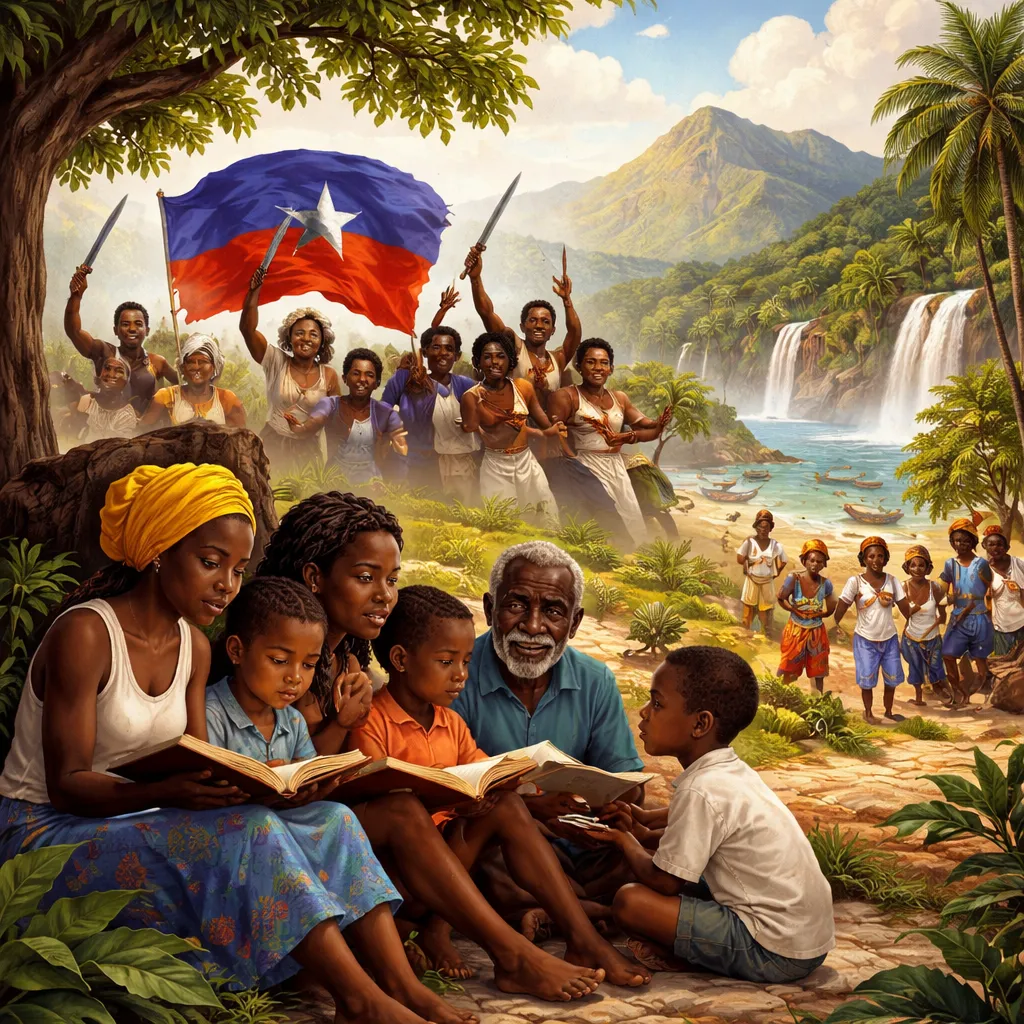
A world-changing event happened here. It was the Haitian Revolution. It started in 1791. Enslaved African people rose up. They fought for their freedom. Great leaders emerged. Toussaint Louverture was a brilliant general. Jean-Jacques Dessalines was the first ruler of independent Haiti. They defeated the French army. Haiti became independent in 1804. This story is a key part of learning reading about Haiti. It is a story of freedom against all odds.
This revolution inspired the world. It showed that slavery could be defeated. It gave hope to oppressed people everywhere. The history of Haiti is a history of resilience and pride.
A Gift of Freedom and Art
Haiti gave the world a powerful idea. It is the idea that all people are free. The Haitian Revolution proved this. The country also gives the world vibrant art. Haitian paintings are full of color and life. They tell stories of daily life and dreams. This art is a gift of joy and expression. It is a key part of learning reading about Haiti.
A Land of Mountains and Coast
Haiti's geography is rugged. The land is mostly mountains. The coast has beautiful beaches and bays. The climate is tropical. It is warm all year. The environment is challenging. Deforestation is a big problem. The land has suffered from storms and earthquakes.
The environment shapes life. People grow coffee, mangoes, and sugarcane. They also farm beans and corn. Houses in the countryside are often made of woven wood and mud. They have tin or thatched roofs. In the city, houses are made of concrete. The main exports are clothing, mangoes, and cocoa.
A special animal is the Hispaniolan trogon. It is the national bird. It has beautiful green and blue feathers. The national animal is the ginger cat. It is a type of hawk. The national flower is the hibiscus. It is red and beautiful. The mango tree is loved for its sweet fruit.
Landmarks of Strength and Memory
Visit the Citadelle Laferri豕re. It is a huge mountaintop fortress. King Henri Christophe built it after independence. He feared the French might return. The fortress is a symbol of freedom. It has giant cannons. You can see for miles. A fun legend says the king rode his horse up the wall. The Citadelle is a UNESCO site. It is a marvel of engineering.
See the Iron Market in Port-au-Prince. It is a large market building. It has a roof of red iron. The market is full of life. You can buy art, spices, and food. A fun story says the iron came from France. It was meant for a train station in Cairo. The market is a bustling, colorful place.
Another wonder is the Sans-Souci Palace. It was the royal palace of King Henri Christophe. Now it is a beautiful ruin. The palace was once called the "Versailles of the Caribbean". It shows the grand dreams of the new nation.
Festivals of Color and History
The biggest festival is Carnival. It is called "Kanaval". It happens in February or March. The celebration lasts for days. There are parades with big bands. People wear amazing costumes and masks. The music is called "rara". It is loud and rhythmic.
The festival is a burst of color and energy. It is a time to forget troubles. It is a celebration of life and culture. The whole country dances in the streets.
Another important day is Independence Day. It is on January 1st. It marks freedom from France in 1804. People eat Soup Joumou. This is a special pumpkin soup. The soup was forbidden for slaves. Now, everyone eats it to celebrate freedom. The day is about national pride and memory.
Food and Flavors
The national dish is Soup Joumou. It is a pumpkin soup. It has beef, vegetables, and pasta. The soup is rich and savory. Families eat it every Sunday. But it is especially important on Independence Day. The soup tastes like freedom and celebration.
You must try Griot. It is fried pork. The meat is marinated in citrus and spices. It is fried until crispy. People eat it with plantains and rice. Families eat it for special meals. The griot is tender, savory, and delicious. It is a favorite party food.
A Culture of Rhythm and Resilience
Music is everywhere. Compas is a popular dance music. Rara music is for the streets. Drums are the heart of Haitian music. This love for rhythm is a joyful part of learning reading about Haiti. It helps people through hard times.
Haiti is known for its resilience. The people face many challenges. Earthquakes, storms, and poverty are real. But the spirit of the people is strong. They help each other. They find joy in art and community. This is a powerful lesson for the world.
Tips for Young Explorers
Cultural Manners Matter
Haitians are polite and respectful. Greetings are important. A handshake is common. Say "Bonjou" or "Bonswa" (Good evening). Ask about the person's health and family. This is good manners. Do not rush the greeting.
Elders are highly respected. Always greet the oldest person first. Use titles like "M豕t" (Mr.) or "Madan" (Mrs.). Listen when they speak. Do not interrupt. This is very important.
When visiting a home, bring a small gift. Fruit, pastries, or a drink are nice. Do not start eating until the host invites you. Compliment the food. The cook will be happy.
A Note on Staying Safe
Haiti has serious security problems. Travel can be dangerous. It is important to check travel advisories. Travel with a guide. Do not walk alone at night. Do not show expensive items. Always stay aware of your surroundings.
The sun is very strong. Use a high SPF sunscreen. Wear a hat. Drink lots of bottled water. Dehydration is a risk. Protect yourself from the sun.
Be careful with street food. Eat at busy places. The food should be cooked fresh and hot. Peeling your own fruit is a safe choice.
A Tasty Stop
Look for "pate" on the street. It is a fried pastry. It is filled with spicy meat or fish. It is golden and crispy. Eat it hot. The pate is savory, flaky, and delicious. It is a popular snack.
Healthy and Happy Travels
Drink only bottled or boiled water. This is the most important rule. Do not drink tap water. Avoid ice in drinks. Brush your teeth with bottled water. This keeps your stomach healthy.
Use insect repellent. Mosquitoes can carry diseases. Wear long sleeves in the evening. Sleep under a mosquito net. This prevents bites.
Wear comfortable, light clothing. The weather is hot and humid. Cotton clothes are best. Good walking shoes are important for rough streets.
Your Invitation to Explore
Start your journey with art. Look at Haitian paintings. See the bright colors and stories. Or, listen to compas or rara music. Feel the rhythm. Try to dance. This is a wonderful way of learning reading about Haiti.
Visit a market. Look for Haitian coffee or paintings. Taste the rich coffee. See the vibrant art. Imagine the hands that made it. You can also try making a simple drawing with bright colors. Tell a story with your picture.
The world is a big, open book. Each country is a different chapter. Haiti's chapter is about freedom, struggle, and unbreakable spirit. Open it with respect. Read about its revolution, art, and incredible strength. Your curiosity is your guide.
Haitian families share Soup Joumou on New Year's Day. Artists paint beautiful pictures. Children play soccer with a makeshift ball. We all know these scenes. We love sharing meals. We create beautiful things. We play and hope for a better future. Learning about Haiti shows us this. Our global family shares the same dreams for freedom and joy. Keep exploring, one page, one country, at a time. Your adventure has just begun.