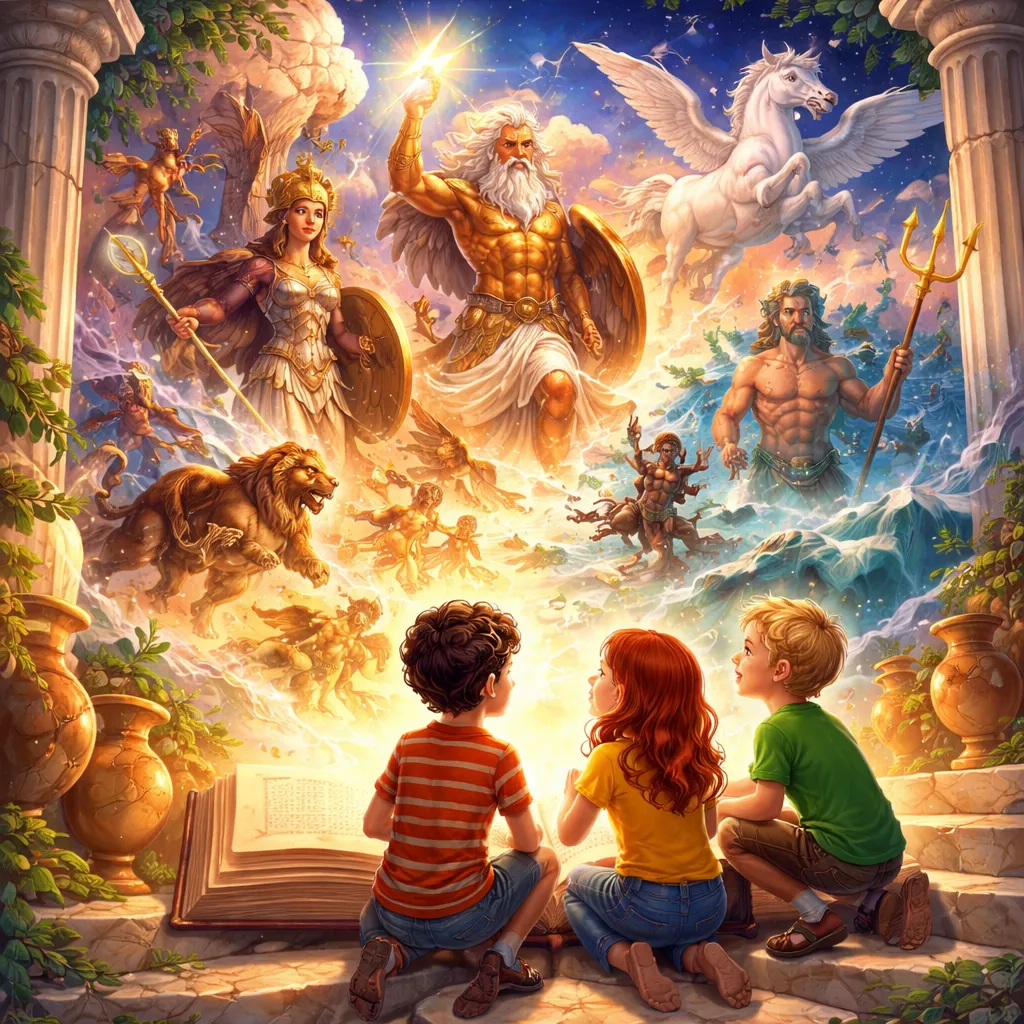

A Friendly Hello and First Impressions
Yasou! (YAH-soo). This is a friendly "Hello" in Greek. Efharisto! (ef-hah-ree-STOH). This is a warm "Thank you". People say it with a smile. Learning reading about Greece starts with these musical, ancient words.
Greece sits in southern Europe. Its shape looks like a hand. The hand reaches into the blue Mediterranean Sea. The country is in Europe. Albania, Turkey, and Bulgaria are its neighbors. The sea surrounds Greece on three sides. It has over 2,000 islands! The land is mountainous and beautiful.
People call it the "Cradle of Western Civilization". Many important ideas started here. Another nickname is the "Land of the Gods". Ancient Greek myths are famous worldwide. Are you ready to meet the gods and heroes?
Deep Dive into Culture and Stories
Echoes of History
A great conqueror changed the world. His name was Alexander the Great. He was a king of Macedonia. He lived 2,300 years ago. He was a brilliant military leader. He created a huge empire. His empire stretched from Greece to India. He spread Greek culture everywhere. His story is a key part of learning reading about Greece. It is a story of ambition and legacy.
Long before Alexander, the city of Athens was powerful. It created democracy. This means "rule by the people". Citizens voted on laws. This idea changed history. It is a foundation of many governments today.
A Gift of Ideas
Greece gave the world a treasure of ideas. The ancient Greeks invented philosophy. Philosophers asked big questions. Socrates, Plato, and Aristotle were famous thinkers. They asked, "What is a good life?" They also excelled in mathematics. Pythagoras created his famous theorem. This love for wisdom is a key part of learning reading about Greece.
A Land of Sea and Mountains
Greece's geography is dramatic. The mainland is very mountainous. The Pindus Mountains run down the center. The coast is long and jagged. Thousands of islands dot the sea. The landscape is rocky, with olive trees and vineyards.
The climate is Mediterranean. Summers are hot and dry. Winters are mild and rainy. This affects how people live. People grow olives, grapes, and citrus fruits. They fish in the sea. Traditional houses on islands are whitewashed. They have blue doors and flat roofs. This keeps them cool. The main exports are medicines, olive oil, and tourism.
A special animal is the loggerhead sea turtle. It nests on Greek beaches. The national animal is the dolphin. It is smart and playful. The national bird is the little owl. It represents wisdom. The national flower is the violet. It is purple and sweet. The olive tree is a national symbol. It means peace and life.
Landmarks of Gods and Heroes
Visit the Acropolis. It is a high rock in Athens. The Parthenon temple sits on top. It was built for the goddess Athena. The columns are made of white marble. The view of Athens is amazing. A fun myth says Athena and Poseidon competed. They wanted to be the city's patron. Athena gave an olive tree. Poseidon gave a spring of salt water. The people chose Athena's gift. The Acropolis is a symbol of ancient glory.
See the island of Santorini. It is a crescent-shaped island. The houses are white with blue domes. The island was formed by a volcano. A legend says Santorini is the lost Atlantis. The sunsets are incredibly beautiful. The island is a picture of dreamy Greece.
Another wonder is Delphi. It was the center of the ancient world. People traveled here for advice. The Oracle of Delphi gave mysterious prophecies. The site has a temple and a theatre. It is on the slopes of Mount Parnassus. The setting is mystical and grand.
Festivals of Light and Easter
The most important festival is Easter. It is called "Pascha". It is more important than Christmas. The celebration starts on Good Friday. There is a solemn procession. On Saturday night, people go to church. At midnight, the priest says "Christos Anesti!" (Christ is risen!). Everyone lights candles from his flame.
They share the "Holy Light". Then they have a big feast. They eat roast lamb and "magiritsa" soup. They crack red eggs. The festival is about resurrection, family, and spring. The feeling is deeply spiritual and joyful.
Another important day is Independence Day. It is on March 25th. It marks the start of the revolt against the Ottomans in 1821. There are parades with traditional costumes. The national flag is everywhere. The colors are blue and white. The day is about freedom and national pride.
Food and Flavors
The national dish is Moussaka. It is a baked casserole. It has layers of eggplant, minced meat, and b谷chamel sauce. It is golden brown on top. Families eat it for Sunday lunch. It is rich, savory, and comforting. It tastes like a special family recipe.
You must try Souvlaki. It is small pieces of grilled meat. The meat is on a skewer. It is often served in pita bread. It has tomato, onion, and tzatziki sauce. People eat it as fast food. A good souvlaki is juicy, tangy, and delicious. It is the taste of a Greek summer.
A Culture of Music and Debate
Music is part of life. The "bouzouki" is a traditional string instrument. Its sound is melodic and lively. People dance in a circle. The dance is called "sirtaki". This love for music and dance is a joyful part of learning reading about Greece.
The ancient tradition of debate lives on. People love to talk and discuss. You see it in cafes and squares. This passion for conversation comes from philosophy. It shows a love for sharing ideas.
Tips for Young Explorers
Cultural Manners Matter
Greeks are very expressive and friendly. Greetings are warm. A handshake is common. Close friends may kiss on both cheeks. Say "Yasou" with a smile. Use titles like "Kirios" (Mr.) or "Kiria" (Mrs.) for adults. This is polite.
Punctuality is flexible. Being 15-30 minutes late is normal. This is called "Greek time". But try to be on time for tours. For social events, it is fine to be late.
When you visit a home, bring a small gift. Flowers, pastries, or wine are nice. Compliment the home and the food. Do not start eating until the host invites you. Say "Kali orexi!" (Good appetite!) before eating.
A Note on Staying Safe
Greece is a very safe country. But be careful in big cities. Watch for pickpockets in crowded tourist areas. Keep your bag closed. Do not leave your things alone on the beach.
The sun is extremely strong, especially in summer. Use a high SPF sunscreen. Wear a hat. Drink lots of water. Heatstroke is a real risk. Stay in the shade during midday.
Be careful when swimming. Some beaches have strong waves. Only swim where it is safe. Obey warning flags. Never swim alone.
A Tasty Stop
Look for a "loukoumades" stand. They are Greek doughnut balls. They are deep-fried until golden. They are soaked in honey syrup. They are sprinkled with cinnamon and nuts. Eat them hot. They are sweet, sticky, and delicious. They are a perfect treat.
Healthy and Happy Travels
Tap water is safe to drink in most cities. But on the islands, ask first. Often, bottled water is better. It is widely available. Carry a water bottle to stay hydrated.
Wear comfortable walking shoes. The archaeological sites have uneven ground. The streets in old towns are cobblestone. Good shoes make exploring easier and safer.
Dress modestly at religious sites. Cover your shoulders and knees. This shows respect. Be quiet and do not use flash photography.
Your Invitation to Explore
Start your journey with a myth. Read the story of Theseus and the Minotaur. Imagine the labyrinth. Or, read a fable by Aesop. Learn the moral of the story. This is a wonderful way of learning reading about Greece.
Visit a museum with ancient Greek artifacts. Look for a vase with black figures. See the stories painted on it. You can also try making a simple salad with olives and feta cheese. Taste the fresh, salty flavors. Imagine a taverna by the sea.
The world is a big, ancient book. Each country is a different chapter. Greece's chapter is about gods, democracy, and dazzling islands. Open it with curiosity. Read about its heroes, philosophy, and passionate spirit. Your curiosity is your guide.
Greek families gather for a big Sunday lunch. Friends debate for hours in a caf谷. Children learn about their ancient heritage in school. We all know these feelings. We love sharing meals. We enjoy good conversation. We are proud of our history. Learning about Greece shows us this. Our global family shares the same love for stories and community. Keep exploring, one page, one country, at a time. Your adventure has just begun.