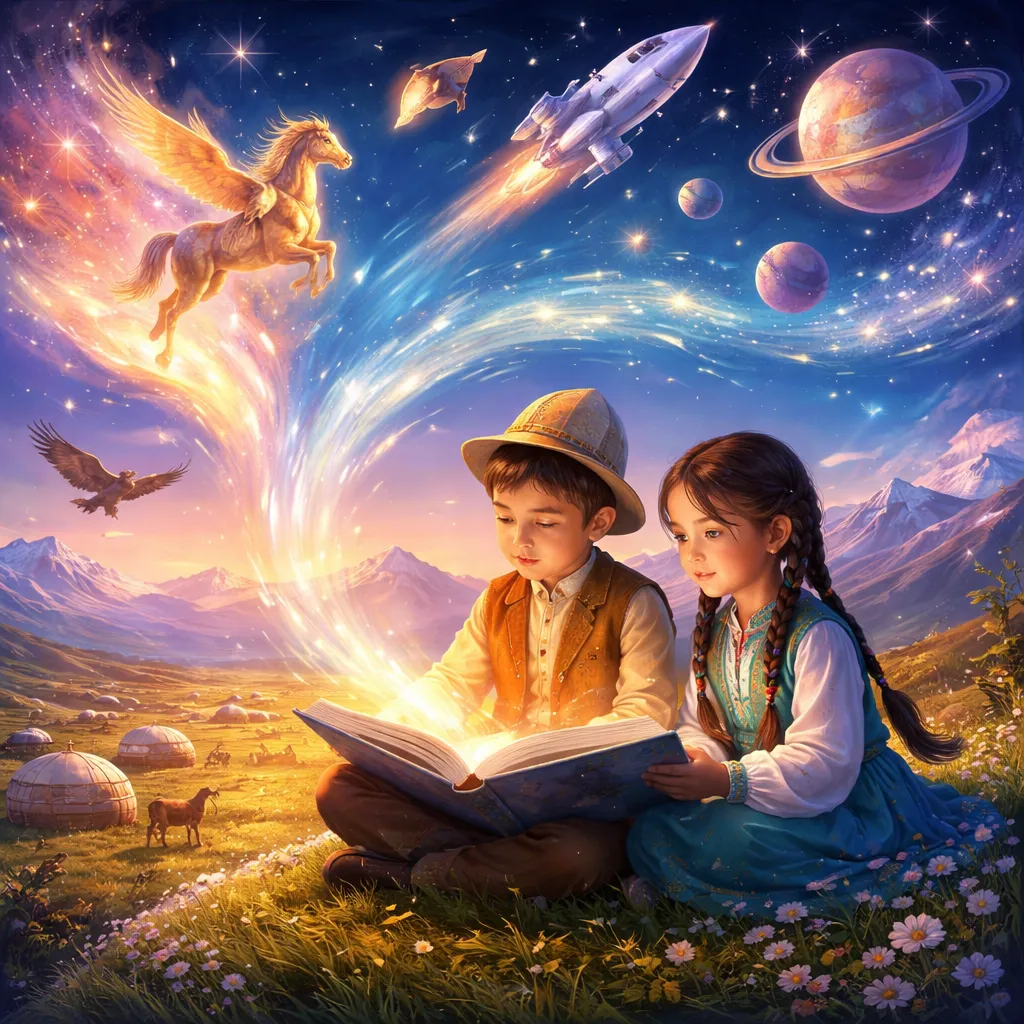

A Friendly Hello and First Impressions
Salem! (SAH-lem). This is a warm "Hello" in Kazakh. Rakhmet! (rahkh-MET). This is a sincere "Thank you". People say it with kindness. Learning reading about Kazakhstan starts with these traditional, welcoming words.
Kazakhstan is a huge country in Central Asia. Its shape looks like a giant, flying eagle. The eagle stretches from Europe to Asia. The country is the world's largest landlocked nation. Russia, China, and Uzbekistan are its neighbors. The Caspian Sea touches its western coast. The land is a vast, open steppe. It has mountains, deserts, and lakes. It is a country of endless skies and great spaces.
People call it the "Land of the Great Steppe". The steppe is a sea of grass. Another nickname is the "Land of the Wanderers". The Kazakh people were nomadic herders. Are you ready to ride across the wide-open plains?
Deep Dive into Culture and Stories
Echoes of History
Great leaders united the nomadic tribes. They formed the Kazakh Khanate in 1465. The khans were wise and brave. They led the people on the steppe. They created a code of laws. It was called the "Zhety Zhargy". This code helped people live together. Their story is a key part of learning reading about Kazakhstan. It is a story of unity and tradition.
A modern founding father is Nursultan Nazarbayev. He was the first president. He led Kazakhstan to independence in 1991. He ruled for nearly 30 years. He helped build the modern nation. The capital is named Nur-Sultan in his honor.
A World of Apples and Space
Kazakhstan gives the world a simple, delicious gift. It is the apple. The wild apple trees of Kazakhstan are the ancestors of all modern apples. The country also gives the world a door to space. The Baikonur Cosmodrome is here. It is the world's first spaceport. Yuri Gagarin launched from here. This mix of nature and science is a key part of learning reading about Kazakhstan.
A Land of Plains and Peaks
Kazakhstan's geography is diverse. The west has the Caspian Sea shore. The center is the huge Kazakh Steppe. The east and southeast have high mountains. The landscape changes from flat grasslands to snowy peaks.
The climate is extreme continental. Summers are hot. Winters are very cold. The environment shapes life. On the steppe, people herd sheep, horses, and camels. They grow wheat in the north. Houses in villages are often one-story. Modern cities have tall buildings. The main exports are oil, metals, and wheat.
A special animal is the snow leopard. It lives in the mountains. It is rare and beautiful. The national animal is the golden eagle. It is used in traditional hunting. The national bird is the steppe eagle. The national flower is the lily. The national tree is the apple tree.
Landmarks of Rockets and Mountains
Visit the Baikonur Cosmodrome. It is a city for space travel. It is where rockets launch into space. You can see the launch pads. You can visit museums about space. A fun story says the first dog in space, Laika, left from here. The site is exciting and futuristic.
See the Mausoleum of Khoja Ahmed Yasawi. It is in the city of Turkistan. It is a large, unfinished mausoleum. It was built in the 14th century. It is made of bricks. It is a UNESCO World Heritage site. A legend says the architect's hands were cut. This was to prevent a copy. The building is a masterpiece of Timurid architecture.
Another wonder is the Singing Dune. It is in the Altyn-Emel National Park. The dune is 150 meters high. When the wind blows, it makes a humming sound. It sounds like music. A local story says the dune is a sleeping giant. The giant snores. The dune is mysterious and beautiful.
Festivals of Spring and New Year
The biggest festival is Nauryz. It is the Persian New Year. It celebrates the spring equinox, March 21-22. It is a celebration of renewal. People clean their homes. They wear traditional clothes. They set a festive table called the "Dastarkhan".
A special dish is "Nauryz Kozhe". It is a soup made from seven ingredients. The ingredients symbolize luck, health, and wealth. There are games, music, and dancing. People visit each other. The festival is about hope, friendship, and new beginnings.
Another important day is Independence Day. It is on December 16th. It marks freedom from the Soviet Union in 1991. There are concerts and fireworks. The national flag is everywhere. The colors are blue and yellow. A sun and a steppe eagle are on it. The day is about national pride and unity.
Food and Flavors
The national dish is Beshbarmak. It means "five fingers". It is boiled meat (usually horse or lamb) with noodles. It is served on a large platter. People often eat it with their hands. Families eat it for big celebrations. It is hearty, savory, and delicious. It is the taste of tradition.
You must try Baursak. They are small, fried dough balls. They are soft and slightly sweet. People eat them with tea or as a snack. They are served at holidays. A good baursak is golden, fluffy, and delicious. It is the ultimate comfort food.
A Culture of Horses and Hospitality
Horse culture is central to Kazakh life. The national sport is "Kokpar". It is like polo with a goat carcass. It is fast and exciting. People also drink fermented mare's milk. It is called "kumys". This love for horses is a key part of learning reading about Kazakhstan. It connects to the nomadic past.
Hospitality is very important. Guests are a gift. A host will always offer food and drink. The traditional home is the yurt. It is a round, portable tent. It is made of felt and wood. It is warm in winter and cool in summer.
Tips for Young Explorers
Cultural Manners Matter
Kazakh people are very hospitable. Greetings are important. A handshake is common. Men may shake with both hands. Say "Salem" with a smile. Ask about the person's health and family. This is polite. Do not rush the greeting.
Elders are highly respected. Always greet the oldest person first. Listen when they speak. Stand up when an elder enters. Offer them your seat. This is good manners.
When visiting a home, bring a small gift. Sweets, fruit, or a souvenir are nice. Take off your shoes at the door. You will be offered tea and food. Try a little of everything. This makes the host happy.
A Note on Staying Safe
Kazakhstan is generally a safe country. But be careful in big cities at night. Watch for pickpockets in markets. Do not walk alone in dark, quiet areas. Use common sense. In the wilderness, be prepared. The weather can change fast. Tell someone your travel plan. This keeps you safe.
The sun in summer is strong. Use sunscreen. Wear a hat. The steppe has no shade. Drink lots of bottled water. Dehydration is a risk. In winter, dress very warmly. Temperatures can drop below -30~C.
Be careful with street food. Eat at busy places. The food should be cooked fresh. Try boiled or fried foods. They are usually safe.
A Tasty Stop
Look for "Kurt" in a market. It is a dried cheese snack. It is made from fermented milk. It is salty and chewy. It is white and ball-shaped. Eat it as a snack. The kurt is tangy, salty, and energizing. It is a traditional nomad food.
Healthy and Happy Travels
Drink bottled water. This is the most important rule. Tap water is not safe to drink. Avoid ice in drinks. Brush your teeth with bottled water. This keeps your stomach healthy.
Wash your hands often. Carry hand sanitizer. This helps prevent getting sick. Be careful with dairy products. Kumys is safe if from a clean source.
Wear comfortable, sturdy shoes. You will walk on uneven ground. The steppe and mountains need good footwear. This protects your feet and helps you explore.
Your Invitation to Explore
Start your journey with music. Listen to the sound of the dombra. It is a two-stringed instrument. Its music tells stories of the steppe. Or, look at pictures of the golden eagle. See its powerful wings. This is a wonderful way of learning reading about Kazakhstan.
Visit a museum with nomadic artifacts. Look for a yurt or traditional carpets. See the beautiful patterns. Imagine life on the move. You can also try drawing a steppe landscape. Use wide, horizontal lines. Show the big sky and open land.
The world is a big, open book. Each country is a different chapter. Kazakhstan's chapter is about open spaces, horse riders, and space dreams. Open it with curiosity. Read about its history, hospitality, and huge skies. Your curiosity is your guide.
Kazakh families gather around a dastarkhan for Nauryz. Friends play the dombra and sing. Children learn to ride horses early. We all know these feelings. We love celebrating new seasons. We enjoy music with friends. We learn skills from our family. Learning about Kazakhstan shows us this. Our global family shares the same joys of community and tradition. Keep exploring, one page, one country, at a time. Your adventure has just begun.