
A Friendly Hello and First Impressions
Bariza! (bah-REE-zah). This is a warm "Hello" in Comorian. Marahaba! (mah-rah-HAH-bah). This is a polite "Thank you". People say it with a smile. Learning reading about Comoros starts with these gentle, musical words.
The Comoros is an island nation. It sits in the Indian Ocean. Imagine a small chain of jewels. The jewels are off the east coast of Africa. The country is in Africa. It is between Mozambique and Madagascar. The four main islands are Ngazidja, Mwali, Nzwani, and Maore. But Maore is controlled by France. The country is a small archipelago.
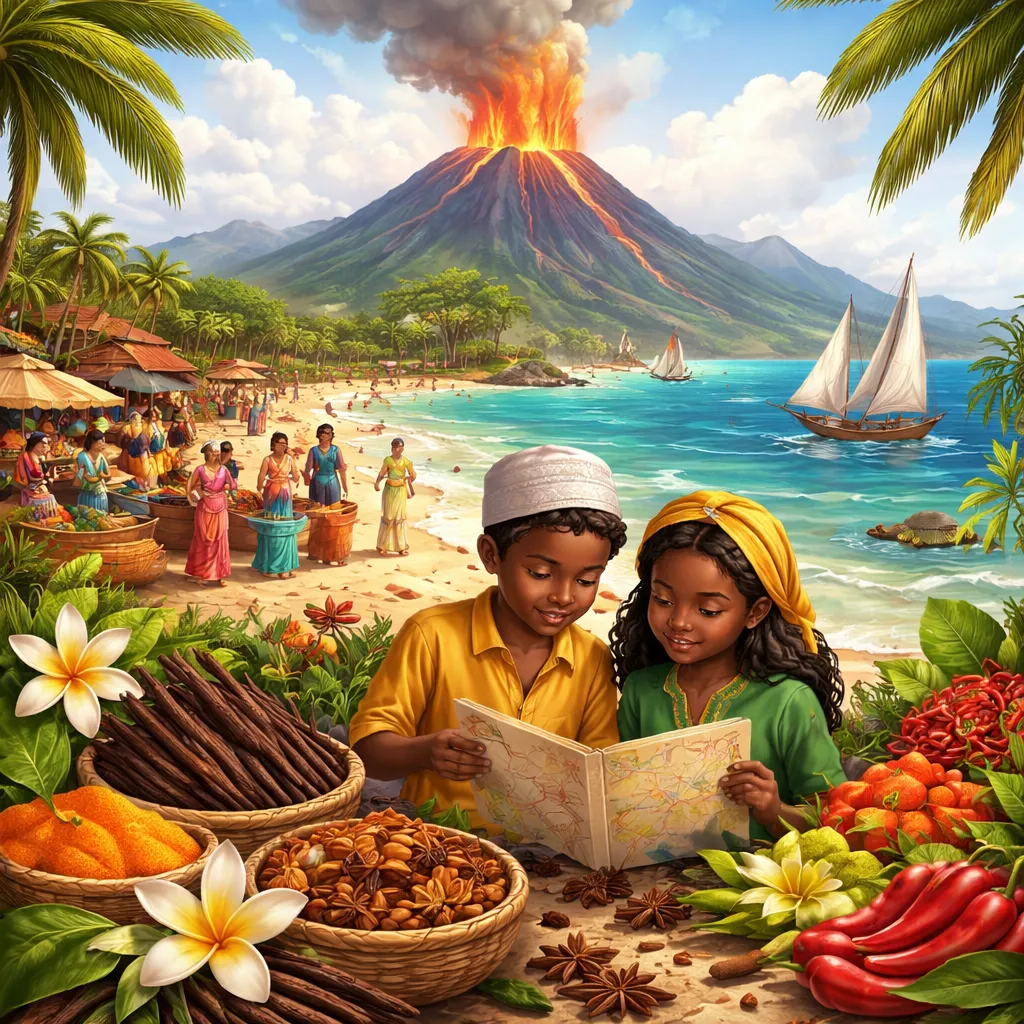
People call it the "Perfume Isles". The islands grow plants for perfume. Ylang-ylang, jasmine, and cloves grow here. The air smells sweet. Another name is the "Land of the Moon". The name "Comoros" might come from an Arabic word. That word means "moon". The islands look like a crescent moon. Are you ready to follow the sweet scent?
Deep Dive into Culture and Stories
Echoes of History
Long ago, the islands had many sultans. They were independent rulers. The sultanates were rich from trade. They traded in spices and slaves. A famous sultan was Said Ali bin Said Omar. He ruled in the 19th century. He was a strong leader. He fought against French colonization. His story is a key part of learning reading about Comoros. It is a story of resistance.
The islands became a French colony. They gained independence in 1975. The country has faced political problems. It is working towards stability. The people are proud of their culture. They work hard for peace.
A Living Fossil
The Comoros gives the world a living fossil. It is the coelacanth. This is a rare fish. Scientists thought it was extinct. They found it alive near Comoros in 1938. The fish has fleshy fins. They look like legs. It is a prehistoric creature. It shows us life from millions of years ago. This fish is a gift of ancient life.
A Land of Fire and Forest
The Comoros islands are volcanic. The islands are the tips of volcanoes. Mount Karthala is an active volcano. It is on Ngazidja island. It is the highest point. The islands have lush, green forests. The coasts have beautiful beaches. The water is clear and blue.
The climate is tropical. It is hot and humid. There is a rainy season and a dry season. The environment is fragile. People grow ylang-ylang, vanilla, and cloves. These are cash crops. They also grow bananas and cassava. Houses are often made of coral stone. They have thatched roofs. The roofs are made from palm leaves.
A special animal is the Livingstone's fruit bat. It is a large bat. It has a fox-like face. It is important for spreading seeds. The national bird is the Comoros blue pigeon. It is a beautiful, colorful bird. The ylang-ylang tree is very important. Its flowers make a sweet oil. The oil is used in perfumes.
Landmarks of Faith and Fire
Visit Mount Karthala. It is an active shield volcano. It is 2,361 meters high. The crater is huge. It is 3 by 4 kilometers wide. The volcano last erupted in 2007. You can hike to the top. The hike is tough but beautiful. A legend says a giant lives in the crater. He guards a treasure. The volcano is powerful and majestic.
See the Old Friday Mosque in Moroni. It is in the capital. It was built in 1427. It is one of the oldest mosques in Comoros. The mosque is white with a square minaret. It is simple and beautiful. It is near the sea. The call to prayer echoes over the water. The mosque is a symbol of faith.
Another wonder is the Mitsamiouli Beach. It is on Ngazidja. The sand is black from volcanic rock. The water is bright blue. The contrast is stunning. You can see green turtles in the water. The beach is a peaceful, natural place.
Festivals of Faith and Culture
The most important festival is Eid al-Fitr. It marks the end of Ramadan. Ramadan is a month of fasting. People do not eat from sunrise to sunset. The festival is a time of joy. Everyone wears new clothes. They go to the mosque for prayer. Then they visit family and friends.
Children receive gifts and money. Special foods are prepared. People eat "mataba". This is a dish with cassava leaves. They also eat "mkatra foutra". This is a sweet fried bread. The festival is about community and gratitude.
Another important day is Independence Day. It is on July 6th. It marks freedom from France in 1975. There is a parade in Moroni. The national flag is everywhere. The colors are yellow, white, red, blue, and green. Four stars represent the four main islands. The day is full of national pride.
Food and Flavors
The national dish is Langouste 角 la Vanille. This is lobster in vanilla sauce. The lobster is from the sea. The vanilla is from the island. The sauce is creamy and fragrant. It is a special meal for guests. It tastes like the sea and the garden together. It is a taste of the islands.
You must try Mkatra Foutra. It is a popular street food. It is a fried bread. It is made from rice flour and coconut milk. It is sweet and a little chewy. People eat it for breakfast or a snack. A hot mkatra foutra is crispy and soft. It tastes like a sweet, coconutty treat.
A Culture of Music and Spice
Music is very important in Comoros. The national dance is the "twarab". It is a mix of Swahili, Arabic, and African rhythms. Drums and string instruments are used. People dance at weddings and festivals. The music is rhythmic and joyful. This love for music is a key part of learning reading about Comoros.
The islands are a leader in organic farming. Many farmers grow spices without chemicals. This is better for the environment. It also makes the spices purer. The ylang-ylang oil is very high quality. It is used in the best perfumes. This care for nature is a modern lesson.
Tips for Young Explorers
Cultural Manners Matter
Comoros is a Muslim country. Dress modestly. Women should cover their shoulders and knees. Men should avoid very short shorts. This shows respect. Swimwear is for the beach only.
Greetings are important. Say "Bariza" with a smile. A handshake is common. Men should not shake hands with women. Wait for the woman to offer her hand first. A nod and smile are fine.
Use your right hand for everything. Give gifts, eat food, and shake hands with your right hand. The left hand is considered unclean. This rule is very important.
A Note on Staying Safe
Comoros is generally safe. But be careful in cities at night. Do not walk alone. Keep your belongings close. Do not show expensive items. Be aware of your surroundings.
The ocean can be strong. Only swim where it is safe. Obey warning flags. Never swim alone. Always have an adult watching you. Be careful of sea urchins on the beach.
A Tasty Stop
Look for "bouchon" on the street. It is a delicious dumpling. The filling is often fish or meat. It is steamed in a banana leaf. It is served with a spicy tomato sauce. Eat it hot. The dumpling is soft and savory. It is a popular snack.
Healthy and Happy Travels
Drink only bottled or boiled water. This is the most important rule. Do not drink tap water. Avoid ice in drinks. Brush your teeth with bottled water. This keeps your stomach happy.
The sun is very strong. Wear a hat and use sunscreen. The tropical sun can burn you quickly. Reapply sunscreen after swimming. Protect your skin.
Mosquitoes can be a nuisance. Use insect repellent. Wear long sleeves in the evening. Sleep under a mosquito net. This helps prevent bites.
Your Invitation to Explore
Start your journey with scent. Find ylang-ylang or clove oil. Smell the sweet, spicy aromas. Imagine the green hills of Comoros. Or, listen to Comorian twarab music. Feel the rhythm. Try to clap along. This is a wonderful way of learning reading about Comoros.
Visit a spice market in your city. Look for vanilla beans or cloves. Smell them. Imagine the volcanic soil they grew in. You can also try drawing a volcano. Make it tall and majestic, with green trees at the base.
The world is a big, wonderful book. Each country is a different chapter. Comoros' chapter is about sweet scents, volcanic fires, and ancient fish. Open it with curiosity. Read about its sultans, spices, and serene beaches. Your curiosity is your guide.
Comorian families gather for Eid dinner. Friends play music on the beach. Children help harvest ylang-ylang flowers. We all know these feelings. We love celebrating with family. We enjoy music and nature. We help our communities. Learning about Comoros shows us this. Our global family shares the same simple joys. Keep exploring, one page, one country, at a time. Your adventure has just begun.