
A Friendly Hello and First Impressions
Salamatsyzby! (sah-lah-maht-SUZ-buh). This is a respectful "Hello" in Kyrgyz. Rakhmat! (rahkh-MAHT). This is a warm "Thank you". People say it with kindness. Learning reading about Kyrgyzstan starts with these traditional, hearty words.
Kyrgyzstan is a mountainous country in Central Asia. Its shape looks like a crumpled piece of paper. The paper is full of high, jagged peaks. The country is landlocked in Asia. China, Kazakhstan, and Uzbekistan are its neighbors. The land is 90% mountains. It is a country of incredible blue lakes and green valleys. People call it the "Switzerland of Central Asia".
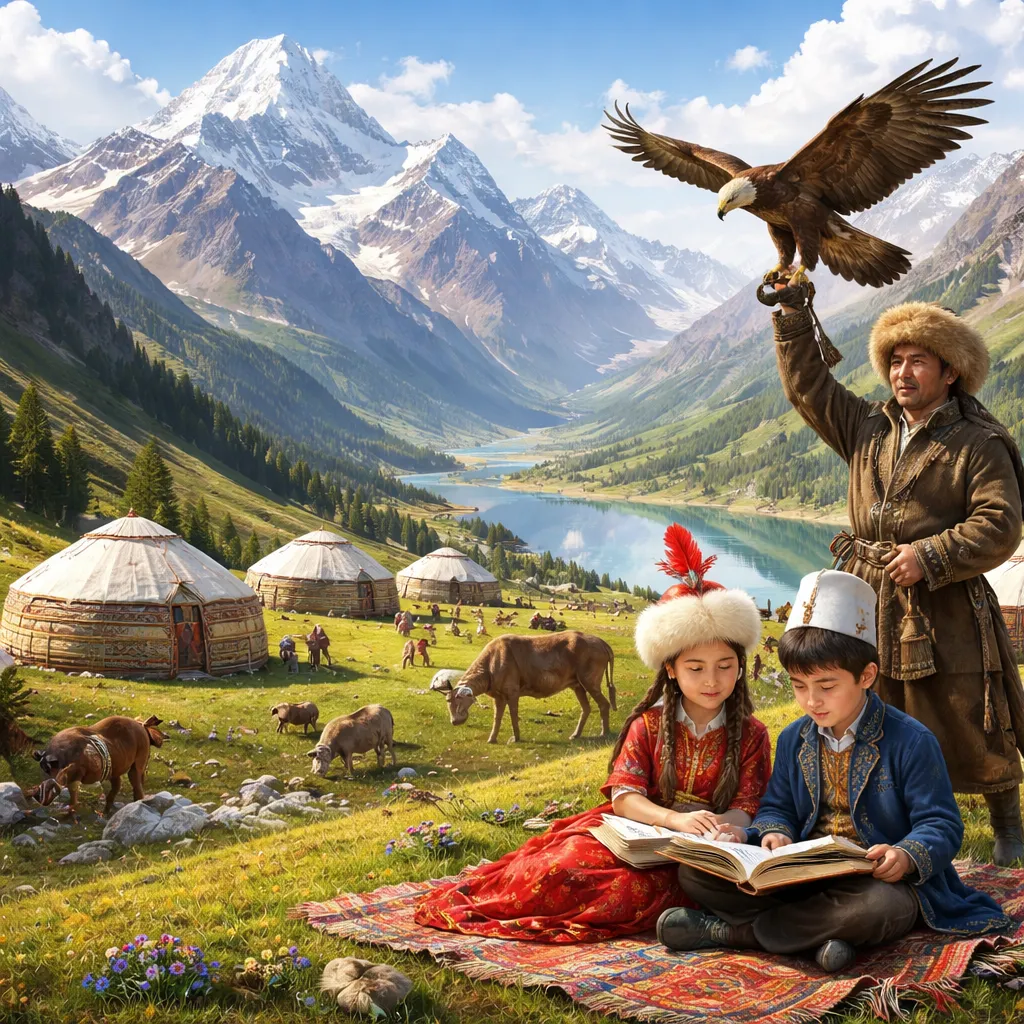
Another nickname is the "Land of the Celestial Mountains". The Tian Shan mountains are majestic. They touch the sky. The Kyrgyz people are traditional nomads. Are you ready to sleep in a felt tent under a blanket of stars?
Deep Dive into Culture and Stories
Echoes of History
A great epic hero is in the heart of the people. His name is Manas. The "Epic of Manas" is twenty times longer than Homer's Odyssey. It tells of a warrior named Manas. He united the Kyrgyz tribes. He fought for freedom and justice. Storytellers, called "manaschi", can recite it for days. His story is a key part of learning reading about Kyrgyzstan. It is a story of unity and oral history.
Another important time was the Silk Road era. Traders passed through Kyrgyzstan. They carried silk, spices, and ideas. The land was a crossroads of cultures. This history of travel and exchange is still felt today.
A World of Felt and Falconry
Kyrgyzstan gives the world beautiful handicrafts. Felt making is a special art. Women make intricate rugs called "shyrdaks". They tell stories with colorful patterns. The country also keeps the ancient tradition of eagle hunting alive. Hunters use golden eagles to hunt foxes. This skill is amazing to see. These traditions are a key part of learning reading about Kyrgyzstan. They show a deep connection to nature and craft.
A Land of Peaks and Lakes
Kyrgyzstan's geography is all about height. The Tian Shan mountains cover the country. Snowy peaks are everywhere. There are over 2,000 lakes. Issyk-Kul is the second largest mountain lake in the world. The landscape is dramatic and wild.
The climate is continental. Summers are warm in the valleys. Winters are very cold. The environment shapes life. People are herders. They raise horses, sheep, and yaks. They live in portable homes called yurts. In towns, houses are often one-story. The main exports are gold, wool, and meat.
A special animal is the snow leopard. It lives in the high mountains. It is rare and beautiful. The national animal is the Marco Polo sheep. It has huge, curled horns. The national bird is the golden eagle. The national flower is the tulip. The national tree is the birch.
Landmarks of Water and Stone
Visit Issyk-Kul Lake. It means "warm lake". It never freezes, even in winter. The water is clear and blue. Mountains surround it. A fun legend says a sunken city lies beneath. The city has ancient treasures. The lake is a place for swimming and relaxing. It is breathtaking.
See the Tash Rabat Caravanserai. It is an ancient stone building. It sits in a remote mountain valley. It was a hotel for Silk Road travelers 500 years ago. A fun story says it was a secret monastery. The building is mysterious and peaceful.
Another wonder is the Ala-Archa Canyon. It is a national park near the capital. It has sharp peaks and fast rivers. You can hike and see glaciers. The air is fresh and cold. The park is a paradise for adventurers.
Festivals of Horses and Culture
The biggest cultural event is the World Nomad Games. It happens every two years. Athletes from many countries come. They compete in traditional sports. The most famous is "Kok-boru". It is like polo with a dead goat. It is fast and wild.
There is also eagle hunting and horse races. People live in yurts and wear traditional clothes. The games celebrate nomadic heritage. The feeling is exciting and proud.
Another important day is Independence Day. It is on August 31st. It marks freedom from the Soviet Union in 1991. There are concerts and parades. The national flag is everywhere. The colors are red and yellow. A sun with 40 rays is in the center. The day is about national pride.
Food and Flavors
The national dish is Beshbarmak. It means "five fingers". It is boiled meat (usually horse or lamb) with noodles. It is served on a large platter. People eat it with their hands. Families eat it for big celebrations. It is hearty, savory, and delicious. It is the ultimate dish of hospitality.
You must try Manti. They are large steamed dumplings. The filling is spiced meat and onions. People eat them with their hands. They are often served with sour cream. A good manti is juicy and flavorful. It is a favorite meal.
A Culture of Horses and Hospitality
Horses are central to Kyrgyz life. People learn to ride as children. The national drink is "kumys". It is fermented mare's milk. It is slightly sour and fizzy. This love for horses is a key part of learning reading about Kyrgyzstan. It connects to the nomadic soul.
Hospitality is sacred. A guest is a gift from God. A host will always offer bread, tea, and the best food. The traditional home is the yurt. It is a round, portable tent. It is made of felt and wood. It is warm in winter and cool in summer.
Tips for Young Explorers
Cultural Manners Matter
Kyrgyz people are very hospitable. Greetings are important. A handshake is common. Men may shake with both hands. Say "Salamatsyzby" with a smile. Ask about the person's health and family. This is polite. Do not rush the greeting.
Elders are highly respected. Always greet the oldest person first. Listen when they speak. Stand up when an elder enters. Offer them your seat. This is good manners.
When visiting a yurt or home, remove your shoes. Step in with your right foot first. This is for good luck. Sit cross-legged on the floor or on cushions. Do not point the soles of your feet at anyone.
A Note on Staying Safe
Kyrgyzstan is generally a safe country. But be careful in big cities at night. Watch for pickpockets in markets. Do not walk alone in dark, quiet areas. Use common sense. Political protests can happen. Avoid large gatherings.
The mountains are beautiful but can be dangerous. Only hike with a certified guide. The weather changes fast. Tell someone your travel plan. Altitude sickness is a risk. Go up slowly. Drink lots of water. This keeps you safe.
A Tasty Stop
Look for "Samsa" from a street oven. It is a baked pastry. It is filled with meat and onions. It is often triangle-shaped. Eat it hot. The samsa is flaky, savory, and delicious. It is a popular snack.
Healthy and Happy Travels
Drink only bottled or boiled water. This is the most important rule. Do not drink tap water. Avoid ice in drinks. Brush your teeth with bottled water. This keeps your stomach healthy.
The sun at high altitude is very strong. Use a high SPF sunscreen. Wear a hat and sunglasses. The sun can burn you quickly. Drink lots of water to stay hydrated.
Wear comfortable, sturdy shoes. The mountain trails are rocky. The streets in towns can be uneven. Good shoes protect your feet and help you explore.
Your Invitation to Explore
Start your journey with a story. Find a children's version of the Epic of Manas. Read about the hero's adventures. Or, listen to the music of the "komuz". It is a three-stringed instrument. Its music sounds like the mountains. This is a wonderful way of learning reading about Kyrgyzstan.
Visit a museum with nomadic artifacts. Look for a yurt or a shyrdak rug. See the beautiful patterns. Imagine life on the move. You can also try making a simple felt ball from wool. Feel the texture. Imagine the hands of a craftswoman.
The world is a big, open book. Each country is a different chapter. Kyrgyzstan's chapter is about roaming horsemen, epic poetry, and sky-high lakes. Open it with curiosity. Read about its history, hospitality, and heroic tales. Your curiosity is your guide.
Kyrgyz families share a platter of beshbarmak. Friends race horses on the open steppe. Children listen to the epic of Manas from a grandparent. We all know these feelings. We love sharing feasts. We enjoy sports and games. We learn from stories. Learning about Kyrgyzstan shows us this. Our global family shares the same joys of community and tradition. Keep exploring, one page, one country, at a time. Your adventure has just begun.