
Opening Introduction
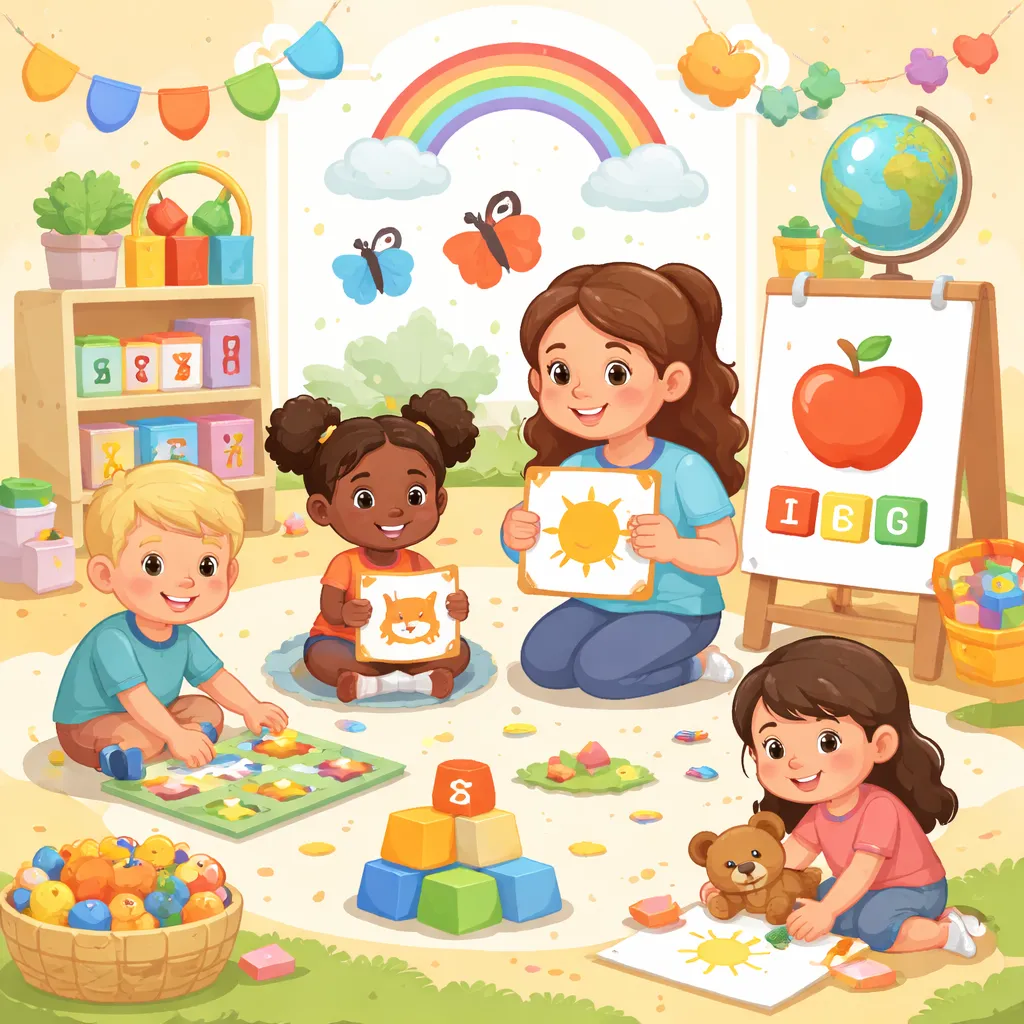
Leo is in first grade. He walks by the kindergarten classroom. He hears singing. He sees children playing with big letters. He remembers his time in kindergarten. It was fun. But what were they learning? Was it just play? His teacher, Ms. Reed, sees him looking. "Hello, Leo," she says. "Are you curious about kindergarten?" Leo nods. "It seems like so much fun. What is the plan for all that fun?"
Ms. Reed smiles. "There is a big plan behind the fun. It is called a curriculum. It is a map for learning. For kindergarten, the map is all about building a strong base. Let me tell you about the kindergarten English curriculum overview. It shows how we help little learners start their English adventure." Leo is interested. A map for the little kids. Let's explore it together.
Core Knowledge Explanation
What is kindergarten? Kindergarten is a special class for young children. They are often five or six years old. It is a bridge between home and school. It is a place to learn how to learn. The word 'kindergarten' is a German word. It means "children's garden". It is a garden where children grow.
What is a curriculum? A curriculum is a plan for learning. It is a list of things to teach. It is a guide for teachers. An overview is a look at the whole plan. So, a kindergarten English curriculum overview is a look at the whole plan for teaching English to kindergarten children. It tells us the main goals. It tells us what children should know by the end of the year.
The main goal is to fall in love with language. We want children to love words. We want them to love stories. We want them to feel confident talking and listening. The curriculum is built around play. Because play is how young children learn best.
Let's look at the main parts of the kindergarten English curriculum overview. The first big part is listening and speaking. Kindergarteners learn to listen carefully. They listen to stories. They listen to instructions. They learn to speak clearly. They learn to share their ideas. They learn to ask questions. They learn to have conversations with friends. This is called oral language. Oral means speaking and listening.
The second big part is phonemic awareness. That is a big word. It means hearing the small sounds in words. It is not reading letters yet. It is about sounds. We play with rhymes. "Cat, hat, mat." We clap the syllables in words. "But-ter-fly." We hear the first sound in a word. "Sun starts with /s/." This skill is very important. It is the foundation for reading.
The third big part is phonics and letter knowledge. Phonics is the link between letters and sounds. Kindergarteners learn the alphabet. They learn the letter names. They learn the sounds each letter makes. They learn to write the letters. They start with capital letters. They learn to write their name. They learn that letters form words. "C-A-T" spells "cat".
The fourth big part is print awareness. This means understanding how books work. We read from left to right. We turn pages one by one. Words are separated by spaces. There are capital letters and periods. We hold a book the right way. These seem simple. But they are important for reading.
The fifth big part is vocabulary. Kindergarteners learn new words every day. They learn words for feelings. They learn words for objects. They learn action words. They learn describing words. They learn these words through stories, songs, and play.
The sixth big part is comprehension. Comprehension means understanding. Kindergarteners learn to understand stories. They can tell you what happened in a story. They can guess what will happen next. They can connect the story to their own life.
This is the kindergarten English curriculum overview. It is a full, rich plan. It is not about rushing. It is about building a strong, happy base. Every game, every song, every story has a purpose. The purpose is to grow a reader, a writer, a thinker, and a speaker.
Fun Interactive Learning
You are a big kid now. You can be a kindergarten helper. Let's do some activities from the kindergarten English curriculum overview. First, let's play a sound game. Get a box of small toys. Take out a toy. Say its name. "Dog." Now, say the first sound. "/d/". Now, find another toy that starts with the same sound. "Duck!" /d/ for duck. This game teaches phonemic awareness.
Second, let's do a letter hunt. Look around your room. Find things that start with the letter 'B'. Book, ball, bed, box. Say the word and the sound. "/b/ for book." This teaches letter sounds.
Third, let's read a picture book like a kindergarten teacher. Sit with a younger sibling or a friend. Read a simple book. Point to each word as you read. Ask questions. "What do you think will happen next?" "How is the character feeling?" This teaches print awareness and comprehension.
Fourth, let's sing a rhyming song. Sing "Down by the Bay". Make up silly rhymes. "Did you ever see a cat, wearing a hat?" This is a fun way to play with sounds.
You can also play "I Spy" with colors and letters. "I spy something that is red and starts with 'A'." "Apple!" These games make learning an adventure. You are using the kindergarten English curriculum overview to have fun and teach at the same time.
Expanded Learning
Kindergarten is different around the world. In some countries, children start formal reading earlier. In other countries, they start later. But the idea of a gentle start is the same. The kindergarten English curriculum overview in many places focuses on social skills and love for learning. It is about becoming a community member.
Did you know that the idea of kindergarten is over 200 years old? A man named Friedrich Froebel started the first kindergarten. He believed children learn through play, songs, and nature. Your kindergarten teacher uses his ideas every day. They create a garden for your mind to grow.
Let's sing a kindergarten song. This song is about the curriculum. Sing it to the tune of "The Farmer in the Dell".
We're learning how to read, we're learning how to read! Hi-ho the derry-o, we're learning how to read! We listen and we speak, we listen and we speak! Hi-ho the derry-o, we listen and we speak! We know our ABCs, we know our ABCs! Hi-ho the derry-o, we know our ABCs! We love our story time, we love our story time! Hi-ho the derry-o, we love our story time!
Singing about learning makes it even more special.
What You Will Learn
You are learning about how education works. You are learning new words: kindergarten, curriculum, overview, phonemic awareness, phonics, alphabet, vocabulary, comprehension, oral language, print awareness. You are learning about teaching and planning.
You are learning useful sentences. You can say, "The kindergarten curriculum includes phonics." You can ask, "What is phonemic awareness?" You can explain, "Kindergarteners learn through play." You are using English to discuss education. This is advanced and smart.
You are building wonderful skills. You are building empathy. You understand how younger children learn. You are building leadership. You can help and guide. You are building analytical skills. You see the plan behind the play. You are building communication skills. You can explain complex ideas simply.
You are forming a reflective habit. The habit of thinking about how you learn. You look back at your own kindergarten time. You see how far you have come. This habit makes you appreciate your own journey and the journeys of others. Understanding a kindergarten English curriculum overview gives you a window into the careful, loving work of teachers.
Using What You Learned in Life
Use this knowledge to be a great helper. At home, you can read to a younger child. Use the methods you learned. Point to words. Ask questions. You are practicing the kindergarten curriculum. You are making a difference.
At school, you can volunteer in a kindergarten classroom. Tell your teacher you know about the curriculum. You can help with letter games or reading circles. You will be a star.
When you are doing your own homework, think about the base you built in kindergarten. The letter sounds you learned help you read now. The listening skills help you follow directions. You are standing on a strong foundation. Knowing the kindergarten English curriculum overview helps you see that every step in learning is important.
You can also tell your parents about what you learned. Explain to them what kindergarteners are really learning. You will amaze them with your knowledge. You are becoming an educational expert.
Closing Encouragement
You have done an incredible thing today. You are an explorer of education. You are a compassionate helper. You are a thoughtful learner. I am so proud of you. Learning about the kindergarten curriculum shows you care about how people learn.
Keep this knowledge in your heart. Use it to be kind and helpful to younger learners. Share your love of reading and words. You are a positive force in the world.
Remember, every big reader started with a single letter. Every great speaker started with a single word. The kindergarten English curriculum overview is the map for that beginning. You have traveled far on your own map. Keep going, keep growing, keep being amazing. Great work, my wonderful learning ambassador.