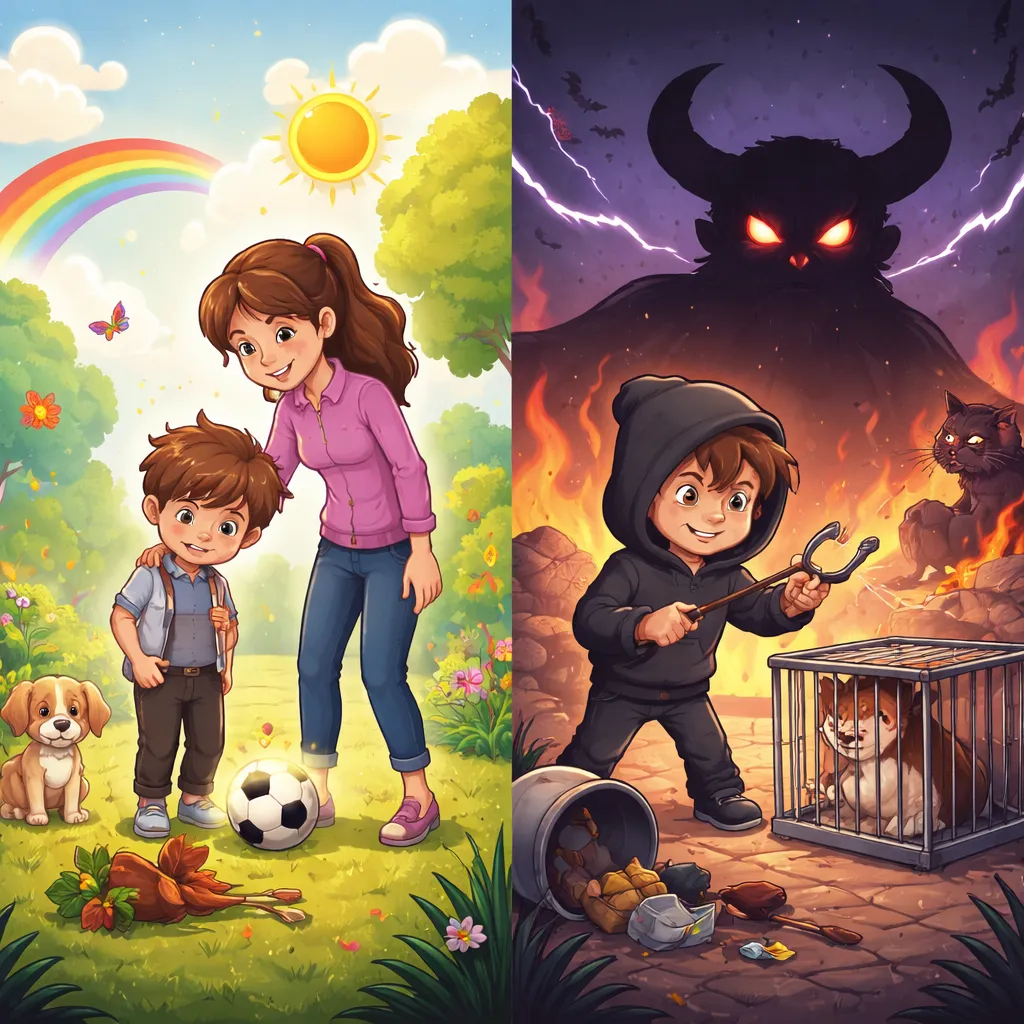

Bad and Evil: Are They Really the Same?
When children learn English, they often come across words that seem similar but are used in different ways. Bad and evil are two such words. Both describe negative qualities, but their meanings and usage can be quite distinct. Understanding the difference between these two words can help children express themselves more accurately, whether they’re talking about behavior, feelings, or ideas.
This article will explore the differences between bad and evil, offering insights into their meanings, usage, and how parents can help children understand them better.
Are Similar Words Really Interchangeable?
At first glance, bad and evil may seem interchangeable because they both describe something harmful or undesirable. However, these words are not always used in the same way, and using them correctly depends on the context.
Bad is more general and can describe anything that is unpleasant, harmful, or of low quality. It’s a broad word that can refer to a wide range of negative things, from a bad day to bad behavior. Evil, on the other hand, is much stronger and refers to moral wrongdoing or something that causes extreme harm. It is often used to describe actions or characters that are intentionally malicious or destructive.
Although both words are negative, their intensity and the context in which they’re used are different. Let’s take a deeper look at how they differ.
Set 1: Bad vs Evil — Which One Is More Common?
In everyday conversation, bad is used much more frequently than evil. It can describe anything unpleasant or harmful, from a bad grade to bad weather. Bad is used in casual conversations and applies to a wide variety of situations.
For example:
“I had a bad day.” “That’s a bad idea.” “She made a bad choice.”
On the other hand, evil is a much stronger word and is often reserved for more extreme situations. It is not something used lightly in daily conversation. It typically refers to deeply harmful or malicious acts, often in a moral or philosophical sense.
For example:
“The villain in the movie was truly evil.” “That was an evil thing to do.” Set 2: Bad vs Evil — Same Meaning, Different Contexts
Both bad and evil describe negative qualities, but they are used in different contexts. Bad is more general and can be used to describe anything that is unpleasant, harmful, or subpar. It can apply to things, actions, or even people, depending on the situation.
For example:
“The weather is bad today.” (Describes a negative condition) “She made a bad decision.” (Describes a poor choice)
Evil, however, is reserved for situations or actions that are morally wrong, malicious, or deeply harmful. It often describes actions that go beyond mere mistakes or imperfections. Evil is typically used to describe intentional harm or cruelty.
For example:
“The evil sorcerer cast a dark spell.” (Refers to a villainous character) “That was an evil act of betrayal.” (Refers to a malicious or harmful action)
Thus, while both words describe negativity, bad is more general, and evil is more intense and associated with moral wrongdoing.
Set 3: Bad vs Evil — Which Word Is “Bigger” or More Emphatic?
Evil is a much stronger and more intense word than bad. It refers to something much more harmful, often with long-lasting or severe consequences. It is associated with moral corruption or wickedness. When we say something is evil, we’re usually talking about something deeply immoral, cruel, or intentionally hurtful.
For example:
“That was a bad action.” (Could mean a mistake or poor decision) “That was an evil act.” (Implies a deliberate, malicious action)
On the other hand, bad is more flexible and can refer to anything undesirable or of poor quality. It doesn’t necessarily imply deep moral wrongdoing.
For example:
“That movie was bad.” (It could simply mean it was unenjoyable or of poor quality) “His behavior was bad.” (Could refer to misbehavior or poor manners)
While bad can describe things that are unpleasant or unsatisfactory, evil suggests a higher level of harm or malice.
Set 4: Bad vs Evil — Concrete vs Abstract
Bad is used to describe concrete things, situations, or behaviors that are unpleasant, harmful, or low in quality. For example, bad can describe the weather, a food item, or even someone’s actions that aren’t morally wrong but are still negative.
For example:
“The food tastes bad.” (Describes the unpleasant taste of the food) “He’s having a bad day.” (Describes a person’s experience)
Evil, on the other hand, is more abstract and refers to actions or qualities that are morally wrong. It is often used in stories, literature, or discussions of moral philosophy to describe things that are profoundly harmful or malicious.
For example:
“He committed an evil crime.” (Describes a morally wrong action) “The evil witch cursed the kingdom.” (Refers to an abstract concept of villainy)
Thus, while bad is often used for tangible or everyday situations, evil refers to deeper, more abstract concepts related to moral wrongdoing.
Set 5: Bad vs Evil — Verb or Noun? First Understand the Role
Bad is often used as an adjective to describe things, actions, or people that are unpleasant, harmful, or of poor quality. It can also be used as a noun in expressions like “the bad in people.”
For example:
“That was a bad movie.” (Adjective) “There is some bad in everyone.” (Noun)
Evil is almost always used as an adjective or noun and describes extreme moral wrongness. When it is used as a noun, it refers to the concept or act of wickedness or harm.
For example:
“The evil sorcerer cast a spell.” (Adjective) “We must fight against evil.” (Noun)
While bad is more flexible in its usage, evil is often reserved for discussions of morality or deep harm.
Set 6: Bad vs Evil — American English vs British English
In both American and British English, bad and evil are used in similar ways. However, in American English, bad is more frequently used in casual conversation, while evil is used more in formal or philosophical discussions. In British English, the usage is similar, with evil often found in more serious contexts, such as discussing crime or moral issues.
For example, in American English:
“That was a bad decision.” “He made an evil choice.”
In British English, you might hear:
“He made a bad mistake.” “The evil actions of the criminal were shocking.”
In both cases, the core differences between bad and evil remain the same, though the frequency of usage may vary slightly based on cultural context.
Set 7: Bad vs Evil — Which Fits Formal Situations?
Evil is more appropriate for formal discussions or situations involving morality, philosophy, or significant wrongdoing. For example, evil is often used in discussions about crime, injustice, or wickedness.
For example:
“The evil of human trafficking cannot be ignored.” “That was an evil act of terrorism.”
Bad, on the other hand, is more commonly used in informal settings and can describe anything negative, from minor annoyances to larger problems.
For example:
“That’s a bad idea.” “I had a bad time at the event.”
Thus, evil tends to fit more formal, serious conversations, while bad is more suitable for casual or everyday situations.
Set 8: Bad vs Evil — Which One Is Easier for Kids to Remember?
For children, bad is easier to understand and remember. It is a word they hear frequently and can easily associate with various situations, such as bad weather, bad grades, or bad behavior.
For example:
“That was a bad day at school.” “She said something bad to me.”
Evil is a stronger, more abstract word and may be harder for younger children to grasp. It is typically used in more serious contexts, such as discussing bad characters in stories or historical events.
For example:
“The evil villain tried to take over the kingdom.” “That was an evil thing to do.”
While bad is more intuitive for children, understanding evil may require more explanation about moral choices and intentions.
Mini Exercise: Can You Spot the Differences Between These Similar Words?
Try the following short exercise to test your understanding of bad and evil.
“The ____ witch cursed the village.” a) Bad b) Evil “That was a ____ idea.” a) Bad b) Evil “He did a ____ thing.” a) Bad b) Evil “That was an ____ crime.” a) Bad b) Evil Parent Tips: How to Help Kids Learn and Remember Similar Words
To help children grasp the difference between bad and evil, parents can use stories, examples, and everyday situations. For example, reading books or watching movies with clearly defined good and evil characters can help children understand how these words are used in different contexts.
Parents can also discuss the moral implications of actions using these words, helping children connect evil to actions that are harmful and bad to things that are unpleasant but not necessarily immoral.
By understanding these words and their meanings, children can communicate more clearly and accurately, expressing themselves with greater depth and understanding.