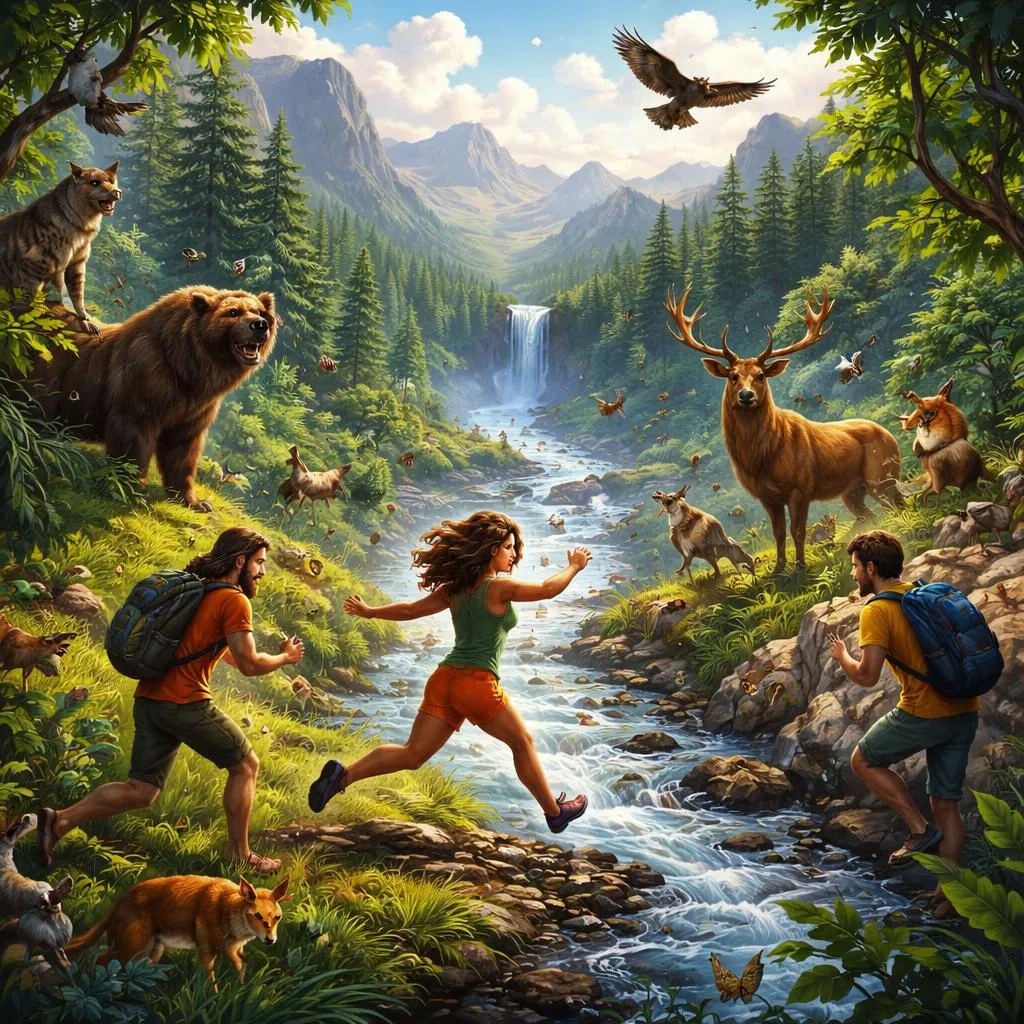

A wild animal lives freely in nature. The children ran wildly through the field. The words “wild, wildly, wildness, wilderness” all come from one family. Each word talks about untamed or natural states. But each one has a different job in a sentence. Learning this family helps children describe nature and behavior. Let us explore these four words together.
What Does “Same Word, Different Forms” Mean? One core idea can grow into many word shapes. The meaning stays the same at the heart. But the word changes its ending for a new role. For example, “wild” is an adjective. “Wildly” is an adverb. “Wildness” is a noun. “Wilderness” is a noun. Knowing these four forms helps a child talk about nature and excitement.
Personal Pronouns Change Their Form Pronouns change from “he” to “him” or “his”. Our word family changes by adding suffixes, not by changing person. Think of “wild” as the quality of being untamed. “Wildly” turns that quality into a way of doing something. “Wildness” names the quality as a thing. “Wilderness” names a place that is wild. Each form answers a simple question. What quality? Wild. How? Wildly. What is the state of being wild? Wildness. What is the wild land? Wilderness.
From Verb to Noun to Adjective to Adverb – One Family, Many Words This family has an adjective, an adverb, and two nouns. Let us start with the adjective “wild”. Adjective: The wild horse refused to be caught. “Wild” means living in nature, not tame, or very excited.
Next is the adverb “wildly”. Adverb: The crowd cheered wildly at the concert. “Wildly” means in a wild manner, excitedly, or without control.
Then the noun “wildness”. Noun: The wildness of the storm scared us. “Wildness” means the quality of being wild.
Finally the noun “wilderness”. Noun: They hiked for days in the Alaskan wilderness. “Wilderness” means a large area of land with no people or farms.
One Root, Many Roles – How Words Grow from Actions to Qualities The Old English word “wilde” meant wild. From this root, we built a family about nature. “Wild” kept the main adjective meaning. Adding -ly made “wildly” (in a wild way). Adding -ness made “wildness” (the state). Adding -erness (from Middle English) made “wilderness” (wild land). Children can see the same pattern in other families. For example, “tame, tamely, tameness, tameless (rare)”. Learning the -ness suffix helps kids describe abstract qualities.
Same Meaning, Different Jobs – Is It a Verb or a Noun? Look at each word’s job carefully. “Wild” is an adjective. Example: The river was wild after the rain.
“Wildly” is an adverb. Example: The dog barked wildly at the stranger.
“Wildness” is a noun. Example: The wildness of the jungle amazed the explorers.
“Wilderness” is a noun. Example: The wilderness area is protected from development. Each form has a clear job.
Adjectives and Adverbs – When Do We Add -ly? We add -ly to “wild” to make “wildly”. Wild + ly = wildly. No letter changes. No letters lost. The rule is simple: adjective + ly = adverb. A simple reminder: “Wild describes a thing. Wildly describes an action. Wildness is a quality. Wilderness is a place.”
Watch Out for Tricky Spelling Changes (Double Letters, y to i, and More) “Wild” has no double letters. Add -ly to make “wildly”. Wild + ly = wildly (no changes). Add -ness to make “wildness”. Wild + ness = wildness (no changes). Add -erness to make “wilderness”. Wild + erness = wilderness (no changes). Note: wilderness has no double letters either. But it is longer. A common mistake is writing “wild” as “wiled” (past tense of wile, meaning trick). Say “Wild is nature. Wiled is tricked.” Another mistake is “wildly” spelled “wildley” (with e). Say “Wildly ends with -ly.” Another mistake is “wildness” spelled “wildnes” (one s). Say “Wildness has two s’s? Wild + ness. Ness has one s? Actually -ness has one s. So wildness has one s? Let us see: W-I-L-D-N-E-S-S. That is two s’s at the end. Because -ness is spelled N-E-S-S. Yes, two s’s. So wildness has two s’s at the end.” Another mistake is “wilderness” spelled “wildernes” (one s). Say “Wilderness ends with -ness, so two s’s at the end.”
Let’s Practice – Can You Choose the Right Form? Try these sentences with your child. Read each one aloud. Pick the correct word from the family.
A ______ wolf lives in the forest. Answer: wild (adjective)
The children screamed ______ on the roller coaster. Answer: wildly (adverb)
The ______ of the ocean during the storm was frightening. Answer: wildness (noun)
We camped in the ______ for a whole week. Answer: wilderness (noun)
The animal was too ______ to approach. Answer: wild (adjective)
He laughed ______ at the silly joke. Answer: wildly (adverb)
The ______ of the prairie felt both beautiful and lonely. Answer: wildness (noun)
The ______ of Alaska is home to bears and moose. Answer: wilderness (noun)
The wind blew ______, knocking down tree branches. Answer: wildly (adverb)
The ______flower grew without any help from a gardener. Answer: wild (adjective)
After the practice, ask your child one question. Is this word an untamed description, an untamed way, an untamed quality, or an untamed place? That simple question teaches grammar through nature.
Tips for Parents – Help Your Child Learn Word Families in a Fun Way Use a zoo to teach “wild”. Say “A lion is a wild animal, even in the zoo.”
Use a party to teach “wildly”. Say “The guests danced wildly when the music started.”
Use a forest to teach “wildness”. Say “The wildness of the woods means there are no houses.”
Use a national park to teach “wilderness”. Say “We will protect the wilderness for future generations.”
Play “fill in the blank” during car rides. Say “A ______ cat will not eat from your hand.” (wild) Say “The fans cheered ______ for their team.” (wildly) Say “The ______ of the bear made us stay inside the car.” (wildness) Say “The ______ is a quiet place away from cities.” (wilderness)
Read a story about a safari, a storm, or an explorer. Ask “What wild animals appear?” Ask “How does the character react wildly?”
Turn a drawing activity into a word lesson. Draw a tiger in grass. Label “wild animal”. Draw a person jumping with arms up. Label “cheering wildly”. Draw a rough sea. Label “wildness of the ocean”. Draw trees and a river with no buildings. Label “wilderness”.
When your child makes a mistake, stay calm. If they say “The wilderness was wildness,” say “Yes. The wilderness has wildness. Wilderness is the place. Wildness is the quality.” If they say “He ran wild,” that is correct. “He ran wildly” means the same.
Write the four words on sticky notes. Put them on a wall near a nature poster or a map. Each time you go for a walk, point to “wilderness”.
Remember that wild places are precious. Use these words to build love for nature. “A wolf is wild, not mean. It is just different from a pet.” “The wilderness needs our respect and care.” Soon your child will spot wild animals. They will act wildly in play. They will sense the wildness of a storm. And they will want to protect the wilderness. That is the natural power of learning one small word family together.