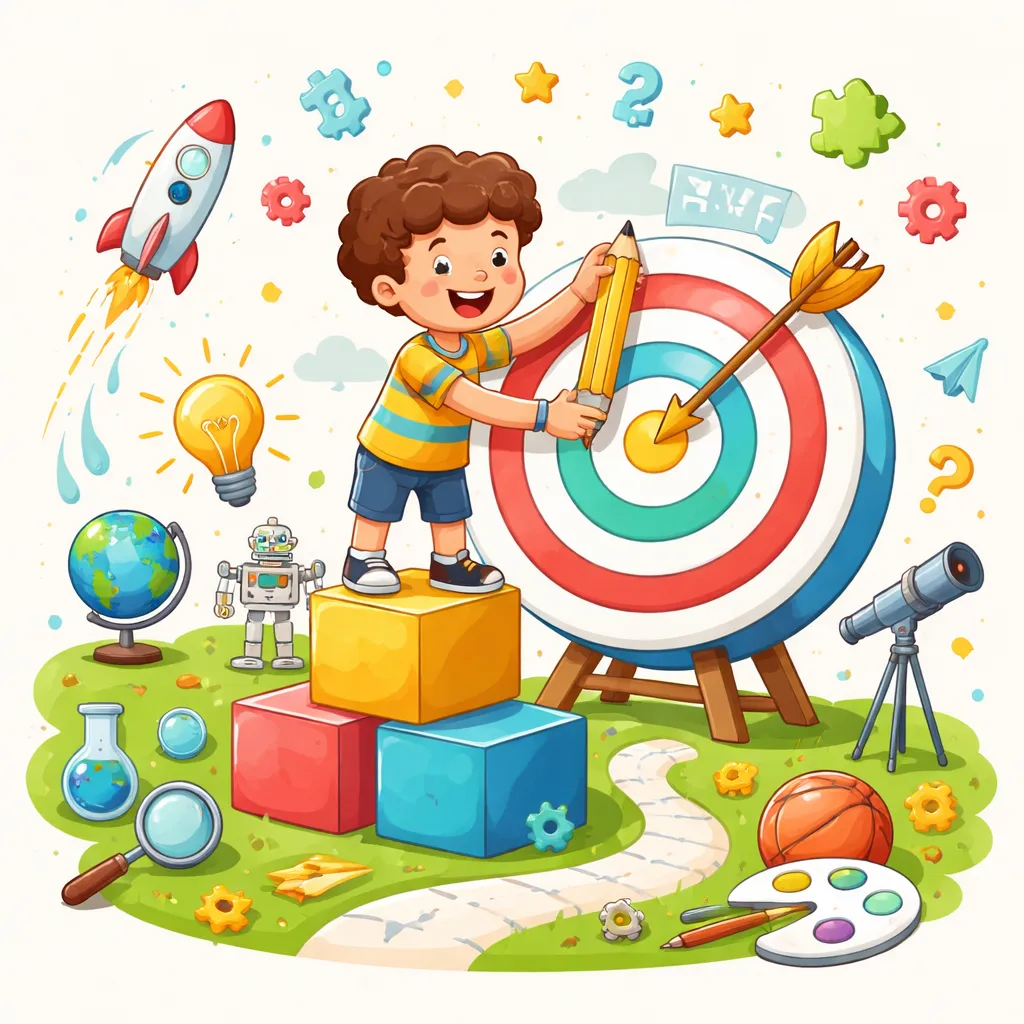

Children love to achieve small wins. Tying a shoe, finishing a puzzle, or learning a letter. These wins start with a simple idea. A child decides to do something. That decision connects a goal and target. Many parents use these words as the same. But they have different flavors. Understanding both helps you guide your child. You can turn hard tasks into fun challenges. This article shows you how. We will explore words and ideas together. Your child will learn to dream and plan. Let us begin this gentle conversation.
Are Similar Words Really Interchangeable? A goal and target share the same family. But they are not identical twins. A goal feels bigger and softer. A target feels smaller and sharper. You can have a goal to read more books. You can have a target of one book this week. Both move you forward. But they work differently in your mind. Knowing the difference helps you teach your child. You can break big dreams into small steps. Children need both the dream and the step. This article explains how to use each word well.
Set 1: Goal vs Target — Which One Is More Common? People say “goal” more often in daily life. We talk about life goals, career goals, and school goals. “Target” appears frequently too. We hear about sales targets and fitness targets. But for children, “goal” feels warmer. A goal sounds like a wish. A target sounds like a bullseye. Start with “goal” for young kids. Say “Our goal is to learn three new words.” Use “target” for specific numbers. Say “Our target is ten spelling points.” Both words are common. Choose based on the feeling you want.
Set 2: Goal vs Target — Same Meaning, Different Contexts A goal and target both describe something you want. But context changes the feel. In sports, you aim for a target. In life, you reach for a goal. At work, you hit your targets. At home, you achieve family goals. For a child’s homework, use both. Say “Your goal is to finish the page.” Say “Your target is question five by snack time.” The goal gives direction. The target gives a checkpoint. Use them together for clarity. Your child will understand the big picture and the small step.
Set 3: Goal vs Target — Which Word Is “Bigger” or More Emphatic? A goal feels bigger than a target. A goal can take months or years. Learning to read is a goal. Becoming kind is a goal. A target feels smaller and closer. A target might take one hour. Writing your name neatly is a target. Saying thank you today is a target. Help your child see the difference. Big goals inspire. Small targets build confidence. You need both. Without a goal, targets feel random. Without targets, goals feel impossible. Teach your child this balance early.
Set 4: Goal vs Target — Concrete vs Abstract Targets are usually concrete. You can measure a target. “Read three pages” is a target. You know when you finish. Goals can be abstract. “Become a better reader” is a goal. You cannot measure it perfectly. For young children, start with concrete targets. “Put one toy away.” “Say one new word.” These are clear and finishable. Then attach them to a bigger goal. “Our goal is a clean room.” “Our goal is to learn English.” Abstract goals give meaning. Concrete targets give action. Both matter for learning.
Set 5: Goal vs Target — Verb or Noun? First Understand the Role Both words work as nouns. You set a goal. You hit a target. But “target” can also be a verb. You target a specific skill. “Goal” is rarely a verb. You do not “goal” something. Teach your child the noun use first. Say “This is our goal.” Say “This is our target.” Later, show the verb “target.” Say “Let us target the letter B today.” Verbs add action. But nouns build understanding first. Keep it simple for young minds. Add layers as your child grows.
Set 6: Goal vs Target — American English vs British English Both words work the same in American and British English. No spelling differences exist. But usage varies slightly. In British business, “target” appears very often. In American schools, “goal” appears more. Do not worry about these small differences. Your child will hear both. The meaning stays the same. Focus on how you use the words at home. Consistency matters more than region. Pick one word for big dreams. Pick the other for small steps. Your child will learn both naturally.
Set 7: Goal vs Target — Which Fits Formal Situations? Formal situations use both words. A school report mentions learning goals. A business plan mentions sales targets. But “target” feels slightly more formal in some cases. The military uses targets. Corporations use targets. “Goal” feels friendly and motivational. For a child’s formal learning plan, use both. Write “Reading goal: enjoy stories.” Write “Weekly target: two new words.” Formal does not mean cold. You can be clear and kind. Help your child see that formal words are just tools. Tools help us achieve things.
Set 8: Goal vs Target — Which One Is Easier for Kids to Remember? Target is often easier for young kids. It sounds like a game. You throw an arrow at a target. You see the circles. Goal is also easy. It sounds like a soccer goal. You kick a ball into a net. Both have physical images. Use pictures to teach. Draw a bullseye for target. Draw a net for goal. Say “A target is a small circle. A goal is a big net.” These images stick in young minds. Your child will remember both. Play a pointing game with the drawings.
Mini Exercise: Can You Spot the Differences Between These Similar Words? Try these simple questions with your child. Use daily activities.
Is “finishing one puzzle piece” a goal or target? (Target)
Is “becoming good at puzzles” a goal or target? (Goal)
Can you have a target without a goal? (Yes, but it feels empty)
Can you have a goal without targets? (Yes, but it feels hard)
Which one can be a verb? (Target)
Now draw a ladder. Write a big goal at the top. Write small targets on each step. Your child climbs the ladder as they finish targets. This picture makes the difference clear. Keep the drawing on the fridge. Add new goals each month.
Parent Tips: How to Help Kids Learn and Remember Similar Words Start with one small target today. Not a big goal. Just one tiny win. “Put your cup in the sink.” Celebrate when your child does it. Say “You hit your target.” Tomorrow, add another target. Over a week, connect the targets. Say “All these targets helped our goal. Our goal is a clean table.” Your child will see the connection naturally.
Use a jar and marbles. Write a family goal on the jar. “Read ten books together.” Each target earns a marble. A target can be “read one page” or “listen to one story.” When the jar fills, celebrate. This game makes goals and targets visible. Young children need to see progress. Marbles are perfect for this.
Never punish a missed target. Say “We did not reach our target today. Let us try a smaller one.” Lower the target if needed. The goal stays the same. Your child learns that failure is not final. It is just data. Adjust and try again. This mindset builds resilience. Resilience matters more than any single target.
Name your own goals and targets as a parent. Say “My goal is to be calmer at dinner. My target is to take three deep breaths before I speak.” Your child hears that adults use these words too. Learning never stops. You model honesty and effort. That is more powerful than any lesson.
Let your child set their own targets sometimes. Ask “What is one small thing you want to finish today?” Respect their answer, even if it seems small. Their target might be “draw a cat” or “jump five times.” Say “Great target. Let me know when you hit it.” Your child learns autonomy. Autonomy fuels motivation.
Use bedtime to review the day. Ask “What target did you hit today?” and “What goal are we still working on?” Keep answers short and positive. This ritual takes two minutes. It builds self-awareness. Your child falls asleep thinking about progress. Not about what went wrong. That is a gift for any young mind.
Keep language playful. Say “Let us aim for our target like a superhero.” Say “Our goal is our treasure map.” Metaphors help children remember. The brain loves stories more than definitions. Give your child a story for each word. The target is the arrow. The goal is the castle. Your child is the brave knight.
Finally, trust small steps. You do not need big changes. One target a day creates three hundred sixty-five wins a year. That changes a child. Goals and targets are not just school words. They are life tools. You are giving your child a map for any challenge. Math, friendships, sports, or art. The same tools work everywhere. Start today with one kind question. “What is one small target you want to try?” Then listen. Then cheer. Then watch your child grow.