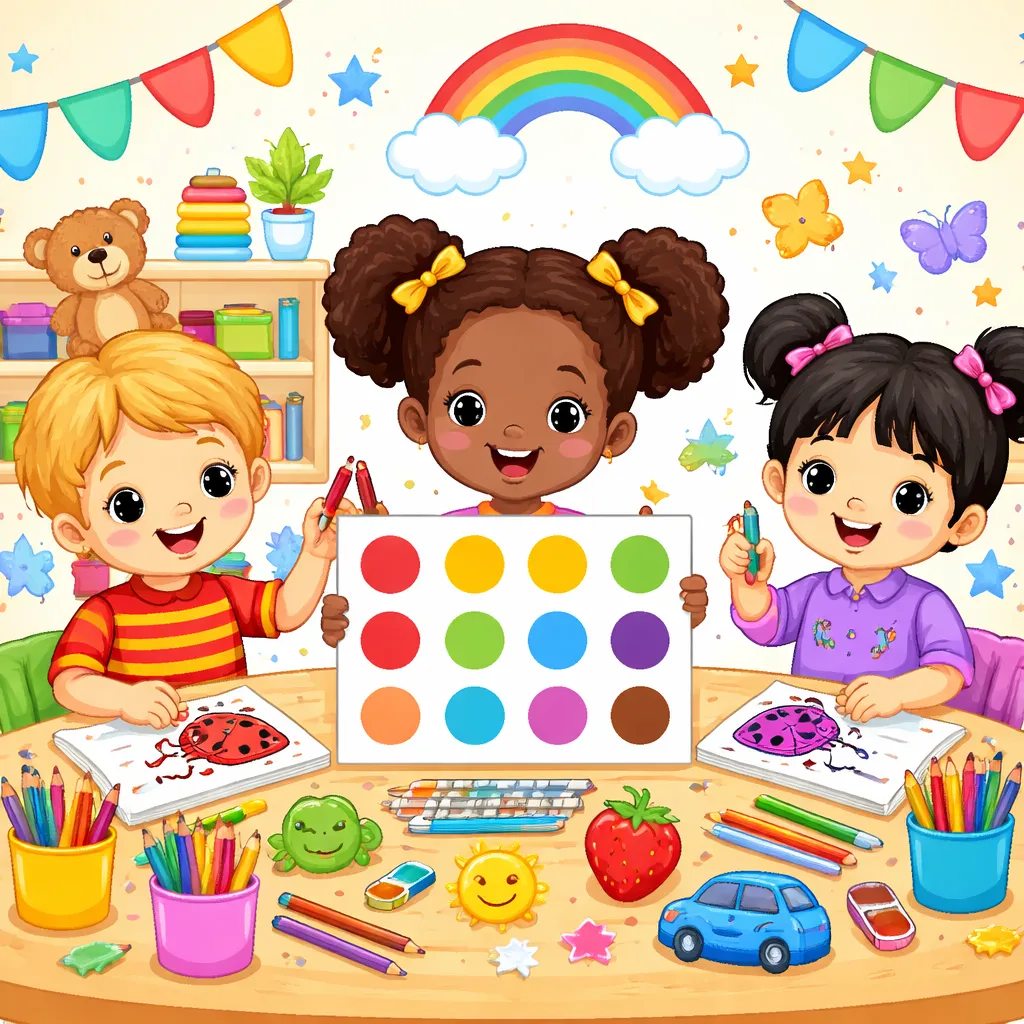

What Is This Situation? Colors are everywhere in a child's world. The sky is blue. The grass is green. The sun is yellow. For a kindergarten child, learning color names is one of the first steps in describing what they see.
This learning happens during art time, while getting dressed, or when looking at picture books. Children naturally notice colors. They point to a red ball and say "red." They choose the blue crayon. These everyday moments are perfect for language learning.
Free ESL worksheets for kindergarten colors take this natural curiosity and give it structure. A worksheet might have a picture of an apple for your child to color red. Another might show a sun to color yellow. The child practices the color word while doing something fun.
These worksheets work well at the kitchen table, during quiet afternoon time, or as a calm activity before dinner. They are simple tools that turn color learning into a hands-on experience.
Key English Phrases for This Situation Use phrases that introduce the color. "This is red. Can you find something red?" connects the worksheet to the real world. "What color is the apple?" invites your child to remember the word.
Use phrases for giving directions. "Color the apple red" gives a clear task. "Use your red crayon" reinforces the color name. "Color carefully inside the lines" adds a gentle instruction.
Use phrases for conversation while coloring. "What color are you using?" keeps the interaction going. "I like your red apple" gives specific praise. "Is the sun yellow or orange?" invites a choice.
Use phrases for review. "You colored the apple red. Good job." "Let us say all the colors on this page." These phrases reinforce learning after the activity is complete.
Use phrases for extending learning. "Let us find something in the house that is the same color." This takes the worksheet learning into the rest of your day.
Simple Conversations for Kids Dialogue 1: Starting a Worksheet Parent: "Look at this worksheet. What do you see?" Child: "An apple." Parent: "Yes. What color is an apple?" Child: "Red." Parent: "Good. Let us color the apple red."
This conversation begins with observation. The parent asks simple questions. The child answers. The parent connects the answer to the activity.
Dialogue 2: Choosing a Color Parent: "Here is the sun. What color do you want to use?" Child: "Yellow." Parent: "Yellow is a good choice. Can you find the yellow crayon?" Child picks up the yellow crayon. Parent: "You found it. Now color the sun yellow."
Here, the child makes a choice. The parent supports the choice. The child practices finding the correct crayon. The parent reinforces the color word throughout.
Dialogue 3: After Coloring Parent: "You colored all the pictures. What color is the apple?" Child: "Red." Parent: "What color is the banana?" Child: "Yellow." Parent: "What color is the grass?" Child: "Green." Parent: "You know all the colors. Good job."
This conversation reviews what the child learned. The parent asks one question at a time. The child answers. The parent ends with specific praise.
Vocabulary You Should Know Red is the color of apples, strawberries, and fire trucks. You can say "The apple is red." This is often one of the first colors children learn.
Blue is the color of the sky and the ocean. You can say "The sky is blue." Children see this color every day.
Yellow is the color of the sun, bananas, and lemons. You can say "The sun is yellow." This color is bright and easy to notice.
Green is the color of grass, leaves, and frogs. You can say "The grass is green." Children see green outdoors and in nature.
Orange is the color of pumpkins, oranges, and carrots. You can say "The pumpkin is orange." This color name is also a fruit name, which makes it memorable.
Purple is the color of grapes, eggplants, and some flowers. You can say "The grapes are purple." This is a favorite color for many children.
How to Use These Phrases Naturally Use a warm and encouraging tone. Worksheets can feel like schoolwork. Your tone makes them feel like play. Smile as you introduce each color. Let your child see your enjoyment.
Say the phrases while your child is coloring. Do not wait until the end. Talk during the activity. "You are using the blue crayon. That is nice." This keeps the language flowing naturally.
Match the worksheet to your child's interest. If your child loves animals, choose worksheets with animals. If they love vehicles, choose worksheets with cars and trucks. Interest keeps attention.
Keep sessions short. One worksheet is enough for a kindergarten child. Pushing for more can create resistance. Stop while your child is still enjoying it. They will want to do it again.
Use the worksheets alongside real objects. After coloring a red apple, go to the kitchen and look at a real apple. Say "This apple is red, just like in your picture." This connection deepens learning.
Common Mistakes to Avoid One mistake is using worksheets that are too complex. Kindergarten children need simple pictures with clear lines. Avoid worksheets with many small details. Simple is better.
Another mistake is expecting perfect coloring. Coloring inside the lines takes time to develop. Focus on the language, not the artistry. The goal is learning color words, not creating a masterpiece.
Some parents correct color choices sharply. If your child colors the sun blue, do not say "No, that is wrong." Instead say "Interesting. The sun is usually yellow. But your blue sun is creative." This keeps the experience positive.
Avoid rushing through the worksheet. Let your child work at their own pace. The learning happens during the process, not just at the end. Rushing creates pressure.
Tips for Parents and Practice Ideas Print worksheets on regular paper. Kindergarten children go through many sheets. You do not need special paper. Simple printing works well.
Keep a folder of completed worksheets. Your child can look back at their work. They see their progress. They feel proud of what they made.
Use worksheets as conversation starters. Ask "What did you color today?" Let your child show you their work. Let them tell you about the colors they used.
Combine worksheets with songs. Sing "I Can Sing a Rainbow" or "The Color Song." Music and worksheets together reinforce learning in different ways.
Repeat favorite worksheets. Children enjoy repetition. Doing the same worksheet again is not boring for them. It builds mastery and confidence.
Fun Practice Activities Create a color scavenger hunt. After completing a worksheet, say "Let us find three red things in the house." Your child finds the items. This connects worksheet learning to the real world.
Make a color book. Staple several worksheets together. Your child colors one page per color. At the end, you have a homemade color book to read together.
Play a color game with crayons. Lay out crayons. Say a color. Your child finds the correct crayon. Then your child says a color, and you find it. This builds recognition and speaking.
Sort objects by color. Use toys, blocks, or clothing. As you sort, say the color names. This activity mirrors what worksheets teach.
Use worksheets during playdates. Two children can color together. They talk about their colors. This adds social learning to the activity.
Free ESL worksheets for kindergarten colors open a door to language learning that is gentle and visual. They give children a way to practice color words with their hands as well as their ears. A child coloring a red apple is not just having fun. They are building vocabulary, practicing fine motor skills, and creating something they can be proud of. With your encouragement and a few simple worksheets, colors become more than words. They become a shared language between you and your child.