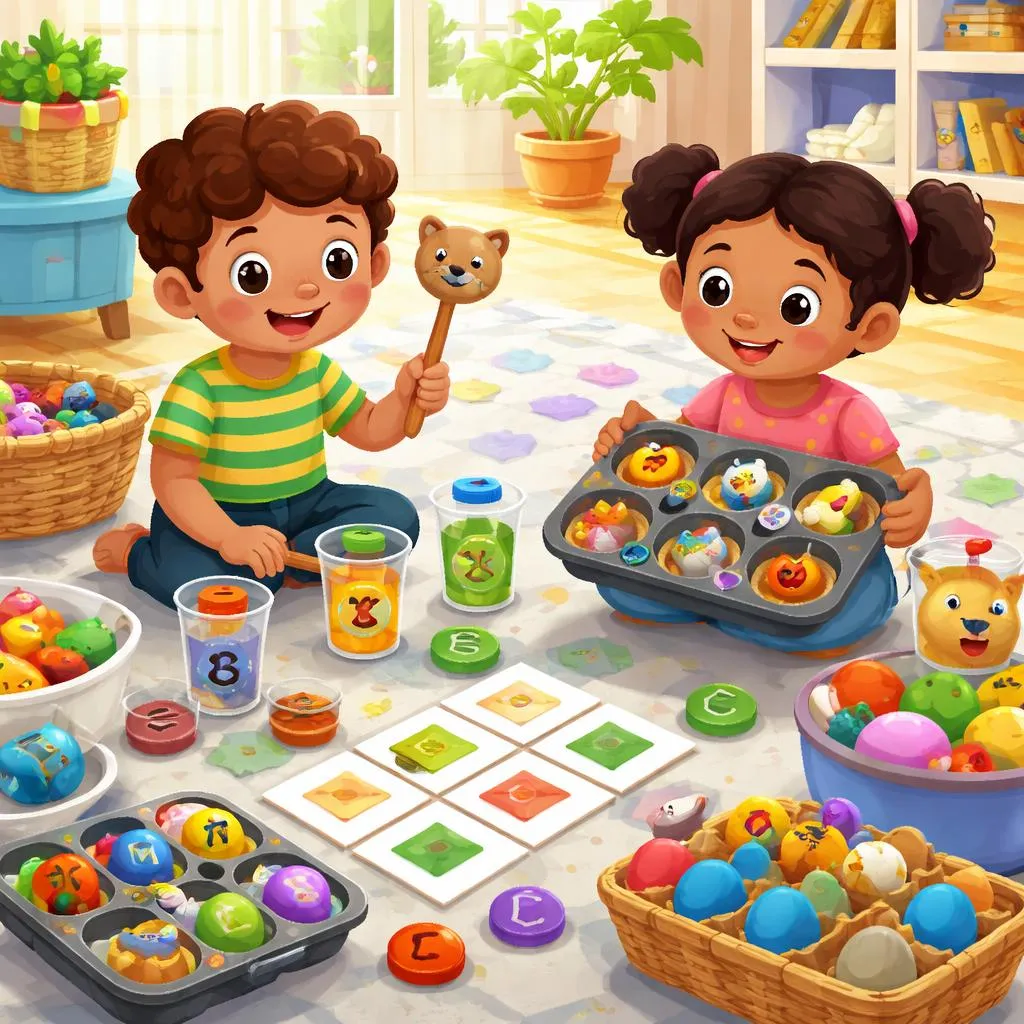

What Is This Situation? You do not need special toys to teach phonics. Your home is full of learning tools. Spoons become letters. Pillows become word builders. The kitchen becomes a classroom. Phonics games using household items make learning easy and free.
These games use things you already have. Magnetic letters on the fridge. Spoons and cups. Paper and markers. Anything can become a learning tool. The games are simple. The learning is powerful.
This situation happens during playtime, during quiet moments, during everyday routines. Learning does not need a special time. It can happen while you cook, while you clean, while you play.
These games are playful and creative. They turn ordinary objects into phonics tools. With household items, your child learns that reading is everywhere.
Key English Phrases for This Situation Use phrases for setting up games. "Let us play a phonics game with things from our house." "We can use these spoons to make words."
Use phrases for playing. "Let us find things that start with B. Ball, book, banana." "Let us match the letter to the object."
Use phrases for creating. "Let us make letters with play dough." "Let us write letters in the flour."
Use phrases for practicing. "Let us sound out this word with our magnetic letters." "C-a-t. Cat."
Use phrases for celebrating. "You found all the B things. Good job." "You made the word cat. You are reading."
Simple Conversations for Kids Dialogue 1: Magnetic Letters on the Fridge Parent: "Let us play with the magnetic letters. Can you find the letter B?" Child finds B. Parent: "Good. Now find something that starts with B." Child points to a banana. Parent: "Yes. Banana starts with B. B-b-banana."
This conversation uses magnetic letters. The child finds the letter and a matching object. The learning is active.
Dialogue 2: Spoon Spelling Parent: "Let us use spoons to make words. This spoon is C. This spoon is A. This spoon is T. What word do we have?" Child: "C-a-t. Cat." Parent: "Yes. You spelled cat with spoons."
This conversation uses spoons as letters. The child spells a word. The learning is creative.
Dialogue 3: Letter Hunt Parent: "Let us go on a letter hunt. Find something that starts with S." Child finds a sock. Parent: "Sock starts with S. Good. Now find something that starts with M." Child finds a mug. Parent: "Mug starts with M. You are a letter detective."
This conversation is a scavenger hunt. The child finds objects. The learning is active.
Vocabulary You Should Know Magnetic letters are letters that stick to the fridge. You can say "Let us use magnetic letters." These are common in many homes.
Spoon is a kitchen tool. You can say "Let us use spoons as letters." This is a creative tool.
Scavenger hunt is a game where you find things. You can say "Let us go on a letter scavenger hunt." This is the activity.
Match means to put together things that go together. You can say "Match the letter to the object." This is the skill.
Spell means to write or say letters in order. You can say "Spell cat with the spoons." This is the goal.
Create means to make something new. You can say "Let us create letters with play dough." This is the action.
How to Use These Phrases Naturally Use an excited and curious tone. Household items are fun. Your voice says "Look what we can do with this spoon."
Let your child lead. If they want to use the spoons for letters, let them. Their creativity is the engine.
Keep it simple. One game, one skill. Do not try to teach everything at once.
Use what you have. You do not need special tools. A marker and paper work. Spoons work. Pillows work.
Celebrate the creativity. "You made letters out of spoons. That is so smart." Creativity builds confidence.
Common Mistakes to Avoid One mistake is thinking you need special materials. You do not. Your home is full of learning tools.
Another mistake is making the game too structured. Let the game flow. Let your child's imagination guide.
Some children want to play the same game again and again. That is good. Repetition builds mastery.
Avoid cleaning up too fast. Leave the letters on the fridge. Leave the spoons out. The learning continues.
Tips for Parents and Practice Ideas Keep magnetic letters on the fridge. Your child will play with them every day.
Use play dough. Roll letters. Make words. Play dough is fun and tactile.
Write in flour. Put flour on a tray. Write letters with a finger. The sensory experience is powerful.
Use sticky notes. Write letters on sticky notes. Put them on objects. "B" on the banana. The notes connect letters to objects.
Save paper towel rolls. They can be binoculars for a letter hunt. They can be letter holders.
Fun Practice Activities Play letter hunt. Say a letter. Your child finds something that starts with that letter. "Find something that starts with C." "Cup." The hunt builds sound awareness.
Make spoon letters. Write letters on spoons with markers. Your child spells words with the spoons. The spoons become letters.
Create a letter obstacle course. Put letters around the room. Your child goes from letter to letter, saying the sound. The course makes learning active.
Use cookie cutters. Press cookie cutters into play dough to make letters. The shapes make letters fun.
Build a word with blocks. Write letters on blocks. Your child builds words. The blocks make spelling physical.
Phonics games using household items make learning accessible and fun. Magnetic letters on the fridge. Spoons as letters. Sticky notes on objects. Your home is full of learning tools. With playful practice and creative guidance, your child will learn phonics. They will find letters everywhere. They will spell with spoons. They will hunt for sounds. And they will know that learning is not just in books. It is in your home, in your hands, in your play. That is the power of creativity. One spoon at a time, your child will learn. And you will be there to play along.