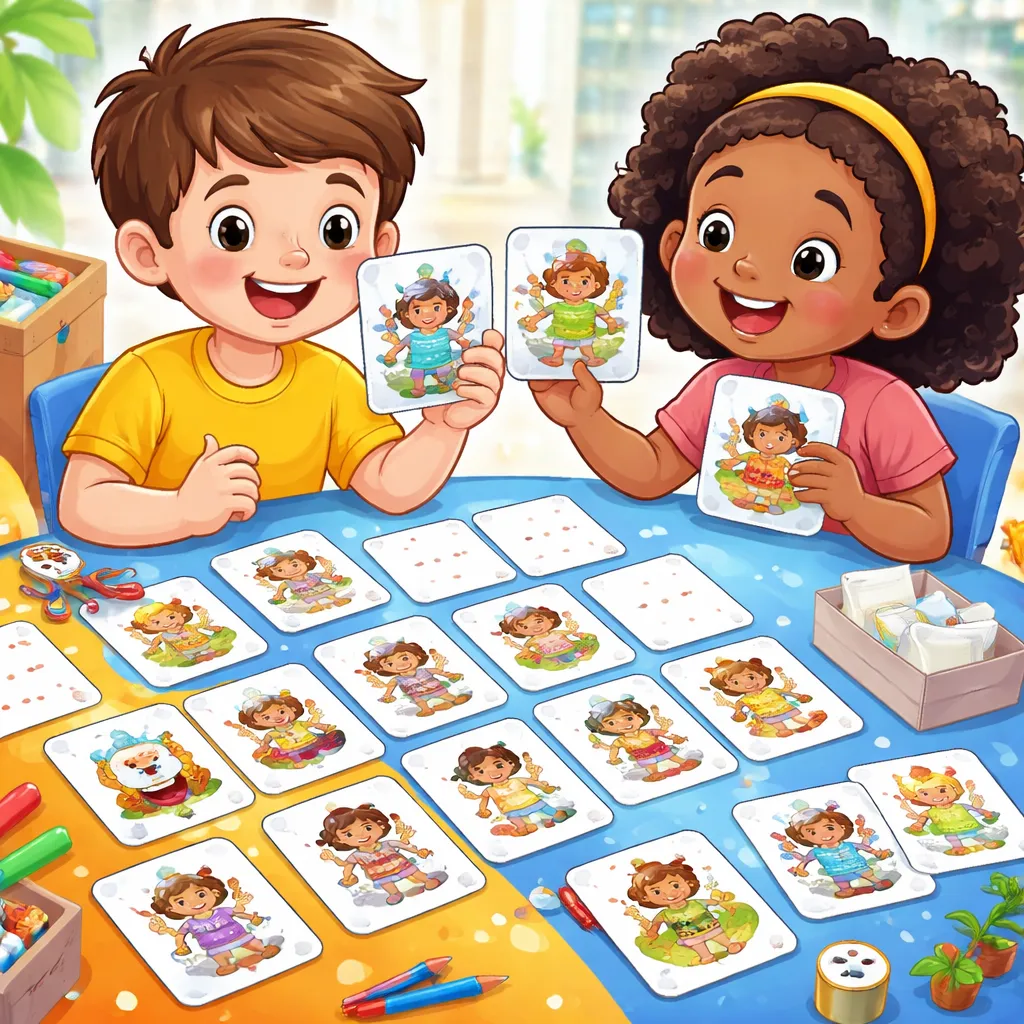

What Is This Situation? Memory is a classic game. You have cards. You turn two over. You try to find a match. It is simple. It is fun. And it is a powerful way to learn verbs. Action words like run, jump, and eat. Match the word to the picture. Learn while you play.
A DIY memory card game for verbs lets you create your own game. You choose the verbs. You draw the pictures. You make the cards. The game is personal. The learning is active.
This situation happens during game time, during quiet time, during moments when children need a calm activity. Memory games are portable. You can play at home, on a trip, anywhere.
These cards are best used with conversation. Say the verb when you flip the card. Act it out. The learning happens while playing.
Key English Phrases for This Situation Use phrases for making the cards. "Let us make a memory game for verbs. First, choose some verbs. Run, jump, eat, sleep." "Draw a picture for each verb. Run is running. Jump is jumping."
Use phrases for playing. "Let us play memory. Flip two cards. Try to find a match." "You flipped run and run. That is a match. Good job."
Use phrases for practicing verbs. "What is this verb? This is run. Can you run?" "This is jump. Jump like a frog."
Use phrases for celebrating. "You found a match. Good job." "You know all the verbs. You are a verb expert."
Use phrases for making the game harder. "Let us add more verbs. Swim, dance, sing." "Now we have more cards. Let us play."
Simple Conversations for Kids Dialogue 1: Making the Cards Parent: "Let us make a memory game for verbs. First, let us choose some verbs. Run, jump, eat, sleep." Child: "I like run and jump." Parent: "Good. Let us draw a picture for run. Draw someone running." Child draws. Parent: "Good. Now draw a picture for jump." Child draws. Parent: "We will make two cards for each verb."
This conversation starts making the cards. The child chooses verbs. The child draws. The learning begins.
Dialogue 2: Playing Memory Parent: "Let us play memory. Put all the cards face down. Flip two cards." Child flips run and run. Parent: "They match. Good job. You get to keep them. Now your turn." Child flips jump and eat. Parent: "That is not a match. Put them back. Try again."
This conversation plays memory. The child flips cards. The parent guides. The game is fun.
Dialogue 3: Acting Out the Verbs Parent: "You flipped jump. What is jump? Can you jump?" Child jumps. Parent: "Good. Now you flipped eat. What is eat? Can you pretend to eat?" Child pretends to eat. Parent: "You know the verbs. Good job."
This conversation acts out the verbs. The child moves. The learning is active.
Vocabulary You Should Know Run means to move fast on your feet. You can say "Run like a cheetah." It is an action.
Jump means to push off the ground. You can say "Jump like a frog." It is an action.
Eat means to take food into your mouth. You can say "Eat your snack." It is an action.
Sleep means to rest with your eyes closed. You can say "Sleep like a bear." It is an action.
Swim means to move in water. You can say "Swim like a fish." It is an action.
Dance means to move to music. You can say "Dance like a butterfly." It is an action.
How to Use These Phrases Naturally Use a playful and curious tone. Verbs are actions. Your voice should show it. "Let us find a match. Run! Jump!"
Say the phrases as you play. "You flipped run. Can you run?" The words keep the game active.
Let your child act out the verbs. Movement makes learning stick.
Play again and again. Repetition builds mastery. Each game, the verbs get stronger.
Celebrate matches. "You found a match. Good job." Celebration makes the game fun.
Common Mistakes to Avoid One mistake is making the game too hard. Start with four pairs. Add more as your child learns.
Another mistake is only using the cards. Act out the verbs too. Movement builds memory.
Some children want to play the same game again. That is good. Repetition builds mastery.
Avoid making it a test. Memory is a game. If your child is tired, stop. Play another day.
Tips for Parents and Practice Ideas Use cardstock paper. The cards last longer. Laminate them if you can.
Draw simple pictures. Stick figures are fine. The picture just needs to show the action.
Let your child decorate the cards. Stickers, colors, glitter. Decoration makes them special.
Keep the cards in a box. Your child can play anytime. Independent play is learning.
Add new verbs as your child learns. Swim, dance, sing. The game grows.
Fun Practice Activities Play verb charades. Act out a verb. Your child guesses. Then switch. The game builds vocabulary.
Make a verb book. Staple paper together. Draw a verb on each page. "Run. Jump. Eat." The book is a reference.
Sing the verb song. "Run, run, run. Jump, jump, jump. Eat, eat, eat. Sleep, sleep, sleep." Music makes learning fun.
Create a verb hunt. Hide the cards around the room. Your child finds them and acts out the verb. The hunt makes learning active.
Draw verb pictures. Your child draws someone running, jumping, eating. They label each drawing. The pictures make the words real.
A DIY memory card game for verbs turns learning action words into a game. Run, jump, eat, sleep. Make the cards. Flip them. Match them. Act them out. With playful practice and patient guidance, your child will learn verbs. They will know what run means. They will jump with joy. They will love learning. That is the power of games. One verb at a time, your child will learn. And you will be there to play and act out together.