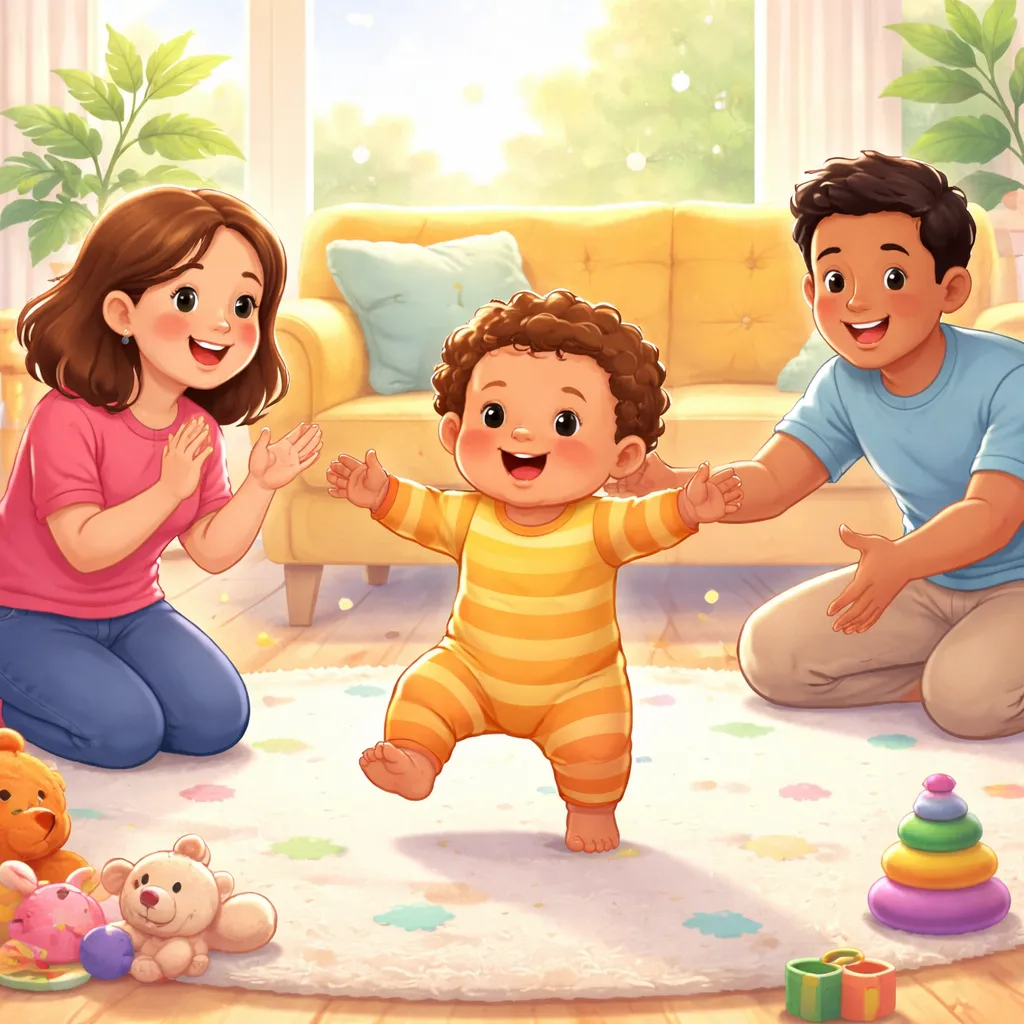

What Is This Situation? Learning to walk is one of the biggest milestones in a young child's life. One day they are crawling. The next day they pull up on the couch. Then comes the first wobbly step. The journey from crawling to running is full of falls and triumphs.
This situation happens in living rooms, on soft carpets, and in safe spaces where a child can practice. It happens when you hold out your arms. It happens when they let go of the table. It happens every time they try again after a fall.
Encouraging words for kids learning to walk give your child the confidence to keep trying. Walking is hard work. Muscles are learning. Balance is developing. Your words become the soundtrack to this big adventure.
These phrases are simple. They celebrate effort more than success. They offer comfort after falls. They cheer every small step. With your words, your child learns that trying is as important as doing.
Key English Phrases for This Situation Use phrases for the first attempts. "You are standing!" celebrates a big step. "Let go. I am here" offers safety. "Come to me" invites movement.
Use phrases for encouragement. "You can do it" builds confidence. "Almost there" acknowledges progress. "Good job trying" praises the effort.
Use phrases for celebrating success. "You walked!" marks the achievement. "Look at you go!" shares excitement. "You did it!" celebrates the moment.
Use phrases for falls. "Oops, you fell" states it calmly. "That was a good try" focuses on effort. "Let us try again" invites another attempt.
Use phrases for persistence. "Practice makes strong" teaches the value of repetition. "Every time you try, you get better" explains progress. "I am so proud of you" builds self-worth.
Simple Conversations for Kids Dialogue 1: First Steps Child pulls up on the couch. Parent: "Look at you! You are standing!" Child lets go and wobbles. Parent: "Come to me. Come on. You can do it." Child takes one step and falls. Parent: "You took a step! That was amazing. Let us try again."
This conversation celebrates the attempt. The parent does not focus on the fall. The focus is on the step. The parent invites another try.
Dialogue 2: Practice Time Parent holds out arms. "Come to Mama. One step. Two steps." Child takes two steps and falls into parent's arms. Parent: "You did it! You walked to me! Good job." Child smiles. Parent: "Let us do it again. Ready?"
This conversation uses short directions. The parent counts the steps. The child feels the success. The parent invites repetition. Practice becomes a game.
Dialogue 3: After a Fall Child falls and looks at parent. Parent: "Oops, you fell. That happens. You are okay." Child starts to cry. Parent: "I know. Falling is hard. But you were walking so well." Child calms. Parent: "Ready to try again? I am right here."
This conversation normalizes falls. The parent validates the feeling. The parent reminds the child of the success. The parent offers presence for another try.
Vocabulary You Should Know Stand means to be on your feet without holding. You can say "You are standing!" This word marks a big achievement.
Step is one movement of the foot. You can say "Take a step." This word breaks walking into small, achievable parts.
Walk means to move on your feet. You can say "You are walking!" This is the ultimate goal word.
Fall means to go down suddenly. You can say "You fell. That is okay." This word names the experience without shame.
Balance means staying steady. You can say "You are learning balance." This word explains what your child is practicing.
Strong means having power in your muscles. You can say "Practice makes you strong." This word connects effort to results.
How to Use These Phrases Naturally Use an excited and warm tone. Your child watches your face for cues. When you smile and cheer, they know they are doing something good. Enthusiasm is contagious.
Say the phrases when your child is trying. Do not wait until they succeed. Cheer the effort. "Good job trying" said during a wobbly attempt keeps them going.
Use a calm tone for falls. Do not gasp or sound worried. Your calm tells your child that falling is normal. They look to you to know how to react.
Repeat the same phrases often. "You can do it" becomes a familiar sound. Your child hears it and knows they are supported. Consistency builds trust.
Let your child set the pace. If they are tired, stop. If they want to try again, cheer. Your words follow their lead. Encouragement works best when it matches their energy.
Common Mistakes to Avoid One mistake is comparing to other children. "Your cousin walked at ten months" creates pressure. Every child walks in their own time. Your words should celebrate your child's journey.
Another mistake is focusing only on success. If you only cheer when they walk, they may feel discouraged when they fall. Cheer the tries. Cheer the practice. Effort deserves celebration.
Some parents rush to hold the child after a fall. Wait a moment. Let your child decide if they need comfort or if they want to get up on their own. Independence builds confidence.
Avoid negative language like "careful" or "don't fall." These words create fear. Use positive language. "You are doing it" and "I am here" are more supportive.
Tips for Parents and Practice Ideas Create a safe space for practice. Clear the floor. Remove sharp edges. A safe environment lets you relax. When you relax, your child relaxes.
Use a favorite toy as motivation. Hold it a few steps away. "Come get your bear." The toy adds fun to the practice. Your child walks toward something they want.
Practice barefoot when possible. Bare feet help with balance. Your child feels the floor. This sensory input helps walking develop.
Celebrate every small victory. A step. Two steps. Standing for three seconds. All of these are wins. Your celebration tells your child that progress matters.
Be patient. Walking takes weeks or months. There will be good days and days with no progress. Both are normal. Your steady encouragement carries them through.
Fun Practice Activities Play follow the leader. You walk slowly. Your child follows. You stop. They stop. This makes walking a game. Language comes naturally. "Follow me. Good job."
Make an obstacle course with pillows. Your child walks around or over them. Each step is a small adventure. You cheer each movement.
Use a push toy. A sturdy wagon or push cart gives support. Your child walks behind it. You say "Push. Walk. Good job." The toy builds confidence.
Sing a walking song. "Walking, walking, walking, walking. Hop, hop, hop." Music adds rhythm. Rhythm helps coordination.
Take walking outside. Grass, sidewalks, and gentle hills offer new challenges. Your child practices balance in new places. You cheer every step.
Encouraging words for kids learning to walk are simple but powerful. They turn a physical challenge into a shared joy. Your child learns that trying is good. Falling is okay. Getting up again is brave. With each "You can do it," they build not just walking skills, but the confidence to try new things. Years from now, when they face harder challenges, they will still hear your voice cheering them on. One step at a time. One try at a time. That is how they learned to walk. That is how they will learn everything else.