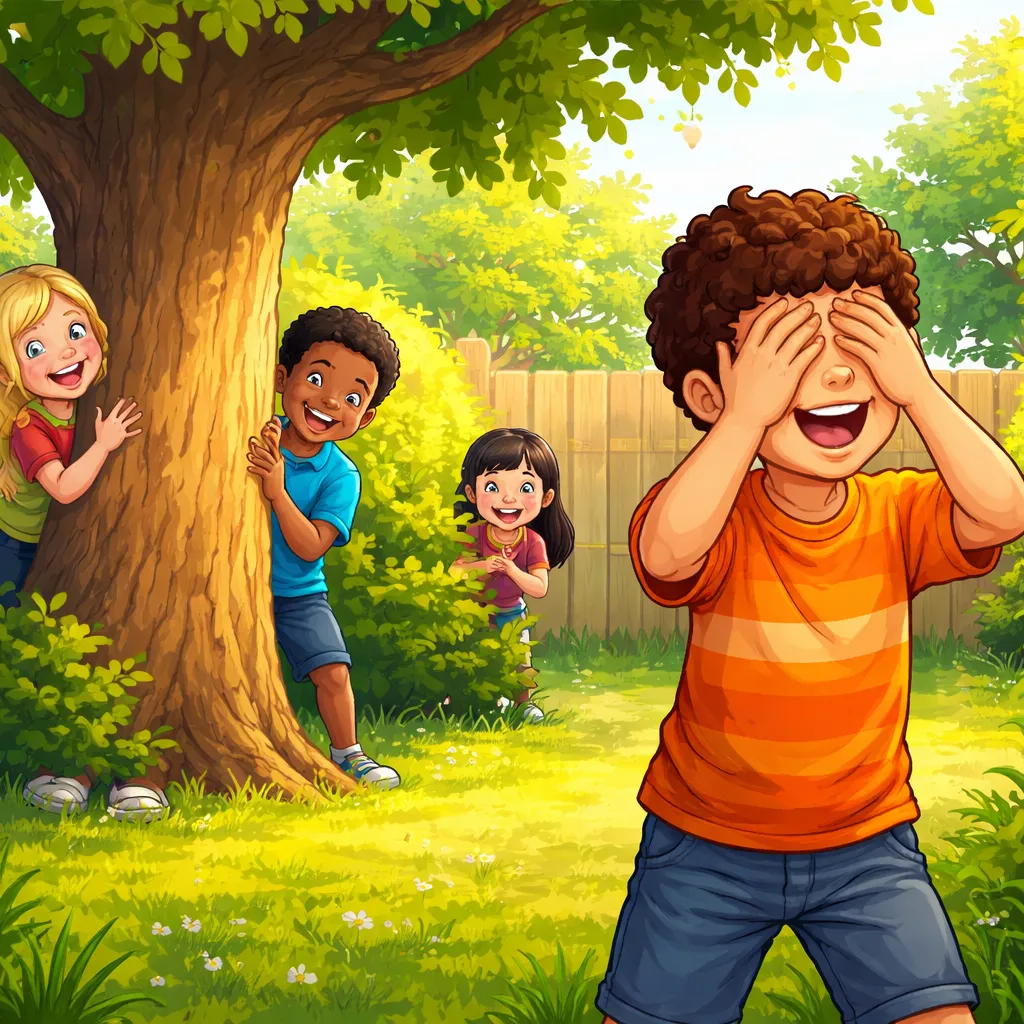

What Is This Situation? Hide and seek is a classic game. One person closes their eyes and counts. The others find places to hide. Then the seeker looks. Laughter follows when someone is found. The game repeats again and again.
English conversation for playing hide and seek gives children the words to play this game in English. They learn to count out loud. They learn to announce they are ready. They learn to shout "Found you!" with joy.
This game happens indoors on rainy days. It happens in backyards on sunny afternoons. It happens at birthday parties and family gatherings. Anywhere with spaces to hide works. The game is simple. The language is easy.
These phrases are short and energetic. They match the excitement of the game. Children learn numbers, prepositions, and exclamations. The learning happens through play. The words become part of the fun.
Key English Phrases for This Situation Use phrases for starting the game. "Let us play hide and seek" invites play. "I will count to ten" announces the rules. "Close your eyes" gives the direction.
Use phrases for counting. "One, two, three..." counts out loud. "Ready or not, here I come" announces the seeking begins. This classic line is perfect for English practice.
Use phrases for hiding. "I am hiding" states the action. "Where should I hide?" asks for ideas. "Shh, do not tell" adds secrecy.
Use phrases for seeking. "Where are you?" calls out. "I am looking" states the action. "Found you!" announces success with excitement.
Use phrases for being found. "You found me!" responds to discovery. "That was a good hiding spot" gives feedback. "Your turn to count" rotates roles.
Simple Conversations for Kids Dialogue 1: Starting the Game Child: "Let us play hide and seek." Parent: "Okay. I will count. You hide." Child: "Count to ten." Parent: "One, two, three..." Child runs to hide. Parent: "...nine, ten. Ready or not, here I come."
This conversation starts the game. The child suggests the game. The parent sets the rules. The child hides. The parent counts and seeks. The game flows naturally.
Dialogue 2: Seeking Together Parent: "Where are you? I am looking." Child giggles from behind the couch. Parent: "I hear something. Is someone behind the couch?" Parent looks. Parent: "Found you!" Child: "You found me!" Parent: "That was a good hiding spot." Child: "My turn to count now."
This conversation shows the seeking part. The parent calls out. The child giggles. The parent finds the child. The child celebrates being found. The roles switch.
Dialogue 3: Hiding Together Child: "Where should I hide?" Parent: "Try behind the door." Child: "Will you find me?" Parent: "I will try. Ready or not, here I come." Parent looks around. Parent: "Behind the door?" Child: "Yes! You found me." Parent: "That was a good spot."
This conversation shows the hiding part. The child asks for ideas. The parent suggests. The child hides. The parent finds. The child celebrates. The game continues.
Vocabulary You Should Know Count means to say numbers in order. You can say "I will count to ten." This word starts the game.
Hide means to put yourself where others cannot see you. You can say "I am hiding." This is the main action of the game.
Seek means to look for someone. You can say "I will seek." This is the other main action.
Ready means prepared. You can say "Ready or not." This word signals that seeking is about to start.
Found means discovered. You can say "I found you." This word ends each round of the game.
Spot is a place to hide. You can say "That was a good spot." This word describes where someone hid.
How to Use These Phrases Naturally Use an excited and playful tone. Hide and seek is fun. Your voice should show it. "Ready or not, here I come!" said with energy makes the game exciting.
Say the phrases at the right moments. Count clearly. Announce when you are seeking. Shout "Found you!" when you see your child. Timing keeps the game moving.
Count together. When it is your child's turn to count, help them. "One, two, three..." Let them say the numbers. Counting practice happens naturally.
Use the same phrases each time. Consistency helps children learn. "Ready or not, here I come" is the same every game. Your child will learn to say it.
Let your child use the phrases. When they are the seeker, let them count. Let them say "Found you!" Let them take the lead. Your child learns by doing.
Common Mistakes to Avoid One mistake is making the game too complex. Hide and seek is simple. Too many rules confuse young children. Keep it simple. The language is what matters.
Another mistake is rushing the counting. Count slowly. Let your child hear each number. Counting is language practice. Take your time.
Some parents hide in places that are too hard. Young children get frustrated if they cannot find you. Hide in easy places. Let them succeed. Success builds confidence.
Avoid skipping the phrases. Even if your child knows the game, use the words. "Where are you?" "Found you!" These are the language moments. Do not miss them.
Tips for Parents and Practice Ideas Play in a small space first. A few rooms are enough. Your child learns the game. Then you can play in bigger spaces.
Let your child be the seeker often. Counting out loud is great practice. Calling "Ready or not, here I come" builds confidence.
Use counting as a warm-up. Count objects around the house. "One teddy bear. Two blocks." Counting becomes familiar before the game.
Play with siblings or friends. Multiple children make the game more exciting. More voices mean more language practice.
Play even when you are tired. A quick game takes five minutes. The language practice is worth the energy.
Fun Practice Activities Play flashlight hide and seek in the dark. Turn off the lights. Use a flashlight to find each other. The excitement adds to the language.
Make hiding spots with blankets. Drape blankets over chairs. Create tents. Your child hides inside. You say "Where are you?" from outside.
Use a stuffed animal. The toy hides. Your child counts and seeks. Then your child hides while the toy counts. The toy adds a playful element.
Sing a counting song. "One, two, three, four, five. Ready or not, here I come." Music adds rhythm to the counting.
Draw a hiding map. Your child draws the house or yard. They mark where they will hide. You draw where you will hide. The map adds a visual to the game.
English conversation for playing hide and seek turns a simple game into a language lesson. Children learn to count. They learn to announce their actions. They learn to celebrate discovery. All of this happens while they are laughing and running and hiding. The words stick because they are part of something fun. The next time your child plays hide and seek, they will not be thinking about learning English. They will be thinking about finding the best spot. But the words will be there. "Ready or not, here I come." "Found you!" Those words are now theirs. And they learned them through play.