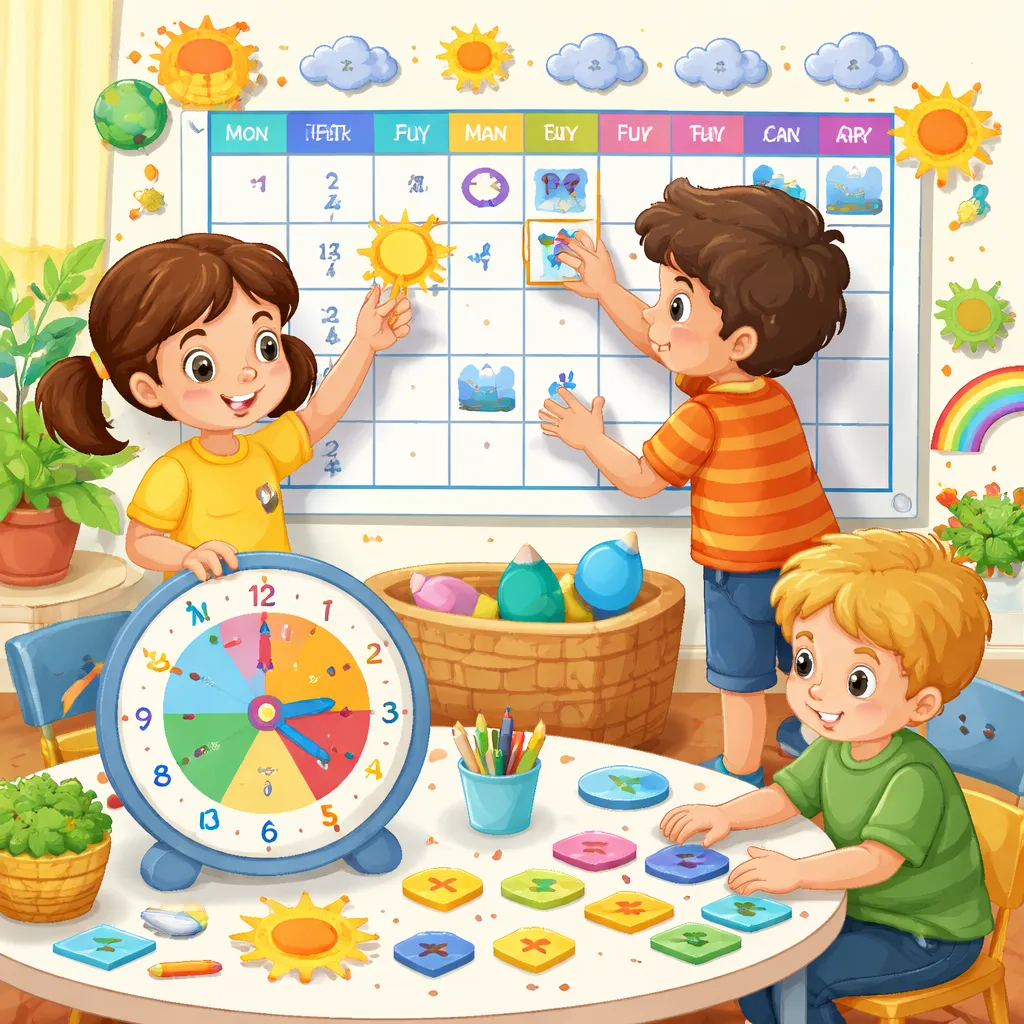

What Is This Situation? A calendar shows the days and months. It helps children understand time. Today, yesterday, tomorrow. This week, next week. January, February, March. A calendar makes time visible. It helps children see the passing of days.
A free printable calendar for kids learning gives children a hands-on way to learn about time. They mark the days. They count the weeks. They learn the months. The calendar becomes part of their daily routine.
This situation happens during morning routine, during quiet time, during moments when children learn about time. A calendar is a daily tool. It builds understanding day by day.
These calendars are best used with conversation. Talk about the day. Talk about the month. Talk about what comes next. The learning happens while using the calendar.
Key English Phrases for This Situation Use phrases for introducing the calendar. "This is our calendar. It shows the days of the week and the months of the year." "Today is Monday. Let us find Monday on the calendar."
Use phrases for days of the week. "What day is today? Today is Monday." "Yesterday was Sunday. Tomorrow will be Tuesday."
Use phrases for months. "What month is it? It is March." "January is the first month. December is the last month."
Use phrases for marking the calendar. "Let us put a sticker on today. Today is Monday, March 3." "You did something special today. Let us mark it on the calendar."
Use phrases for planning. "Your birthday is in April. Let us find April on the calendar." "We have a playdate on Saturday. Let us mark it."
Simple Conversations for Kids Dialogue 1: Learning Days of the Week Parent: "Let us look at our calendar. Today is Monday. Can you find Monday?" Child points to Monday. Parent: "Good. What day was yesterday?" Child: "Sunday." Parent: "Yes. Yesterday was Sunday. What day is tomorrow?" Child: "Tuesday." Parent: "Yes. Tomorrow is Tuesday."
This conversation teaches days of the week. The child finds the day. The parent asks questions. The learning begins.
Dialogue 2: Learning Months Parent: "What month is it? It is March. Can you find March on the calendar?" Child points to March. Parent: "Good. January is the first month. December is the last month. Your birthday is in May. Let us find May." Child finds May. Parent: "Good. May is your birthday month."
This conversation teaches months. The child finds the month. The parent adds facts. The learning continues.
Dialogue 3: Marking Special Days Parent: "Let us mark special days on the calendar. Your birthday is on May 5. Let us circle it." Child circles May 5. Parent: "We have a playdate on Saturday. Let us put a sticker on Saturday." Child puts sticker. Parent: "Now we can see what is coming. The calendar helps us remember."
This conversation uses the calendar for planning. The child marks special days. The calendar becomes a tool.
Vocabulary You Should Know Calendar is a chart showing days and months. You can say "Let us look at the calendar." This is the main tool.
Day is a 24-hour period. You can say "Today is Monday." There are seven days in a week.
Week is seven days. You can say "This week we have school." Monday to Sunday.
Month is about four weeks. You can say "March is a month." There are twelve months.
Year is twelve months. You can say "A year has 365 days." This is the big picture.
Today is this day. You can say "Today is Monday." This is the present.
How to Use These Phrases Naturally Use a calm and consistent tone. The calendar is part of routine. Your voice should match. "Let us look at the calendar."
Say the phrases at the same time each day. Morning is a good time. Routine builds learning.
Let your child mark the calendar. Stickers, circles, drawings. Marking makes it theirs.
Talk about what comes next. "Tomorrow we will go to the park. Let us find tomorrow on the calendar."
Celebrate when they remember. "You remembered that yesterday was Sunday. Good job." Celebration reinforces learning.
Common Mistakes to Avoid One mistake is using the calendar only for counting days. Use it for planning. "We have a party on Saturday." Planning makes it meaningful.
Another mistake is forgetting to use it daily. Consistency matters. Five minutes a day builds understanding.
Some children confuse yesterday and tomorrow. Gently correct. "Yesterday was the day before today. Tomorrow is the day after."
Avoid making it a test. The calendar is a tool. Use it naturally. The learning will come.
Tips for Parents and Practice Ideas Print the calendar on big paper. Hang it where your child can reach. Daily access is key.
Use stickers for special days. Birthday, playdate, holiday. Stickers make the calendar fun.
Sing the days of the week song. "Monday, Tuesday, Wednesday, Thursday, Friday, Saturday, Sunday." Music makes the order stick.
Sing the months of the year song. "January, February, March, April, May, June, July, August, September, October, November, December." Music makes the months stick.
Let your child draw the weather each day. A sun for sunny. A cloud for cloudy. Weather connects to time.
Fun Practice Activities Make a daily calendar routine. Each morning, find today. Say the day. Say the date. Say the month. Routine builds understanding.
Play calendar bingo. Call out a day. Your child finds it on the calendar. The game builds recognition.
Create a birthday chart. Write family birthdays on the calendar. Your child sees when each birthday comes.
Make a countdown. "Five days until Grandma comes. Let us count the days on the calendar." Counting builds anticipation.
Draw the seasons. On the calendar, draw symbols for each month. Snow for winter. Flowers for spring. Sun for summer. Leaves for fall.
A free printable calendar for kids learning helps children understand the passage of time. Days of the week. Months of the year. Today, yesterday, tomorrow. With daily practice and patient guidance, your child will learn to read the calendar. They will know what day it is. They will know what comes next. They will understand time. That is the power of a calendar. One day at a time, your child will learn. And you will be there to mark each day together.