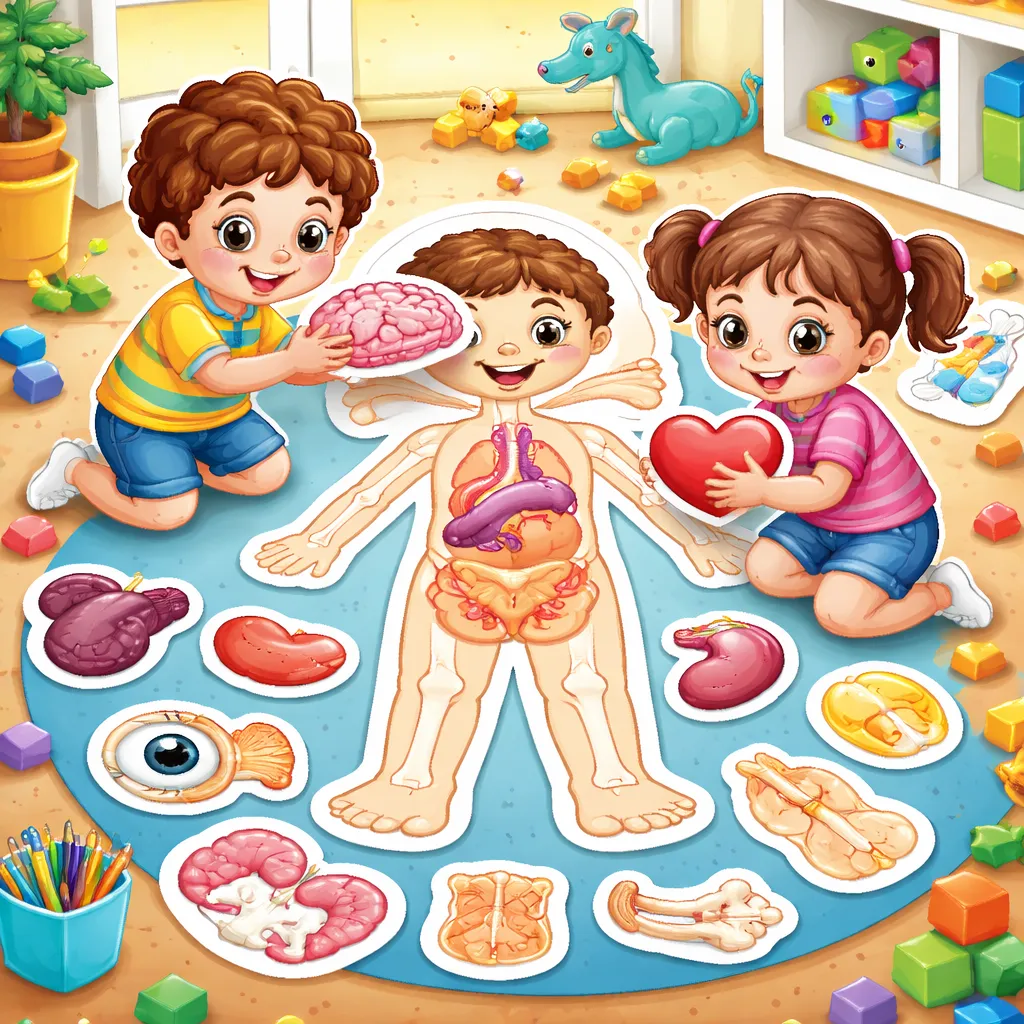

What Is This Situation? Children are curious about their bodies. Head, shoulders, knees, toes. They point to their nose. They wiggle their fingers. Learning the names of body parts is natural. Stickers make it fun. You print the labels. You stick them on. The body becomes a learning tool.
Printable body parts label stickers give children a hands-on way to learn. Head sticker on the head. Arm sticker on the arm. Foot sticker on the foot. The sticker shows the word. The child sees the word and the body part together.
This situation happens during playtime, during quiet time, during moments when children are curious about their bodies. Stickers are fun. Children love to stick them. Learning happens while playing.
These stickers are best used with conversation. Talk about each body part. Touch the part. Say the word. The learning happens while sticking.
Key English Phrases for This Situation Use phrases for introducing the stickers. "Let us learn about our bodies. We have stickers for each body part. Find the head sticker." "Put the head sticker on your head."
Use phrases for body parts. "This is your head. Head." "These are your shoulders. Shoulders." "This is your knee. Knee."
Use phrases for sticking. "Peel the sticker. Put it on your head." "Good. Now find the arm sticker. Put it on your arm."
Use phrases for practicing. "Where is your nose? Point to your nose." "What is this? This is your foot."
Use phrases for celebrating. "You put the stickers in all the right places. Good job." "You know your body parts."
Simple Conversations for Kids Dialogue 1: Sticking Head and Shoulders Parent: "Let us use our body stickers. First, find the head sticker." Child finds head sticker. Parent: "Peel it off. Put it on your head." Child puts sticker on head. Parent: "Good. Now find the shoulders sticker." Child finds shoulders sticker. Parent: "Put it on your shoulders." Child puts sticker on shoulders. Parent: "You know your head and shoulders."
This conversation introduces the stickers. The child finds and sticks. The parent guides. The learning begins.
Dialogue 2: Sticking More Parts Parent: "Now find the arm sticker." Child finds arm sticker. Parent: "Put it on your arm." Child puts sticker on arm. Parent: "Now find the leg sticker." Child finds leg sticker. Parent: "Put it on your leg." Child puts sticker on leg. Parent: "Good. You have stickers on your arm and leg."
This conversation continues the activity. The child sticks more stickers. The vocabulary grows.
Dialogue 3: Reviewing the Parts Parent: "Let us see what you learned. Where is your head?" Child points to head. Parent: "Good. Where is your shoulder?" Child points to shoulder. Parent: "Where is your knee?" Child points to knee. Parent: "You know all your body parts. Good job."
This conversation reviews the body parts. The child points. The parent praises. The learning is complete.
Vocabulary You Should Know Head is the top part of your body. You can say "Touch your head." It holds your brain.
Shoulders are between your neck and arms. You can say "Shrug your shoulders." They help you carry things.
Arms are between your shoulders and hands. You can say "Raise your arms." They help you reach.
Legs are between your hips and feet. You can say "Stand on your legs." They help you walk.
Knees are in the middle of your legs. You can say "Bend your knees." They help you sit and jump.
Feet are at the bottom of your legs. You can say "Wiggle your feet." They help you stand and walk.
How to Use These Phrases Naturally Use a playful and curious tone. Bodies are fun. Your voice should show it. "Where does the head sticker go? On your head!"
Say the phrases as your child sticks. "Put the nose sticker on your nose." The words guide the hands.
Let your child stick the stickers themselves. Peeling and sticking builds fine motor skills.
Talk about what each body part does. "Your eyes see. Your ears hear." Function makes the words meaningful.
Celebrate each sticker. "You put the sticker on your arm. Good job." Celebration makes the activity fun.
Common Mistakes to Avoid One mistake is using only the stickers. Talk about the parts too. "This is your head." The words matter.
Another mistake is putting the stickers on for your child. Let them do it. The sticking is part of the learning.
Some children mix up body parts. That is okay. Gently guide. "That is your arm. Your leg is here."
Avoid making it a test. Stickers are for fun. If your child is tired, stop. Play another day.
Tips for Parents and Practice Ideas Print the stickers on sticker paper. They stick better. Regular paper with tape works too.
Let your child wear the stickers all day. Seeing the words reinforces learning.
Use a mirror. Your child can see the stickers on their body. The mirror helps.
Sing the body parts song. "Head, shoulders, knees, and toes." Music makes learning fun.
Play Simon Says. "Simon says touch your nose." The game builds recognition.
Fun Practice Activities Play body part bingo. Make bingo cards with body parts. Call out a part. Your child covers it. Bingo makes practice fun.
Make a body book. Take photos of your child. Label the photos with stickers. The book is a reference.
Create a body puzzle. Draw an outline of a child. Cut out the parts. Your child puts the parts together and labels them.
Draw body parts. Your child draws a face, arms, legs. They label each part. Drawing builds recognition.
Sing and move. Sing "Head, shoulders, knees, and toes." Touch each part as you sing. Movement builds memory.
Printable body parts label stickers help children learn anatomy while playing. Head, shoulders, arms, legs, knees, feet. Peel, stick, say. With playful practice and patient guidance, your child will learn body parts. They will point to their head. They will touch their knees. They will know their body. That is the power of stickers. One sticker at a time, your child will learn. And you will be there to stick and learn together.