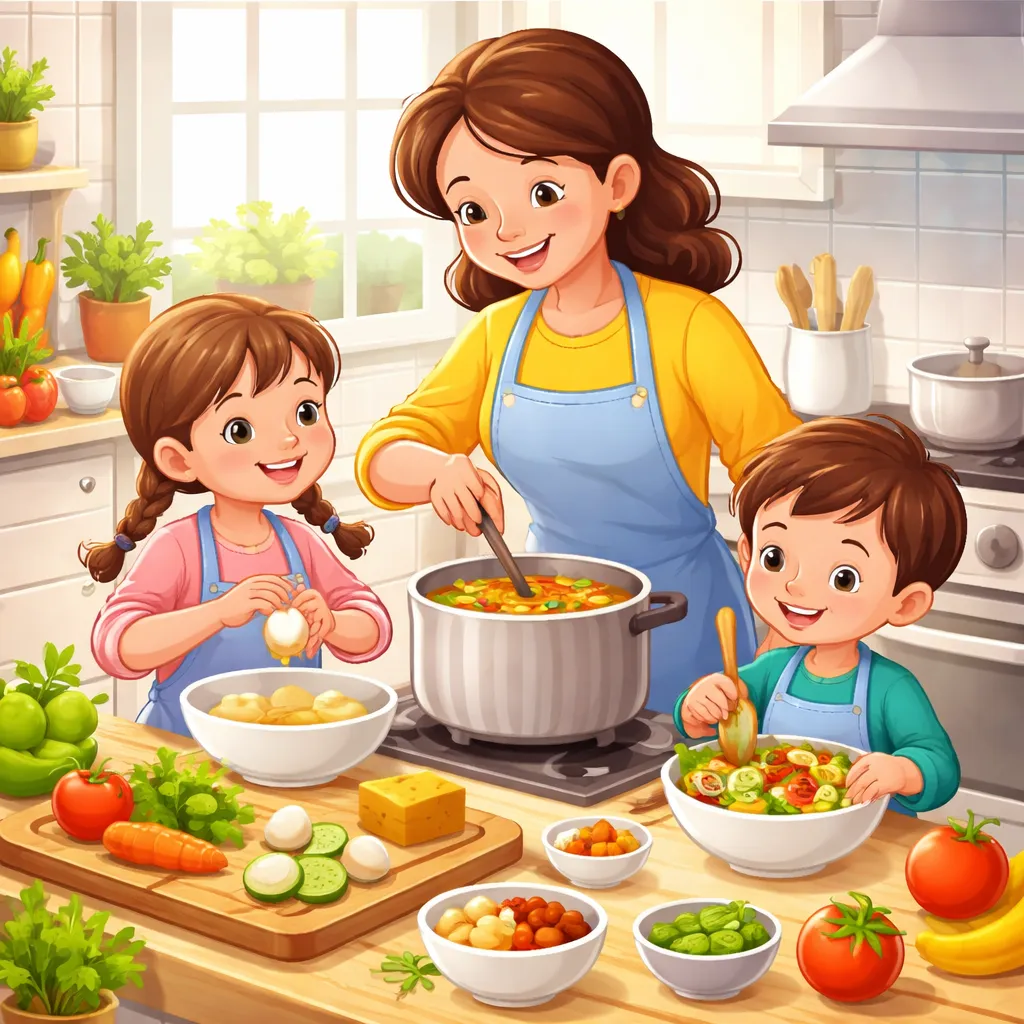

What Is This Situation? The kitchen is a busy place. Pots bubble. Vegetables get chopped. Mixers whir. A child watching is curious. They want to help. They want to be part of making the meal. Cooking together is a time of learning and connection.
English sentences for helping mom cook give children the words to participate. They learn to ask what they can do. They learn the names of tools and ingredients. They learn to follow directions. The words turn a child into a helper.
This situation happens in kitchens, before meals, during baking, anytime food is being prepared. It happens when there is time to include a child. The kitchen becomes a classroom. Cooking becomes conversation.
These phrases are simple and clear. They give directions. They name tools. They ask for help. With these words, your child learns to cook and to talk about cooking.
Key English Phrases for This Situation Use phrases for offering help. "Can I help you cook?" asks to join. "What can I do?" asks for a job. "I want to help" states the wish.
Use phrases for giving directions. "Wash your hands first" starts safely. "Stir the soup" gives a task. "Add one cup of flour" teaches measuring.
Use phrases for naming tools. "Get the big bowl" names the container. "Use the wooden spoon" names the tool. "Where is the measuring cup?" asks for location.
Use phrases for naming ingredients. "We need flour" names a dry ingredient. "Pour the milk" names a liquid. "Add the eggs" names a common ingredient.
Use phrases for praising. "Good job stirring" praises the action. "You are a great helper" praises the role. "Thank you for helping me" expresses gratitude.
Simple Conversations for Kids Dialogue 1: Asking to Help Child: "Mama, can I help you cook?" Parent: "Yes, I would love some help. What do you want to do?" Child: "I want to stir." Parent: "Okay. You can stir the soup. But first, wash your hands." Child washes hands. Parent: "Now use this spoon. Stir slowly. Good job."
This conversation starts with the child asking. The parent says yes. The child chooses a task. The parent gives safety directions. The child helps. The parent praises.
Dialogue 2: Making Cookies Parent: "We are making cookies today. Do you want to help?" Child: "Yes!" Parent: "First, we need flour. Can you get the flour from the cupboard?" Child gets flour. Parent: "Good. Now we need sugar. Where is the sugar?" Child points. Parent: "Yes. Now we measure. One cup of flour. Can you pour it in the bowl?" Child pours. Parent: "Great. Now we mix. Use your hands."
This conversation involves the child in every step. The parent gives tasks. The child finds ingredients. The child measures. The child pours. The child mixes. The cookies become a team effort.
Dialogue 3: A Simple Task Parent: "I am making salad. Can you wash the lettuce?" Child: "I can do that." Parent: "Put the lettuce in the colander. Turn on the water. Rinse each leaf." Child washes lettuce. Parent: "Now shake off the water. Good. You washed the lettuce all by yourself." Child: "I helped make salad." Parent: "Yes, you did. Thank you."
This conversation gives one clear task. The child follows the steps. The child completes the task. The parent praises. The child feels proud.
Vocabulary You Should Know Stir means to mix with a spoon. You can say "Stir the soup." This is a common cooking action.
Pour means to make liquid flow from a container. You can say "Pour the milk." This action needs care.
Mix means to combine ingredients. You can say "Mix the flour and sugar." This word names the goal.
Measure means to get the right amount. You can say "Measure one cup." This action teaches math too.
Bowl is the container you mix in. You can say "Get the big bowl." This word names a common tool.
Spoon is the tool for stirring. You can say "Use the wooden spoon." This word names a common utensil.
How to Use These Phrases Naturally Use a patient and encouraging tone. Cooking with a child takes time. Your voice should say "I am glad you are here." Patience makes cooking together a joy.
Say the phrases in order. Cooking has steps. Give directions one at a time. "First, get the bowl." Wait. "Now, add the flour." Wait. One step at a time works for little helpers.
Let your child do real tasks. Stirring, pouring, washing vegetables. Real tasks matter. They feel like real help. Your child feels capable.
Expect mess. Cooking with children is messy. That is part of learning. Praise the help, not the cleanliness.
Cook things your child likes. When they help make something they love, they are more engaged. Their favorite food is the best motivation.
Common Mistakes to Avoid One mistake is giving tasks that are too hard. A child cannot chop vegetables safely. Give safe tasks. Stirring. Washing. Pouring. Mixing with hands. Safe tasks build confidence.
Another mistake is taking over. Let your child do the task. Even if it is slow. Even if it is messy. Their help is about learning, not efficiency.
Some parents forget safety rules. "Wash your hands first" is important. "The stove is hot" teaches safety. Safety language is part of cooking.
Avoid perfection. The cookies may be lumpy. The salad may be wet. That is okay. The learning is the goal. The food will still taste good.
Tips for Parents and Practice Ideas Start with simple recipes. Cookies, salad, sandwiches. Simple recipes have few steps. Success is more likely.
Use a stool or tower. Your child needs to reach the counter safely. A stool gives them access. They can see and do.
Cook at the same time each week. Saturday morning pancakes. Tuesday night pasta. Routine builds skills. Your child knows when they get to help.
Talk about what you are doing. "Now I am chopping carrots. Now I am adding them to the pot." Talking makes the cooking a conversation.
Let your child taste as you go. "Taste the sauce. Does it need more salt?" Tasting connects the process to the result.
Fun Practice Activities Make a cooking apron. Let your child decorate a plain apron. They wear it when they cook. The apron makes them a real chef.
Play restaurant. Your child cooks play food. They use the words. "I am stirring the soup." Play builds skills for real cooking.
Create a recipe book. Draw pictures of the steps. "First, get the bowl. Second, add flour." Your child follows the book. The book builds independence.
Sing a cooking song. "Stir, stir, stir the soup. Pour, pour, pour the milk. Mix, mix, mix the dough. Cooking is so fun." Music makes the actions fun.
Sort ingredients. Give your child dry pasta or beans. They sort by color or shape. Sorting builds classification skills. It also keeps them busy while you cook.
English sentences for helping mom cook turn kitchen time into language time. Your child learns the words for tools and ingredients. They learn to follow directions. They learn to ask and to help. And when the meal is done, they can look at the food and say "I helped make that." That pride is the best reward. The words you share in the kitchen will stay with your child. They will remember stirring the soup. They will remember washing the lettuce. They will remember being your helper. And one day, they will cook for you. And you will remember these days in the kitchen, learning together.