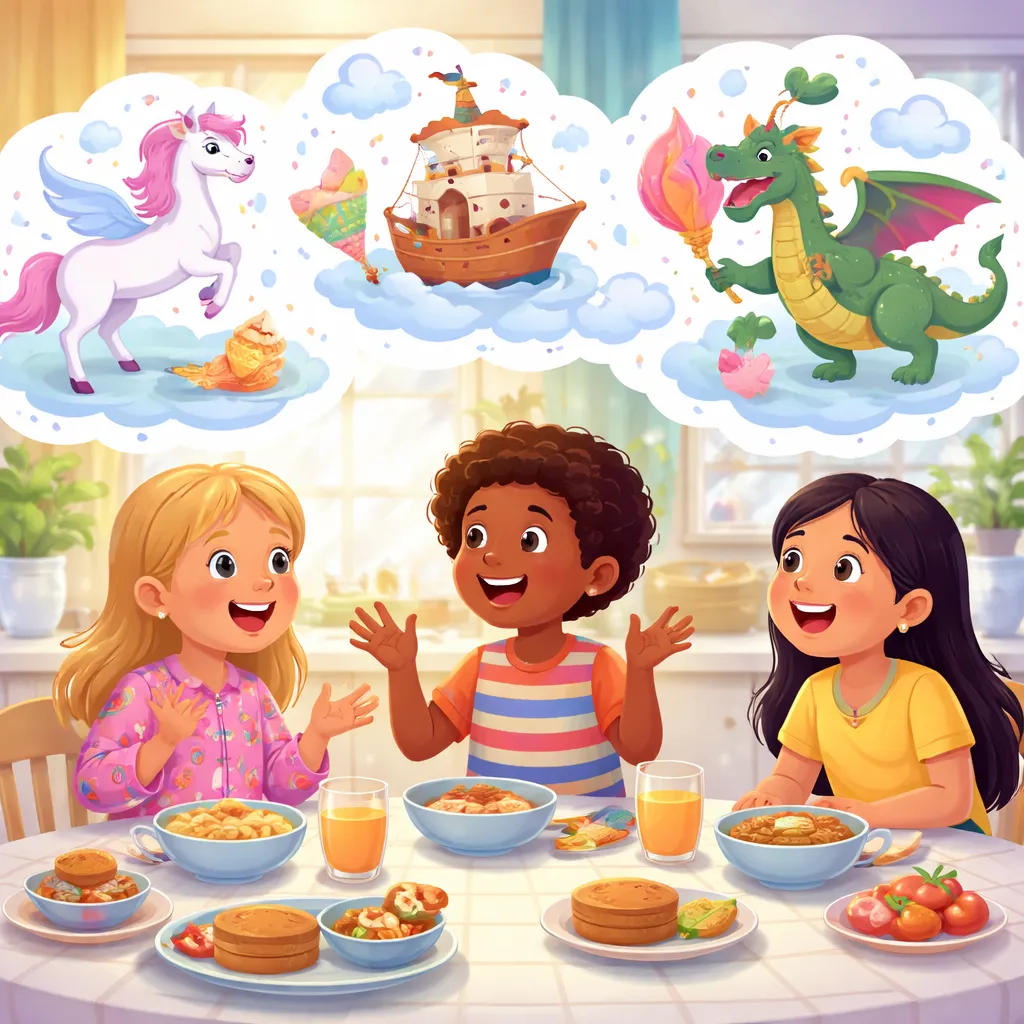

hat Is This Situation? Morning comes. Your child wakes up. Their eyes open. They stretch. They smile. Sometimes they remember something from the night. A dream. A story that played in their head while they slept. They want to tell you about it.
Talking about dreams in the morning in English gives children the words to share these nighttime adventures. They learn to say what they saw. They learn to say how they felt. They learn to ask about your dreams. The words turn private experiences into shared stories.
This situation happens in bedrooms, at breakfast tables, during morning cuddles. It happens when your child first wakes up. The dream is fresh. The words are waiting. The morning is the time to share.
These phrases are simple and curious. They ask about what happened. They name feelings. They celebrate imagination. With these words, your child learns that dreams are stories worth telling.
Key English Phrases for This Situation Use phrases for asking. "Did you have any dreams last night?" opens the conversation. "What did you dream about?" invites sharing. "Do you remember your dream?" is gentle.
Use phrases for describing. "I dreamed about..." starts the story. "I saw..." tells what they saw. "I was..." tells who they were in the dream.
Use phrases for sharing feelings. "It was fun" describes a happy dream. "It was a little scary" names a frightening one. "I felt happy" shares the emotion.
Use phrases for listening. "Tell me more" invites more detail. "What happened next?" continues the story. "That sounds amazing" shows engagement.
Use phrases for connecting. "I dreamed about..." shares your own dream. "Our dreams are so different" compares. "I like hearing about your dreams" expresses love.
Simple Conversations for Kids Dialogue 1: A Happy Dream Parent: "Good morning. Did you have any dreams last night?" Child: "Yes. I dreamed about a big elephant." Parent: "A big elephant? What was the elephant doing?" Child: "It was dancing." Parent: "An elephant dancing? That sounds like a fun dream." Child: "It was fun. I was dancing too." Parent: "You and an elephant dancing together. I wish I could have seen that."
This conversation invites the child to share. The parent asks questions. The child describes the dream. The parent shows interest. The child feels heard.
Dialogue 2: A Scary Dream Child: "I had a bad dream." Parent: "Oh, I am sorry. Do you want to tell me about it?" Child: "There was a monster." Parent: "A monster. That sounds scary. What did it look like?" Child: "It was big and had big teeth." Parent: "That does sound scary. But you are safe now. The monster is gone." Child: "I know. It was just a dream." Parent: "Yes. Dreams are not real. But they can feel real. I am glad you are safe."
This conversation addresses a scary dream. The parent validates the feeling. The parent asks for details. The parent reassures. The child learns that scary dreams can be talked about.
Dialogue 3: Sharing Dreams Together Parent: "I had a dream last night. I dreamed we were at the beach." Child: "I dreamed about a dog." Parent: "A dog? What was the dog doing?" Child: "It was chasing a ball." Parent: "That sounds fun. In my dream, we built a sandcastle." Child: "Next time, I want to dream about the beach too." Parent: "Maybe tonight. I like hearing your dreams."
This conversation shows both people sharing. The parent shares first. The child shares. They talk about both dreams. The conversation is balanced and connected.
Vocabulary You Should Know Dream is a story your mind makes while you sleep. You can say "I had a dream." This word names the experience.
Night is when you sleep. You can say "Last night I dreamed." This word tells when.
Remember means to keep something in your mind. You can say "I remember my dream." This word is for when dreams stay with you.
Monster is a scary creature in dreams. You can say "I dreamed about a monster." This word names a common dream fear.
Fun means enjoyable. You can say "It was a fun dream." This word describes happy dreams.
Scary means making you feel afraid. You can say "It was a scary dream." This word describes frightening dreams.
How to Use These Phrases Naturally Use a curious and gentle tone. Morning is a soft time. Your voice should match. Not rushed. Not loud. Curious about what your child will share.
Say the phrases when your child first wakes up. Dreams are freshest in the morning. The moment they open their eyes is the moment to ask.
Share your own dreams too. When you tell your child about your dream, you model the language. "I dreamed about..." becomes familiar. They learn to share.
Do not push if they do not remember. "I do not remember" is okay. Say "Maybe next time." The invitation is open. No pressure.
Accept all dreams. Even silly dreams. Even scary dreams. All dreams are welcome. Your child learns that sharing is safe.
Common Mistakes to Avoid One mistake is analyzing the dream. "A monster means you are worried about school." Let the dream be a story. Analysis can feel like judgment. Just listen.
Another mistake is dismissing scary dreams. "It was just a dream" can feel like "Your feelings do not matter." First validate. "That sounds scary." Then reassure.
Some parents forget to share their own dreams. If you never share, your child learns that dreams are private. Share your dreams. Make it a family habit.
Avoid comparing. "My dream was better" is not helpful. All dreams are interesting. Each dream is a gift to share.
Tips for Parents and Practice Ideas Make dream time part of the morning routine. After "Good morning," ask "Did you have any dreams?" The routine builds the habit.
Draw your dreams. Give your child paper and crayons. "Draw what you dreamed." The drawing helps them remember. It gives a visual for the words.
Keep a dream journal. Write down your child's dreams. Read them together. The journal becomes a book of their nighttime stories.
Talk about dreams during the day. "Remember that dream about the dancing elephant?" Talking later reinforces the words.
Read books about dreams. Many children's books have characters who dream. Read them together. Talk about what the characters dreamed.
Fun Practice Activities Create a dream box. Decorate a box. After talking about dreams, your child draws the dream and puts it in the box. The box collects the dreams.
Play the dream game. You start. "I dreamed about a cat." Your child adds. "The cat was jumping." You add. "It jumped to the moon." Together you build a dream story.
Make dream puppets. Use paper bags or socks. Your child makes a puppet of something from their dream. They tell the dream through the puppet.
Sing a dream song. "Last night, last night, I had a dream. A dream about a butterfly. It flew so high, it flew so high. Last night, last night, I had a dream." Music makes sharing fun.
Draw dream maps. Your child draws the places they went in their dream. They tell the story of the map. The map helps them remember the sequence.
Talking about dreams in the morning in English turns the first moments of the day into a time of connection. Your child learns that their dreams matter. Their stories matter. Their feelings matter. And they learn the words to share all of it. In the quiet of the morning, with the sun coming up, you listen. You ask. You share your own dreams. And in those moments, you build more than vocabulary. You build a relationship where all stories are welcome. The real ones and the ones that happen while you sleep. That is the gift of dream talk. It says "I want to hear what your mind made while you were sleeping. I want to know you. All of you." And your child, hearing that, will tell you their dreams.