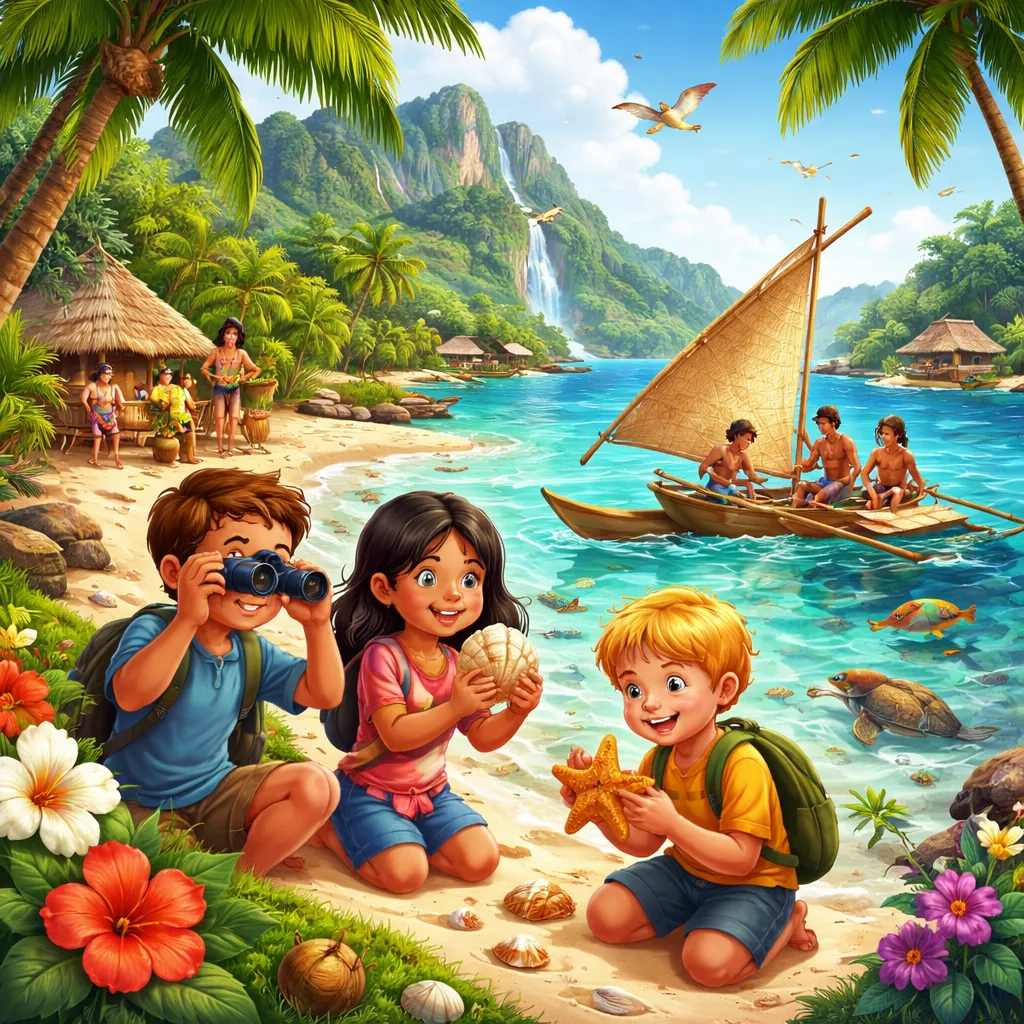

Introduction to Micronesia
Language learning transports us to a vast ocean scattered with thousands of tiny islands. Today we explore a country whose name means "small islands." This nation stretches across an enormous area of the Pacific Ocean. Children will discover a place where people navigate by reading the stars and waves. They will learn about ancient stone cities built on coral reefs. Exploring Micronesia builds reading skills while revealing the wonders of Pacific island life. Every fact shows how people thrive across vast distances. Every word invites young readers to imagine life on these remote islands.
Where Is Micronesia?
Micronesia lies in the western Pacific Ocean. It sits north of the equator between Hawaii and Papua New Guinea. The country consists of over six hundred islands spread across a huge ocean area. The islands divide into four main states. These are Yap, Chuuk, Pohnpei, and Kosrae. The capital city is Palikir. Palikir sits on the island of Pohnpei. The country has no land borders. Its nearest neighbors include the Marshall Islands, Palau, and Papua New Guinea. Finding Micronesia on a map shows a scattered group of islands across a vast blue ocean. The land area is small, but the ocean territory stretches for thousands of miles.
Interesting Facts About Micronesia
Micronesia offers many remarkable facts for young learners. The country holds one of the most mysterious ancient sites in the Pacific. Nan Madol is a city built on artificial islands off the coast of Pohnpei. Ancient builders stacked massive stone logs to create walls and platforms. No one knows exactly how they moved these stones. Another interesting fact involves navigation. Micronesian sailors navigated across thousands of miles without maps or compasses. They read the stars, the waves, and the flight of birds. This knowledge passed down through generations.
Micronesia also has a unique form of money. On the island of Yap, people use giant stone disks as currency. These stones can be as tall as a person. Some weigh several tons. The stones do not move. Ownership changes through agreement. Another fun fact involves diving. The waters around Chuuk hold dozens of shipwrecks from World War II. These wrecks now form artificial reefs covered in coral. Divers from around the world come to explore them.
The country also has incredible marine life. The reefs hold over one thousand species of fish. Manta rays, sea turtles, and sharks swim in the clear waters. These facts show children a nation where ancient traditions meet the vast Pacific Ocean.
Key Vocabulary About Micronesia
Let us build vocabulary for this Pacific nation. These words help children describe what they learn.
Archipelago: a group or chain of islands.
Navigation: the skill of finding your way across water.
Artificial: made by people rather than natural.
Reef: a ridge of coral near the surface of water.
Currency: money or a system of payment.
Lagoon: a shallow body of water separated from the sea by a reef.
Coral: a hard substance made by tiny sea animals. Introduce these words with pictures and stories. Show Nan Madol with its massive stone walls. Show the giant stone money of Yap. Let children say each word aloud. These vocabulary words give children the language to explore Micronesia's unique culture and geography.
Simple Sentences for Reading Practice
Short sentences help new readers build confidence. Use these sentences about Micronesia for practice.
Micronesia is a country in the Pacific Ocean.
The country has over six hundred islands.
The capital city is Palikir.
Nan Madol is an ancient city built on water.
People on Yap use giant stone money.
Sailors navigate using stars and waves.
Coral reefs surround the islands. Read each sentence together. Let children point to the words. Encourage them to repeat after you. Use pictures to show each fact. These simple sentences prepare young readers for longer passages.
Short Reading Passage About Micronesia
Here is a short passage for children to read together.
“Micronesia spreads across the western Pacific Ocean. Four main states make up this island nation. Yap, Chuuk, Pohnpei, and Kosrae each hold their own traditions. The capital, Palikir, sits on the green island of Pohnpei. Off the coast of Pohnpei, an ancient city rises from the water. Nan Madol consists of artificial islands built with massive stone logs. No one knows exactly how people moved these stones so long ago. On the island of Yap, people use giant stone disks for money. Some stones weigh more than a car. Owners do not move the stones. Everyone knows who owns each one. Micronesian sailors mastered the ocean. They learned to read the stars, the waves, and the wind. They could find tiny islands across thousands of miles. Under the water, coral reefs teem with life. Colorful fish dart among the corals. Turtles glide through the lagoons. Micronesia proves that small islands hold big stories.”
Read this passage slowly together. Pause to talk about each idea. Ask children to find vocabulary words in the text. This activity builds reading fluency and deepens understanding.
Fun Questions About Micronesia
Questions make reading interactive and engaging. Use these to start conversations with young learners.
What ocean contains Micronesia?
What is the capital city of Micronesia?
What ancient city was built on artificial islands?
What do people on Yap use for money?
How did Micronesian sailors find their way across the ocean?
How many islands does Micronesia have? Let children answer in complete sentences. Encourage them to use new vocabulary. Ask them to imagine building a city on the water. What would they build? Creative questions make the topic personal and exciting.
Tips for Learning English with This Topic
Use Micronesia to create engaging English learning experiences. Start with a map activity. Let children find Micronesia in the Pacific Ocean. Point out how many islands spread across such a large area. Discuss how people traveled between them without modern tools. This connects geography to history and navigation.
Next, introduce the vocabulary through a hands-on activity. Create a simple navigation activity using a bowl of water. Let children float small boats and use straws to create waves. Explain how Micronesian sailors read wave patterns. For stone money, let children create their own stone disks from clay or paper. Talk about why a culture might use such large currency.
Read the passage aloud with a sense of mystery and wonder. Let your voice reflect the unknown about Nan Madol. After reading, let children draw a scene from Micronesia. One child might draw Nan Madol with its stone walls rising from the water. Another might draw a sailor reading stars above the ocean. Let them label their drawings with vocabulary words.
Incorporate a science and history connection. Talk about how ancient people built Nan Madol without modern machines. Discuss how reading stars and waves works as a navigation method. This shows children that language learning reading connects to human ingenuity and science.
Use music and movement to enhance the experience. Play gentle ocean sounds while reading or drawing. Let children move like waves or pretend to navigate by the stars. Physical activity reinforces learning in joyful ways.
Encourage children to share their knowledge. Let them tell a family member about Nan Madol or the giant stone money. They can explain how sailors found tiny islands in the vast ocean. Teaching others builds confidence and deepens understanding.
Connect Micronesia to your child's world. Ask, “How do we find our way when we travel?” Compare maps and GPS to star navigation. Ask about unusual money forms in your community. Compare to the stone disks of Yap. These connections help children see that language learning reading is about understanding how people solve problems in different ways. By exploring Micronesia together, you give children a rich experience. They learn new words, discover a nation of ocean navigators, and grow their love for reading. This Pacific island nation becomes a meaningful part of their learning journey.