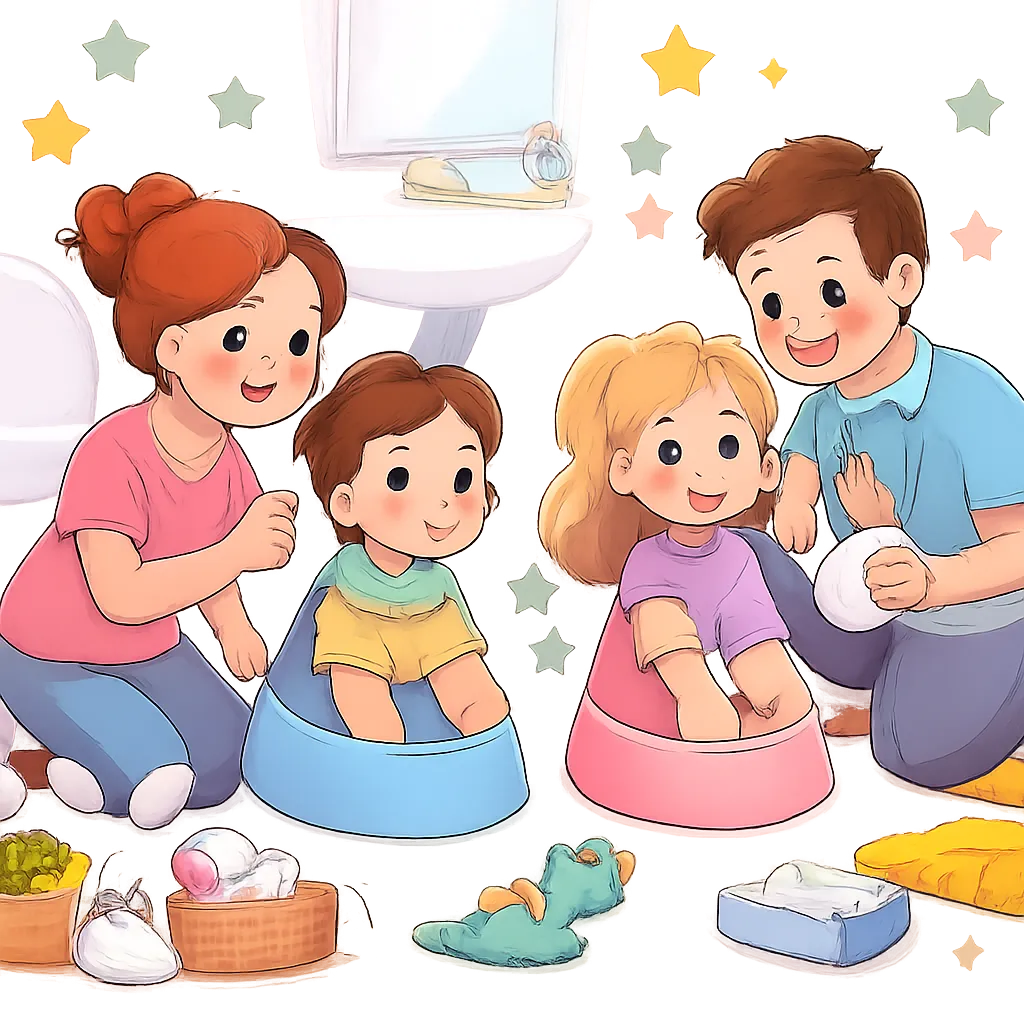

What Is This Situation? Potty training is a big step in a young child's life. It happens in the bathroom, at home, and sometimes when you are out. This is a time when children learn to listen to their bodies. They also learn new words to tell you what they need.
This situation happens many times each day. Your child moves from diapers to using the toilet. They need words to say when they feel the urge. They need words to ask for help. They also need words to feel proud of their success.
Using English during potty training helps in two ways. It gives your child clear language to communicate. It also makes the routine feel consistent. When you use the same words each time, your child knows what to expect.
These words are simple and gentle. They focus on body awareness, asking for help, and celebrating progress. The bathroom becomes a place where your child builds both independence and language skills.
Key English Phrases for This Situation Start with phrases that signal the need. "I need to go potty" is a clear and simple sentence. It gives your child a way to tell you before an accident happens. Another useful phrase is "My tummy feels funny." This helps younger children describe the physical feeling.
Use phrases for the actions themselves. "Let us go to the bathroom" moves you both to the right place. "Pull down your pants" gives a clear direction. "Sit on the potty" tells your child what to do next.
Use phrases for encouragement. "You can do it" builds confidence. "Try to go potty" is gentle and not pushy. "I am right here" offers comfort and safety.
Use phrases for success. "You did it" celebrates the moment. "Good job using the potty" gives specific praise. "Let us flush and wash hands" teaches the complete routine.
Use phrases for accidents. "It is okay. Accidents happen" keeps the mood calm. "Next time you can tell me sooner" offers a gentle reminder. These words prevent shame and keep learning positive.
Simple Conversations for Kids Dialogue 1: Telling a Parent Child: "Mommy, I need to go potty." Parent: "Okay, let us go to the bathroom." Child: "I go fast." Parent: "Yes, we go now. Good job telling me."
This conversation shows a child using the key phrase. The parent responds quickly and positively. The child feels heard and successful.
Dialogue 2: Sitting on the Potty Parent: "Do you feel ready to try?" Child: "I try." Parent: "Okay. Sit down. I wait here." Child sits. Parent: "You are trying. That is good."
Here, the parent respects the child's readiness. The child uses a simple word to agree. The parent gives encouragement without pressure.
Dialogue 3: After an Accident Child starts to cry. Parent: "It is okay. Accidents happen." Child: "I did not tell you." Parent: "Next time you can say 'I need to go.' Let us clean up." Child: "Okay. I tell you next time."
This dialogue normalizes accidents. The parent offers comfort. The child learns what to do next time. The conversation ends with a plan.
Vocabulary You Should Know Potty is the small toilet or the word for using it. You can say "Do you need the potty?" This is a gentle word that most children learn first.
Pee and poop are simple words for what comes out. You can say "Did you pee in the potty?" These words are direct and easy for toddlers to say.
Pants are the clothing you wear over your bottom. You can say "Pull your pants down." This action word is part of the routine.
Flush means to make the toilet clean with water. You can say "Let us flush now." Many children enjoy this step. It makes the routine feel complete.
Wash means to clean with soap and water. You can say "Now we wash our hands." This is an important habit to build alongside potty training.
Dry means to remove water with a towel. You can say "Let us dry your hands." These words follow a natural sequence after flushing.
How to Use These Phrases Naturally Use a calm and steady tone. Potty training can bring big emotions. Your voice should stay even and kind. This helps your child feel safe even when things do not go as planned.
Say the phrases at the right moments. When you see your child doing the potty dance, say "Do you need to go potty?" When they succeed, say "You did it" right away. Timing makes the words meaningful.
Use the same phrases every time. Consistency helps memory. If you always say "Let us wash hands" after flushing, your child learns the sequence. They may even say it before you do.
Let your child hear you use these words for yourself. Say "Mommy needs to go potty." This normalizes the language. It shows that everyone uses these words.
Be patient. Some children learn the words quickly. Others need more time. Keep using the phrases gently. Do not pressure your child to repeat them. They will speak when ready.
Common Mistakes to Avoid One mistake is using baby words that other caregivers do not understand. If you use a private word for potty, your child may struggle at preschool. Use clear words that everyone can recognize.
Another mistake is reacting strongly to accidents. If you show frustration, your child may feel scared to try again. Stay calm. Use your gentle phrases. "Accidents happen" keeps the mood safe.
Some children use translations from their home language. They might say "water comes out" instead of "I peed." Gently model the common phrase. Say "Oh, you peed. Good job telling me."
Avoid long explanations during the moment. A child who needs to go cannot process many words. Keep it short. "Sit down. Try." Save longer talks for calm times.
Tips for Parents and Practice Ideas Talk about potty training before you start. Read a book about using the potty. Point to the pictures and use the words. This prepares your child for what is coming.
Use the same phrases at home and when you are out. Say "Let us find the potty" at a store or a friend's house. Consistency across places builds confidence.
Let your child practice with dolls. Give your child a doll that "uses the potty." Your child can say "Do you need to go potty?" to the doll. This playful practice reduces pressure.
Praise the effort, not just success. Say "Good job telling me you need to go" even if nothing happens. The words and the communication are the real wins.
Stay relaxed. Children sense your mood. If you feel stressed, they feel stressed. Take a breath. Use your kind phrases. Trust that your child will learn in their own time.
Fun Practice Activities Play pretend potty with stuffed animals. Set up a small box as a potty. Your child makes the toy sit and say "I need to go potty." This lets your child practice the words without any pressure.
Sing a potty song together. Make a simple tune. Use words like "potty, potty, I can go. Pull my pants down, nice and slow." Music makes the words stick.
Draw a potty chart. Each time your child uses the potty, they add a sticker. You say "You did it" each time. The words and the sticker together build positive feelings.
Read potty books in English. Many children's books show the potty routine with simple words. Read them together. Your child sees the words in a fun story.
Create a potty basket with small toys or books. Keep it near the toilet. Your child can look at it while sitting. This makes the time feel special. You can say "Look at your potty basket" as a gentle invitation to sit.
Potty training is a journey of small steps. The words you choose become part of that journey. They give your child a voice in a new skill. With patience and gentle language, you build both confidence and communication. Each "I did it" and each calm "accidents happen" teaches more than English. They teach your child that you are there, steady and kind, through every step of learning.