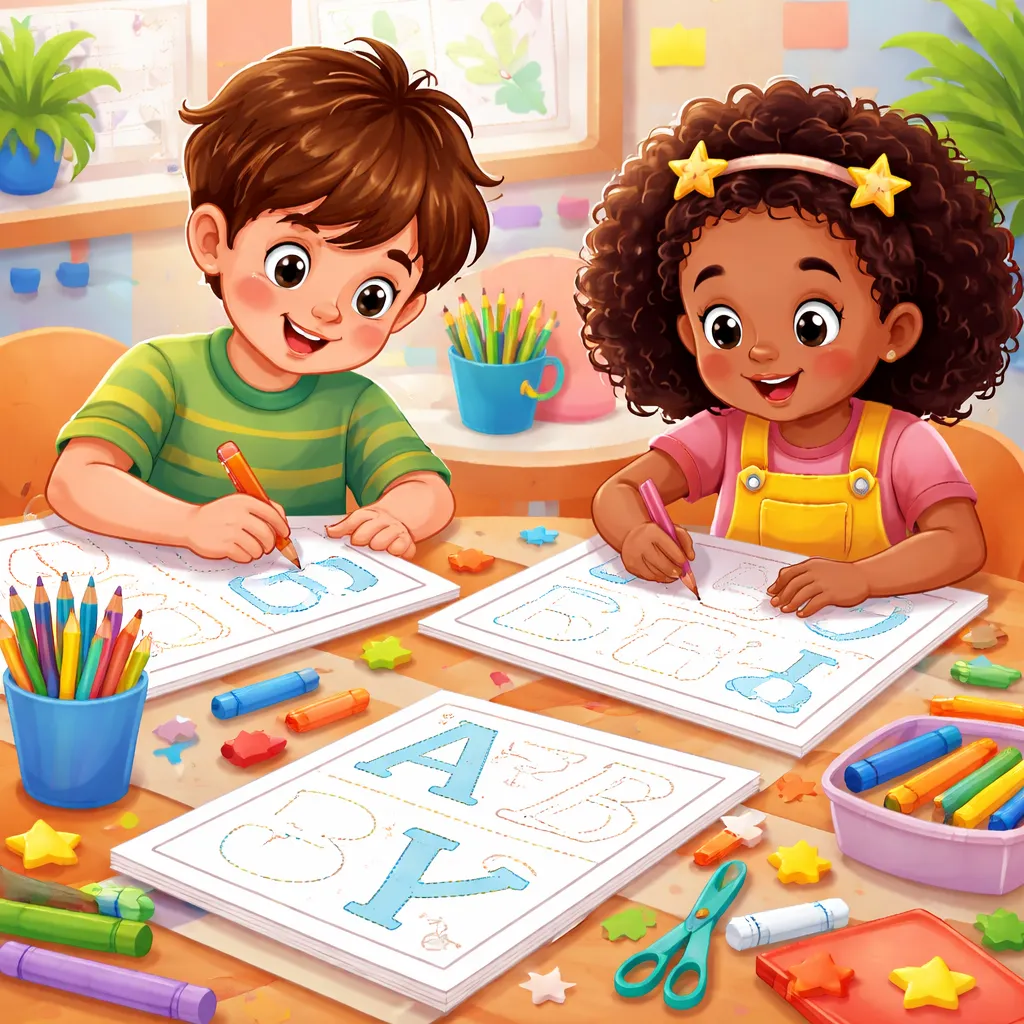

What Is This Situation? Writing letters takes practice. Children need to learn how to form each letter. Where to start. Which way to go. Tracing helps. It shows the path. Children follow the dotted lines. They learn the shape.
Printable alphabet tracing sheets give children a simple, effective way to practice. Each sheet has a letter. Big letters to trace. Small letters to trace. Dots to show the order. Children trace. They learn. They build muscle memory.
This situation happens during quiet time, during writing practice, during moments when children are learning letters. Tracing sheets are portable. You can use them at home, on a trip, anywhere.
These sheets are best used with conversation. Talk about the letter. Talk about the sound. Talk about the strokes. The learning happens while writing.
Key English Phrases for This Situation Use phrases for introducing tracing. "Let us practice writing the letter A. Start at the dot. Trace the lines." "Follow the dotted lines. A. A is for apple."
Use phrases for guiding. "Start at the top. Go down. Now back up. Go across. That is A." "Good. Now try on your own."
Use phrases for letter sounds. "A says 'ah.' Ah like apple. Can you say ah?" "A is the first letter in apple."
Use phrases for celebrating. "You traced the A. Good job." "Your A is getting better."
Use phrases for practicing. "Let us try the next letter. B. B says 'buh.'" "Start at the top. Down. Around. That is B."
Simple Conversations for Kids Dialogue 1: Tracing the Letter A Parent: "Let us practice the letter A. Look at the tracing sheet. Start at the dot. Trace the lines." Child traces. Parent: "Good. Now trace the next A." Child traces. Parent: "Now try on your own." Child writes A. Parent: "You wrote A. Good job. A is for apple."
This conversation introduces tracing. The parent guides. The child traces. The learning begins.
Dialogue 2: Letter Sound Practice Parent: "A says 'ah.' Ah like apple. Can you say ah?" Child: "Ah." Parent: "Good. What word starts with A?" Child: "Apple." Parent: "Yes. Apple starts with A. Now let us trace the next letter. B."
This conversation adds letter sounds. The child practices the sound. The learning continues.
Dialogue 3: Tracing the Whole Alphabet Parent: "Let us trace all the letters. Start with A." Child traces A. Parent: "Now B." Child traces B. Parent: "Now C." Child traces C. Parent: "You traced A, B, and C. Good job. Let us keep going."
This conversation practices multiple letters. The child traces. The parent guides. The skills build.
Vocabulary You Should Know Trace means to follow the lines. You can say "Trace the letter A." This is the action.
Dot is where you start. You can say "Start at the dot." This is the beginning.
Line is the path you follow. You can say "Follow the dotted line." This is the guide.
Letter is the symbol you are writing. You can say "Write the letter A." This is the goal.
Sound is what the letter makes. You can say "A says ah." This is the phonics.
Write means to make letters with a pencil. You can say "Now write on your own." This is the skill.
How to Use These Phrases Naturally Use a calm and encouraging tone. Writing takes practice. Your patience says "You can do this."
Say the phrases as your child traces. "Start at the top. Go down." The words guide the hand.
Let your child go at their own pace. Some children trace carefully. Some go fast. Both are fine.
Talk about the letter sounds. "A says ah. What word starts with A?" The sounds connect to the shapes.
Celebrate each letter. "You traced A. Good job." Small celebrations build confidence.
Common Mistakes to Avoid One mistake is correcting every stroke. Let your child try. If they go the wrong way, gently guide. "Try starting at the top."
Another mistake is moving too fast. Master a few letters before adding more. Five letters a week is enough.
Some children get frustrated. If your child is frustrated, stop. Try again later. Learning should feel good.
Avoid comparing. Every child learns at their own pace. Your child will learn.
Tips for Parents and Practice Ideas Print the sheets on good paper. Keep them in a folder. Your child sees their progress.
Use a pencil or crayon. Crayons are easier for small hands. Pencils can be erased.
Start with capital letters. They are easier. Then move to lowercase.
Trace with a finger first. Practice the shape without a pencil. Finger tracing builds muscle memory.
Make it fun. "Let us write A for apple. Then we can draw an apple."
Fun Practice Activities Trace in sand. Pour sand in a tray. Your child traces the letter with a finger. Sensory learning is powerful.
Trace in the air. Use a finger to trace big letters in the air. Whole body learning.
Make a letter book. Staple tracing sheets together. Your child has their own alphabet book.
Play letter detective. Your child finds the letter they traced in books. "I found A. Apple."
Sing the alphabet song while tracing. Music makes the order stick.
Printable alphabet tracing sheets help children build strong writing skills. A, B, C. Trace the lines. Learn the shapes. With playful practice and patient guidance, your child will learn to write letters. They will trace with confidence. They will write on their own. That is the power of practice. One letter at a time, your child will learn. And you will be there to guide every stroke.