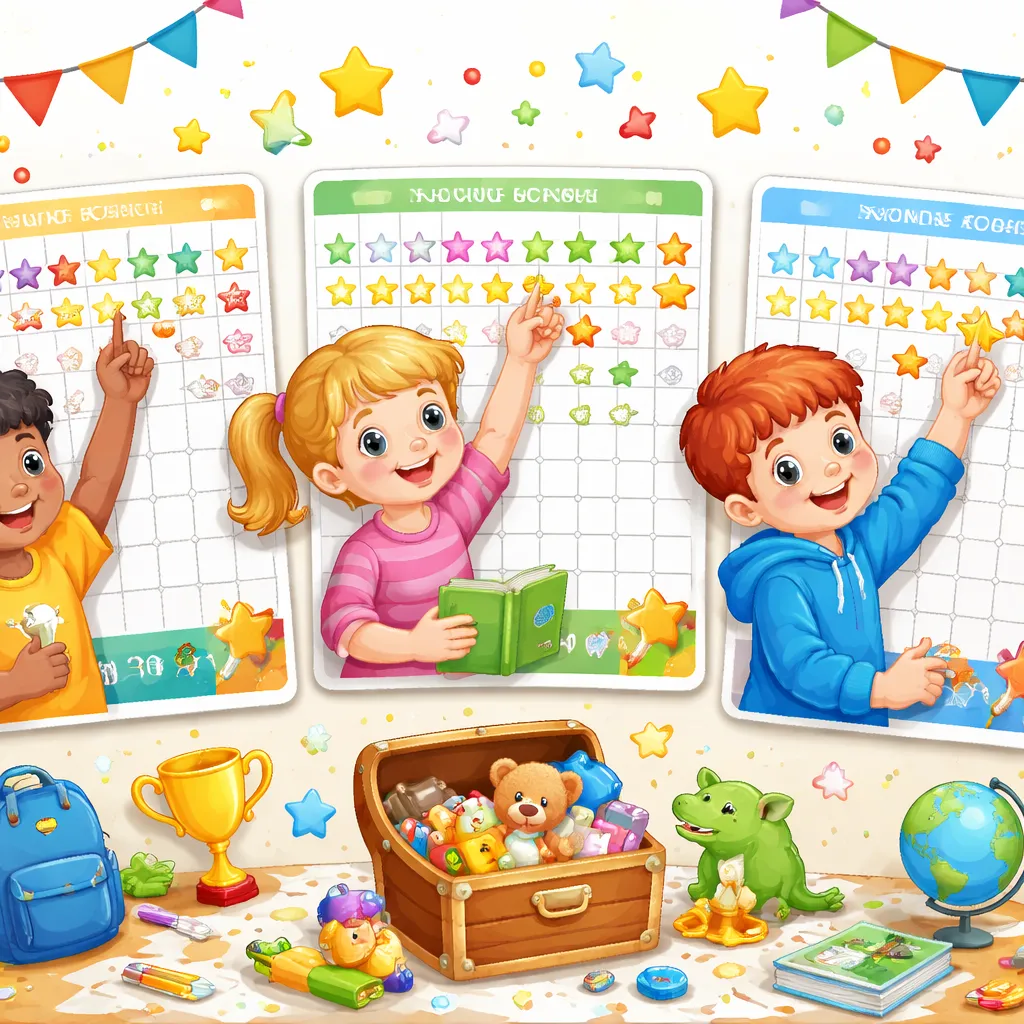

What Is This Situation? Learning English takes practice. Sometimes children need a little motivation. A reward chart helps. They do a task. They get a sticker. They fill the chart. They get a reward. The chart makes progress visible.
Printable reward charts for English learning give children a visual way to see their achievements. Learned five new words. Read a book. Spoke in English. Each success gets a sticker. The chart builds motivation.
This situation happens during learning time, during practice time, during moments when children reach goals. Reward charts are positive. They celebrate success. They make children want to learn.
These charts are best used with conversation. Talk about the goal. Celebrate each sticker. The learning happens while filling the chart.
Key English Phrases for This Situation Use phrases for introducing the chart. "Let us make a reward chart for your English learning. Every time you do something, you get a sticker." "When the chart is full, you get a reward."
Use phrases for setting goals. "What do you want to work on? Learning new words? Reading a book?" "Let us put your goal at the top."
Use phrases for giving stickers. "You learned five new words. Let us put a sticker on the chart." "You read a book. Good job. Here is a sticker."
Use phrases for celebrating. "Look at your chart. It is almost full. You are doing great." "You filled the chart. You reached your goal. Let us celebrate."
Use phrases for choosing rewards. "What reward do you want when the chart is full?" "A trip to the park? A new book? A special treat?"
Simple Conversations for Kids Dialogue 1: Making the Chart Parent: "Let us make a reward chart for your English learning. What goal do you want to work on?" Child: "Learn ten new words." Parent: "Good. Let us write that at the top. 'Learn ten new words.' Every time you learn a new word, we put a sticker." Child: "I want a sticker for each word." Parent: "Yes. When you have ten stickers, you get a reward."
This conversation starts the chart. The child chooses the goal. The parent sets up the chart. The motivation begins.
Dialogue 2: Getting Stickers Parent: "You learned the word apple. Let us put a sticker on the chart." Child puts sticker. Parent: "Good. One sticker. You have nine more to go." Child: "I learned cat too." Parent: "Yes. Cat is another new word. Let us put another sticker."
This conversation gives stickers. The child learns words. The parent celebrates. The chart fills.
Dialogue 3: Reaching the Goal Parent: "You learned ten new words. Look at your chart. It is full." Child: "I did it." Parent: "Yes. You reached your goal. What reward did you want?" Child: "Go to the park." Parent: "Let us go to the park. You worked hard. You earned it."
This conversation celebrates the goal. The child sees success. The parent delivers the reward. The learning is complete.
Vocabulary You Should Know Reward chart is a chart where you put stickers for achievements. You can say "Let us make a reward chart." This is the tool.
Goal is what you want to achieve. You can say "What is your goal?" This is the target.
Sticker is a small picture you put on the chart. You can say "Put a sticker on the chart." This is the reward.
Achievement is something you did well. You can say "You made an achievement." This is the success.
Progress is moving toward your goal. You can say "Look at your progress." This is the growth.
Reward is something you get when you reach your goal. You can say "You earned a reward." This is the motivation.
How to Use These Phrases Naturally Use an encouraging and celebratory tone. Rewards charts are positive. Your voice should show it. "You got a sticker. Good job."
Say the phrases as your child earns stickers. "You learned a new word. Let us put a sticker on the chart." The words connect action to reward.
Let your child put the stickers on. Putting the sticker is part of the celebration.
Celebrate small steps. "You learned one word. Good. Let us put a sticker." Small celebrations build momentum.
Make the reward meaningful. Let your child choose. Choice builds ownership.
Common Mistakes to Avoid One mistake is making the goal too hard. Start with a small goal. Five stickers. Success builds confidence.
Another mistake is forgetting to use the chart. Put it where your child can see it. Use it every day.
Some children lose interest. Change the goal. Change the reward. Keep it fresh.
Avoid using rewards for everything. Use them for specific goals. Too many rewards lose meaning.
Tips for Parents and Practice Ideas Print the chart on big paper. Hang it where your child can see it. Daily visibility matters.
Use fun stickers. Stars, animals, cartoon characters. Stickers that your child loves.
Celebrate when the chart is full. Make a big deal. "You did it. Let us celebrate."
Let your child help design the chart. Colors, pictures, decorations. Ownership builds motivation.
Keep old charts. Show your child their progress over time. "Look at all the charts you filled."
Fun Practice Activities Make a sticker story. Each sticker is part of a story. "This sticker is the word apple. The apple is red." The story builds language.
Create a family reward chart. Everyone works toward a goal. Learning together is fun.
Play reward chart bingo. Fill a row. Get a small reward. Fill the whole chart. Get a bigger reward.
Sing the reward chart song. "Sticker, sticker, on the chart. I am learning, I am smart." Music makes motivation fun.
Use a reward jar. Put a marble in a jar for each achievement. When the jar is full, get a reward. The jar makes progress visible.
Printable reward charts for English learning motivate children to practice and achieve. Set a goal. Earn stickers. Celebrate success. With playful practice and patient guidance, your child will learn English. They will see their progress. They will feel proud. That is the power of reward charts. One sticker at a time, your child will learn. And you will be there to celebrate every achievement.