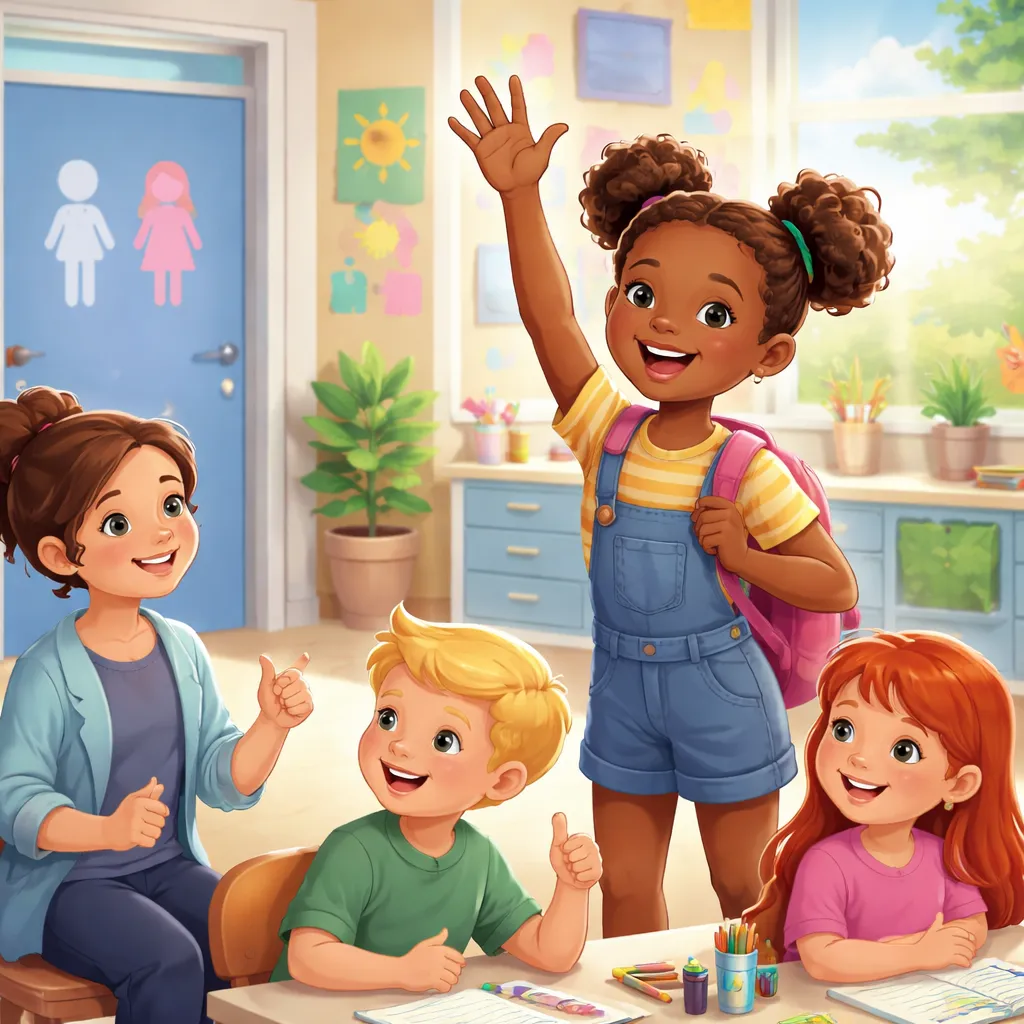

What Is This Situation? Every child needs to use the bathroom during the day. At home, they can go anytime. But at school, at a restaurant, at a friend's house, they need to ask. They need words to tell a grown-up what they need.
How to ask to go to the bathroom in English gives children the language for this essential need. Instead of waiting until it is urgent, they learn to speak up. Instead of feeling embarrassed, they learn the right words. The phrases help them take care of themselves.
This situation happens at school, at stores, at restaurants, at friends' homes, and anywhere away from home. It happens when a child is in a classroom and needs to be excused. It happens when a child is at a playdate and needs to find the bathroom.
These phrases are clear and polite. They ask permission. They state the need. They work in any setting. With these words, your child can confidently ask to use the bathroom wherever they are.
Key English Phrases for This Situation Use phrases for asking permission. "May I go to the bathroom, please?" is formal and polite. "Can I go to the bathroom?" is simpler. "Please may I use the restroom?" is another option.
Use phrases for stating urgency. "I need to go" is direct. "It is urgent" tells the adult it is important. "I cannot wait" communicates the need for speed.
Use phrases for different settings. At school: "Teacher, may I go to the bathroom?" At a restaurant: "Excuse me, where is the bathroom?" At a friend's house: "Can I use your bathroom, please?"
Use phrases for after. "Thank you" is polite. "I am back" lets the teacher know you returned. "I washed my hands" shows good hygiene.
Use phrases for asking again. "May I please go again?" is polite if the first request was denied. "I really need to go" communicates urgency.
Simple Conversations for Kids Dialogue 1: At School Child raises hand. Teacher: "Yes?" Child: "May I go to the bathroom, please?" Teacher: "Yes, you may. Go quickly and come right back." Child: "Thank you." Child goes and returns. Child: "I am back."
This conversation shows the complete school routine. The child raises a hand. The child asks politely. The child says thank you. The child reports return. The teacher knows where the child is.
Dialogue 2: At a Restaurant Child: "Mom, I need to go to the bathroom." Parent: "Okay. Let me ask the server where it is." Parent: "Excuse me, where is the restroom?" Server: "It is down the hall, to the left." Parent: "Thank you. Come on, let us go."
This conversation shows a child speaking up in a public place. The child states the need. The parent handles the location question. The child goes with the parent. The need is met.
Dialogue 3: Urgent Need Child: "Teacher, I cannot wait." Teacher: "Go quickly. You do not need to ask next time if it is urgent. Just go and tell me when you are back." Child: "Thank you." Child runs to bathroom. Child returns: "I am back. I washed my hands." Teacher: "Good job. Thank you for telling me."
This conversation addresses urgency. The child communicates the urgency. The teacher gives permission and a plan for next time. The child reports return and handwashing. The teacher praises.
Vocabulary You Should Know Bathroom is the room with the toilet. You can say "May I go to the bathroom?" This is the most common word for the place.
Restroom is another word for bathroom. You can say "Where is the restroom?" This word is often used in public places.
Toilet is the fixture itself. You can say "I need to use the toilet." This word is direct and clear.
Urgent means needing to happen right away. You can say "It is urgent." This word tells the adult it is important.
Permission means being allowed to do something. You can say "May I have permission?" This word names what you are asking for.
Excuse me is a polite way to get attention. You can say "Excuse me, where is the bathroom?" This phrase starts the request.
How to Use These Phrases Naturally Use a calm and clear tone. Your child should sound polite but not nervous. Practice the tone at home. A calm request gets a calm response.
Say the phrases when you ask to use the bathroom yourself. "Excuse me, where is the restroom?" Your child hears you use the words. Modeling makes learning natural.
Practice at home before school starts. Role-play the classroom. Your child raises a hand. You are the teacher. "May I go to the bathroom?" Practice makes the words automatic.
Let your child know it is okay to ask. Some children are shy. Tell them "Teachers expect you to ask. It is part of school." Normalizing the request reduces anxiety.
Teach the urgent version too. "If you really cannot wait, you can say 'I cannot wait. May I please go?'" Knowing what to say in an emergency builds confidence.
Common Mistakes to Avoid One mistake is using baby words that others may not understand. "Potty" is fine at home. At school, "bathroom" is clearer. Use words that work in all settings.
Another mistake is waiting too long to teach the phrases. Children need the words before they need them. Teach before school starts. Practice regularly.
Some parents forget to teach the return phrase. "I am back" lets the teacher know you returned. This is part of the routine. Teach it too.
Avoid making the child feel embarrassed about asking. Never say "You just went." If they ask, let them go. Bodies are different. Trust your child.
Tips for Parents and Practice Ideas Practice at home. Before a meal, your child asks "May I go to the bathroom?" You say yes. They go. They return and say "I am back." The routine becomes familiar.
Teach the location words too. "Where is the bathroom?" "Down the hall." "To the left." "Past the kitchen." Knowing location words helps them find it.
Use a bathroom pass for practice. At home, use a small object as a pass. Your child takes it when they go. They return it when back. This builds the school routine.
Read books about school. Many books show children asking to use the bathroom. Read them together. Point out the words they use.
Talk to the teacher. Find out the classroom routine. Does the teacher want a hand raise? A specific phrase? Teach your child the exact words their teacher uses.
Fun Practice Activities Role-play school. You are the teacher. Your child raises a hand. "May I go to the bathroom, please?" You say "Yes." Your child goes to the pretend bathroom and returns. "I am back." Practice makes perfect.
Make a bathroom sign. Write "May I go to the bathroom?" on a card. Your child shows the card if they feel shy. The card helps until they are ready to speak.
Create a bathroom routine chart. Draw pictures: raise hand, ask, go, wash hands, return, say "I am back." Your child follows the chart. The chart builds memory.
Sing a bathroom song. "Raise your hand, ask the teacher. May I go to the bathroom please? Go and wash your hands. Come right back. I am back, thank you." Music makes the routine fun.
Practice with dolls. Your child makes a doll ask to go to the bathroom. The doll raises its hand. The doll says the words. The doll returns. Play builds skills.
How to ask to go to the bathroom in English is one of the most important phrases a child learns for school and public places. It is a phrase they will use every day. It gives them independence. It keeps them comfortable. It connects them to the adults who care for them. With these simple words, your child can walk into any classroom, any restaurant, any friend's house knowing they have the language to take care of their own body. That is confidence. That is independence. That is the power of knowing what to say.