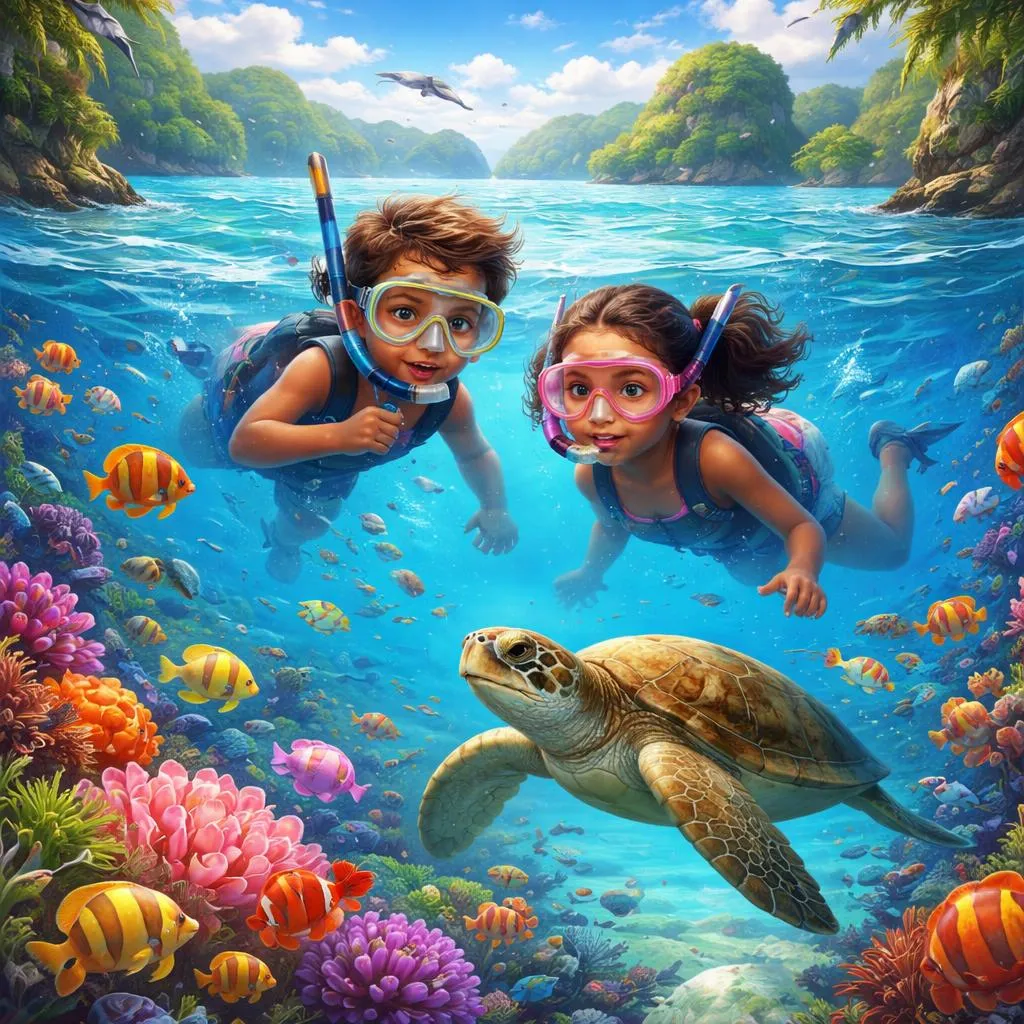

Introduction to Palau
Language learning transports us to one of the world's most extraordinary marine environments. Today we explore an island nation in the western Pacific Ocean. This country has created one of the largest marine sanctuaries on Earth. Children will discover a lake filled with millions of jellyfish that have lost their sting. They will learn about limestone islands shaped like giant mushrooms rising from turquoise water. Exploring Palau builds reading skills while revealing a nation dedicated to protecting its natural wonders. Every fact uncovers a new marvel. Every word invites young readers to imagine this underwater paradise.
Where Is Palau?
Palau lies in the western Pacific Ocean, part of the Micronesia region. It sits east of the Philippines and north of Indonesia. The country consists of over three hundred islands. The capital city is Ngerulmud. Ngerulmud sits on the island of Babeldaob, the largest island in Palau. The country covers about one hundred seventy-seven square miles of land. The islands stretch across a much larger ocean area. The Rock Islands form the most famous part of Palau. These small, green islands rise from crystal-clear water. Finding Palau on a map shows a scattered chain of islands in the western Pacific. Its remote location created unique marine ecosystems found nowhere else.
Interesting Facts About Palau
Palau offers countless remarkable facts for young learners. It created the first shark sanctuary in the world. Palau banned all commercial shark fishing in its waters. This protected the sharks that swim through its reefs. Another interesting fact involves Jellyfish Lake. This marine lake contains millions of golden jellyfish. Over time, they lost their sting because no predators lived in the lake. Swimmers can float among them safely.
Palau also has a unique national heritage. The country's constitution bans nuclear weapons and nuclear power. This reflects the region's history with nuclear testing elsewhere in the Pacific. Another fun fact involves the Rock Islands. These limestone islands number over four hundred. They rise like green domes from the sea. Some have hidden lagoons inside. The islands served as filming locations for the television show Survivor.
The country also has a traditional meeting house called a bai. These buildings feature intricate carvings telling stories of village history. Another interesting fact involves the money. Palauans traditionally used bead money for important transactions. These glass beads held deep cultural significance. Palau also has a unique swimming spot. The Milky Way is a shallow lagoon where visitors cover themselves with white limestone mud. The mud is said to have healing properties. These facts show children a country of natural wonders and cultural traditions.
Key Vocabulary About Palau
Let us build vocabulary for this Pacific island nation. These words help children describe what they learn.
Sanctuary: a protected area for wildlife.
Jellyfish: a sea animal with a soft, bell-shaped body and tentacles.
Limestone: a type of rock formed from shells and coral.
Lagoon: a shallow body of water separated from the sea by a reef.
Coral Reef: a ridge of coral near the surface of water.
Manta Ray: a large flat fish that glides through the ocean.
Snorkel: a tube used for breathing while swimming underwater. Introduce these words with pictures and stories. Show Jellyfish Lake with its golden jellyfish. Show manta rays gliding over coral reefs. Let children say each word aloud. These vocabulary words give children the language to explore Palau's marine world.
Simple Sentences for Reading Practice
Short sentences help new readers build confidence. Use these sentences about Palau for practice.
Palau is a country in the western Pacific Ocean.
The country has over three hundred islands.
The capital city is Ngerulmud.
Jellyfish Lake has millions of stingless jellyfish.
Palau created the first shark sanctuary in the world.
The Rock Islands rise from turquoise water.
Coral reefs surround the islands. Read each sentence together. Let children point to the words. Encourage them to repeat after you. Use pictures to show each fact. These simple sentences prepare young readers for longer passages.
Short Reading Passage About Palau
Here is a short passage for children to read together.
“Palau rises from the western Pacific Ocean as a chain of islands. Over three hundred islands form this nation. The Rock Islands stand as the most famous. These green limestone islands rise from turquoise water like mushrooms. Hidden lagoons sit inside some islands. Swimmers can paddle through narrow passages to find them. One special lake holds millions of golden jellyfish. These jellyfish lost their sting over time. Snorkelers float among them without worry. Palau protects its waters fiercely. The country created the first shark sanctuary in the world. Sharks swim freely through the reefs. Manta rays glide past with wings spanning many feet. The capital, Ngerulmud, sits on the largest island, Babeldaob. Traditional bai houses with carved stories stand nearby. Palau shows how a country can treasure its natural world.”
Read this passage slowly together. Pause to talk about each idea. Ask children to find vocabulary words in the text. This activity builds reading fluency and deepens understanding.
Fun Questions About Palau
Questions make reading interactive and engaging. Use these to start conversations with young learners.
Where is Palau located?
What is the capital city of Palau?
What special lake has stingless jellyfish?
What sanctuary did Palau create first in the world?
What are the Rock Islands made of?
What large sea creature glides through Palau's waters? Let children answer in complete sentences. Encourage them to use new vocabulary. Ask them to imagine swimming in Jellyfish Lake. What would it feel like to float among the jellyfish? Creative questions make the topic personal and exciting.
Tips for Learning English with This Topic
Use Palau to create rich English learning experiences. Start with a map activity. Let children find Palau in the western Pacific. Point out its location east of the Philippines. Discuss how its isolation created unique marine life. This connects geography to biology.
Next, introduce the vocabulary through a hands-on activity. Create a simple Jellyfish Lake using blue paper or water in a shallow tray. Add small pieces of orange paper or jellyfish toys. Explain why these jellyfish lost their sting. For the Rock Islands, build islands using clay or paper mache. Let children create their own lagoon. Use the words "sanctuary," "jellyfish," and "coral reef" during the activity.
Read the passage aloud with wonder and appreciation. Let your voice reflect the beauty of swimming with stingless jellyfish. After reading, let children draw a scene from Palau. One child might draw Jellyfish Lake with golden jellyfish floating. Another might draw a manta ray over a coral reef. Let them label their drawings with vocabulary words. Add blue for the water and green for the Rock Islands.
Incorporate a science and conservation connection. Talk about why Palau created a shark sanctuary. Discuss how protecting marine life helps the entire ocean ecosystem. This shows children that language learning reading connects to caring for the planet.
Use music and movement to enhance the experience. Play ocean sounds while reading or drawing. Let children move like jellyfish pulsing through the water. Pretend to snorkel among coral reefs. Physical activity reinforces learning in joyful ways.
Encourage children to share their knowledge. Let them tell a family member about the stingless jellyfish of Palau. They can explain why Palau protects its sharks. Teaching others builds confidence and deepens understanding.
Connect Palau to your child's world. Ask, “What animals do we protect in our area?” Compare to Palau's shark sanctuary. Ask about lakes or ponds near you. Compare them to Jellyfish Lake. These connections help children see that language learning reading is about understanding different ways to protect nature. By exploring Palau together, you give children a rich experience. They learn new words, discover an underwater paradise, and grow their love for reading. This Pacific nation becomes a cherished part of their learning journey.