
Opening Introduction
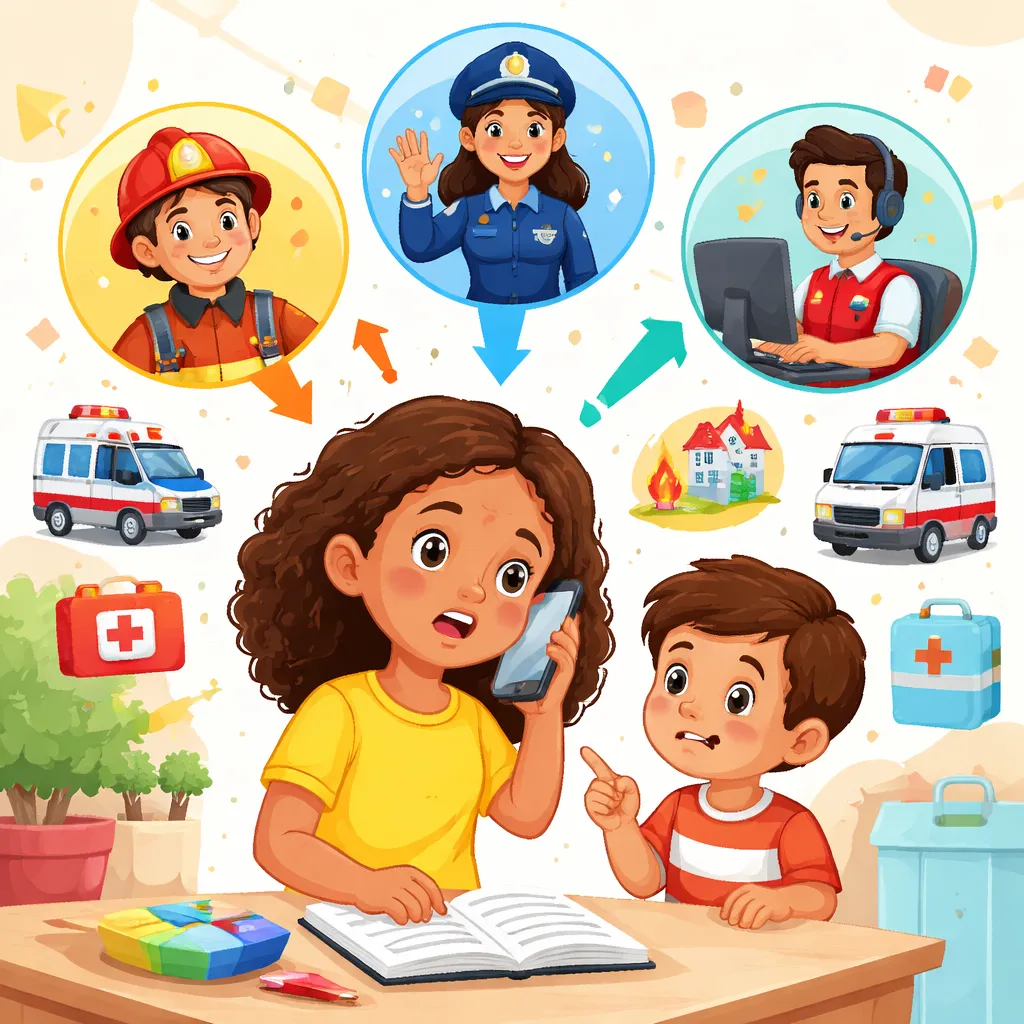
Mia was at home with her grandma. Suddenly, her grandma sat down quickly and said, "Oh, I don't feel well." Mia saw she was having trouble breathing. Mia knew this was serious. She remembered her parents' words: "In a real emergency, call for help." But what was the number? And what should she say? Luckily, her dad had taught her. She picked up the phone, dialed 9-1-1, and said clearly, "My grandma is having trouble breathing. We need help." Help arrived quickly. Later, her dad hugged her. "You knew the right thing to do. Let's make sure you and all your friends know, too. Let's practice emergency numbers and what to say. Being prepared is the best superpower." Mia felt proud and responsible. She wanted everyone to have this superpower. Let's learn it together.
Core Knowledge Explanation
An emergency is a serious situation where someone is badly hurt, very sick, or in danger. In an emergency, you need help from grown-ups who are trained to help. They are called emergency services. You call them on the telephone. The most important thing to learn is the emergency numbers and what to say. In the United States and Canada, the main emergency number is 9-1-1. When you call 9-1-1, your call goes to a person called a dispatcher. Their job is to send the right helpers to you: police, firefighters, or ambulance paramedics.
But knowing the number is not enough. You must know what to say. The most important thing is to stay calm. Take a deep breath. The dispatcher will ask you questions. You need to tell them three main things. First, tell them what is wrong. Say, "My mom fell down and can't get up." Or, "I see a fire in the kitchen." Or, "A stranger is trying to get into our house." Be clear. Second, tell them the address. The address is where you are. Say your house number and street name. For example, "I am at 123 Maple Street." If you are at a store or a park, try to say the name. "I am at Central Park near the big fountain." Third, tell them your name. "My name is Leo."
The dispatcher will stay on the phone with you. They might give you instructions. "Stay on the line." "Is the person breathing?" Listen carefully and do what they say. Do not hang up until they tell you to. Remember, 9-1-1 is only for real emergencies. A real emergency is when someone is hurt badly, there is a fire, you see a crime, or someone is very sick. It is not for a scraped knee or a lost toy. Learning these emergency numbers and what to say is a very grown-up skill. It means you are ready to be brave and smart.
Fun Interactive Learning
The best way to learn is to practice. Let's play "Practice Call." With a grown-up, use a toy phone or a disconnected phone. Pretend you are calling 9-1-1. Your grown-up can be the dispatcher. They can ask, "9-1-1, what is your emergency?" You practice saying, "My brother fell off his bike and his leg looks bent. We are at 456 Oak Road. My name is Sam." Then switch roles. You be the dispatcher. Ask the questions. This makes the emergency numbers and what to say feel familiar, not scary. Remember, never practice on a real phone.
Another fun activity is to make an "Emergency Info Card." Get an index card. Write "EMERGENCY" at the top in red. On the card, write your full name. Write your address. Write your parent's phone number. You can draw a small picture of your house. Keep this card near the home phone or on the fridge. Practice reading it out loud. "My address is 789 Pine Lane." This helps you remember it. You can also play a game. Ask a grown-up to describe a scene. "You are at home and you smell smoke. What do you do?" You say the steps: Stay calm, go to a safe place, call 9-1-1, tell the address, say there's a fire. This builds your thinking skills.
Expanded Learning
Emergency numbers are different in different countries. In the United Kingdom, the number is 9-9-9. In Australia, it is 0-0-0. In the European Union, 1-1-2 is the common number. If you travel, it is important to know the local number. But the idea is the same everywhere: a short, easy-to-remember number for help. The emergency numbers and what to say you are learning are a universal concept. Long ago, people had to run to get a doctor or shout for the town watch. Today, we are lucky to have phones and quick responders.
The people who answer 9-1-1 are trained to be calm. They help callers of all ages. They know you might be scared. They will help you through it. There are also other important numbers. You might know the number for Poison Control, or your doctor. But 9-1-1 is the most important one to know first. When you learn the emergency numbers and what to say, you are joining a community of people who help each other. Let's make an emergency chant. Chants are easy to remember when you are nervous.
Nine-one-one, is the number, call when you hear a crash or thunder! Stay so calm, and be so brave, it is help that you must crave! Say your name, and what is wrong, in a voice that's clear and strong! Tell the street, and house number too, so helpers know just what to do! Listen well, to what they say, help is quickly on the way!
What You Will Learn
You are learning about safety, communication, and community helpers. You are learning the key emergency numbers and what to say: the number 9-1-1 (and knowing other countries have different numbers), how to describe the emergency, how to give your address, and how to give your name. You are also learning words like emergency, dispatcher, paramedic, address, and calm.
You are learning clear, life-saving sentences. You can say, "I need an ambulance. My dad is not waking up." You can state, "My address is 10 River Road." You can respond, "My name is Chloe." You are using English to convey critical information under pressure. This builds confidence and clarity in communication.
You are building essential safety skills. You are building situational awareness. You learn to recognize a real emergency. You are building procedural memory. You know the steps to make the call. You are building composure. You practice staying calm. You are building community knowledge. You know how the emergency system works. You are building responsibility. You are trusted with important knowledge.
You are forming a prepared and brave habit. The habit of thinking clearly and acting decisively in a scary situation. You learn that even a child can be a hero by knowing what to do. Mastering the emergency numbers and what to say gives you a powerful tool that can save a life, including your own.
Using What You Learned in Life
Talk with your family. Make sure everyone knows the emergency plan. Practice saying your address out loud. Know two ways to exit your house. Put your Emergency Info Card in a visible spot. If you have a babysitter, show them the card. When you go to a friend's house, notice the address. You can ask your parents, "What's the address here?" so you know. Always call 9-1-1 from a safe place first. If there is a fire, get out, then call.
At school, you will have safety drills. Remember, the principles are the same. Listen to your teacher, who is like the dispatcher. You can share your knowledge with your classmates. You can even do a show-and-tell about your Emergency Info Card. The more you review the emergency numbers and what to say, the more ready you will be. You hope you never need it, but you will be glad you know it.
Closing Encouragement
You are a safety champion. You are a clear communicator. You are a brave and prepared helper. I am so incredibly proud of you. Learning about emergency numbers and what to say shows you are responsible, caring, and smart.
Carry this knowledge with you like a shield. It allows you to face the world with an extra layer of safety. Remember, being brave doesn't mean you aren't scared. It means you know what to do even when you are. You are learning the language of help, and that is a language of courage.
You are aware, you are articulate, and you are ready to be a calm voice in a storm. Great work, my wonderful safety hero.