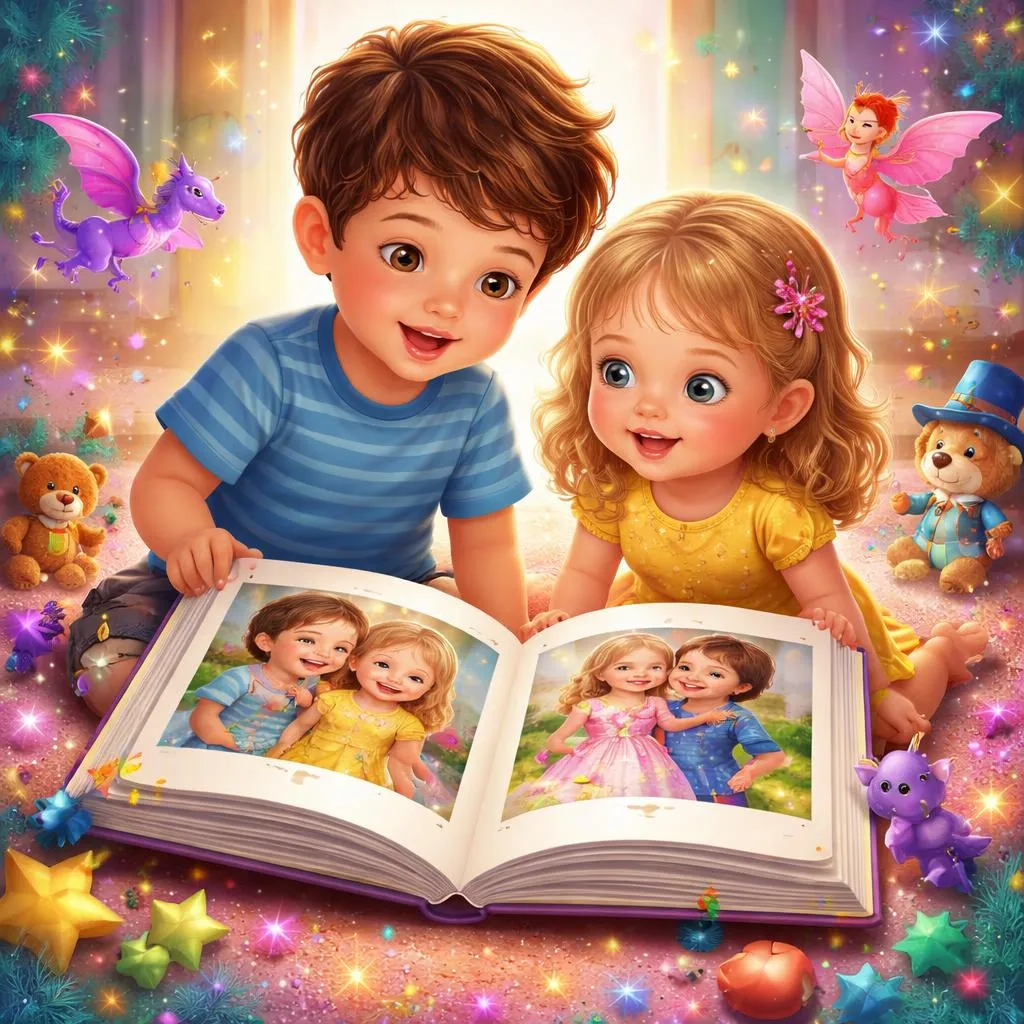

What Are Personalised Children's Story Books With Photos? Let us explore this wonderful category of children's books together. Personalised children's story books with photos are custom-made books for individual children. They include the child's name throughout the story as the main character. Real photographs of the child appear on the pages too. Family members, pets, and friends might also be featured. The photos show the child's actual face, not just an illustration. This makes the book uniquely personal and special. The child sees themselves as the hero of the adventure. They recognize their own face in the pictures. The combination of photos and story creates magic. These books become treasured keepsakes for families forever. No other child in the world has exactly the same book.
Meaning and Purpose of Personalised Photo Books These books serve several important purposes in child development. They create an immediate connection between reader and story. The child sees their own face and name in the book. This personal connection increases attention and engagement. Children become deeply invested in what happens to the character. After all, that character is them! Reading becomes about discovering what "I" will do next. The photo element adds another layer of magic. Children recognize themselves and feel truly part of the story. The books also build confidence and self-esteem. Seeing oneself as a story hero sends powerful messages. The child learns they matter enough to be in a book.
How Personalised Photo Books Work The process of creating these books is simple and wonderful. Parents upload photos of their child to a website. They might also upload photos of family and pets. They choose a story theme from available options. Adventure, fantasy, bedtime, or learning themes are common. They enter the child's name and other personal details. The publisher creates a custom book just for that child. The child's face appears on characters throughout the story. Their name is woven into the narrative naturally. The finished book arrives in the mail like magic. The child opens it to find themselves inside. This process creates a one-of-a-kind treasure for the child.
Categories of Personalised Photo Books We can find several types of personalised photo books for children. Adventure stories place the child on exciting journeys. Jungles, space, or magical lands become their playground. Fantasy tales feature the child meeting magical creatures. Dragons, fairies, and unicorns become their friends. Learning books teach letters, numbers, or colors with the child. Each letter of the name might start a new page. Holiday stories celebrate birthdays or Christmas specially. The child becomes the star of their own celebration. Bedtime stories create calming narratives before sleep. The child stars in soothing, gentle tales. Family stories include parents, siblings, and pets as characters. Everyone the child loves appears in the book.
Vocabulary Learning From Personalised Books Personalised books introduce vocabulary in highly engaging contexts. New words become memorable because they appear in "my" story. Children want to understand what happens to themselves. This motivation drives deeper vocabulary learning. Words like jungle, castle, or treasure gain personal meaning. The child imagines themselves in these settings. Feeling words like brave, clever, or kind become self-descriptors. The child learns these words apply to them personally. Action words describe what "I" do in the story. Running, flying, helping, and discovering become personal actions. The personal connection makes vocabulary stick permanently. Children remember words from "their" stories most easily.
Phonics Points in Personalised Books Personalised books provide excellent phonics practice. The child's own name contains sounds to learn and practice. Breaking the name into sounds builds phonemic awareness. "Let's listen to the sounds in your name. /M/ /a/ /t/ /t/." The name repeats many times throughout the book. This repetition reinforces letter-sound connections. Words in the story with same beginning sound get noticed. "Matt starts with M. Monkey starts with M too." Same applies to ending sounds and vowel sounds. Children pay closest attention to sounds in their name. This attention transfers to other words in the story. Name letters become anchor points for learning other words.
Grammar Patterns in Personalised Narratives Personalised books model important grammar structures naturally. The child's name appears in various sentence positions. "Maria went to the park. The dog followed Maria. Maria's friend came too." This shows nouns as subjects, objects, and possessives. Action verbs describe what the child-character does. "Maria runs, jumps, and climbs throughout the adventure." Descriptive words tell about the child positively. "Brave Maria faced the dragon without fear." Questions appear when other characters speak to the child. "Where is Maria going?" we might read. Prepositions show location in the story world. "Maria went through the forest and over the bridge." Children absorb these patterns through personal connection.
Daily Life Connections Through Personalised Books Personalised books connect directly to children's daily experiences. The child already sees their name everywhere in life. On cubbies, lunch boxes, and artwork at school. On birthday cards and gift tags from family. They hear it called across the playground daily. Personalised books build on this daily experience. The child knows their name holds special meaning. Seeing it in a story feels like more recognition. Photos of themselves in the book add another layer. They recognize their own face, their own room, their own family. The story becomes intertwined with their actual life. These connections strengthen identity and sense of self.
Learning Activities for Personalised Books Many activities extend the value of personalised reading. Have the child find their name on each page. Count how many times it appears throughout. Create a name chart showing each letter of the name. Find words in the story that start with those letters. Draw pictures of the child as the story character. Include details from the book like special clothes. Retell the story using the child as narrator. "First I went to the castle. Then I met a dragon." Write a new adventure for the character beyond the book. What else could happen in that magical world? Create a name puzzle with letters from the child's name. Mix and put back in order together.
Creating Personalised Photo Books Parents and educators can create these magical books easily. Many online services offer personalised book creation. Upload clear photos of the child's face. Choose a story theme that matches the child's interests. Enter the child's name and other details carefully. Preview the book before ordering to check everything. Order a high-quality printed version for lasting memories. Consider making books for special occasions. Birthdays, holidays, or just because are perfect. Multiple books can be made as the child grows. Each captures a different age and stage. The collection becomes a treasured library of "me" books.
Educational Games With Personalised Books Games make personalised book learning playful and fun. Play "Name Hunt" finding the child's name in other books. How many times can they find it in the library? Create "Letter Hop" on the floor with letter cards. Children jump to spell their name in order. Play "Name Memory" matching pairs of the child's name. Use different colors and fonts for variety. Design a "Story Journey" game board based on the book. Move forward by answering questions about the story. Play "Character Says" like Simon Says using story actions. "Ruth says jump over the stream like in the book." Create "Name Bingo" with letters from the child's name. Call out letters for children to cover. These games build skills through personal connection.
Building Identity Through Personalised Stories Personalised books do more than teach reading skills. They build a child's sense of identity and worth. Seeing oneself as a story hero sends powerful messages. The child learns they matter enough to be in a book. They see themselves capable of adventures and solving problems. The character with their name helps others and shows courage. This models positive traits for the child to emulate. "The Maria in the book was brave. I can be brave too." Teachers can discuss times children showed courage like the character. The personalised book becomes a mirror reflecting possibilities. It shows children not just who they are. But who they can become with courage and kindness.
Sharing Personalised Books in Groups Personalised books work wonderfully in group settings too. Each child can have their own version of the same story. This creates shared experience with individual ownership. Children love hearing classmates' names in the narrative. They notice when their friend appears in someone else's book. Teachers can read different versions throughout the week. Children eagerly await the day their version is shared. The group discusses how each child might respond differently. "Emma found treasure. What would you do with treasure?" This builds perspective-taking and empathy. Children learn different people experience things differently. The classroom becomes a community of unique story heroes.
Making Personalised Books Part of Classroom Life We can integrate personalised books throughout the learning day. Place them in the classroom library for independent reading. Children will naturally choose their own book repeatedly. Use them during one-on-one reading conferences. Discuss what the child notices about their special story. Refer to the books during discussions about character traits. "Remember how brave the character with your name was?" Connect the books to writing activities. Have children write about what they would do next. Use them as models for creating class books. Each child contributes a page about themselves with photos. Bind these into a classroom personalised book collection. This extends the magic beyond commercially produced versions. The classroom becomes where every child's face belongs in a story.