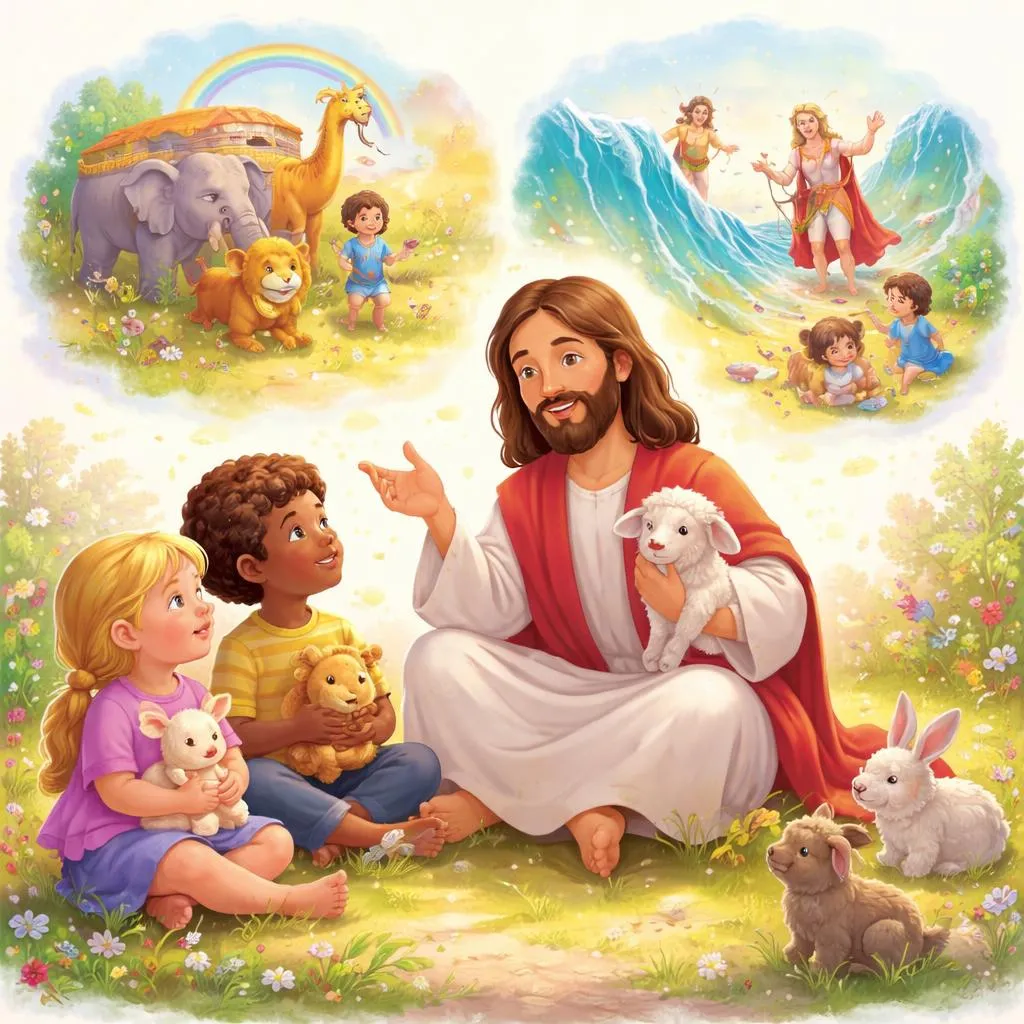

What Are Short Children's Bible Stories? Let us explore this valuable resource for faith education together. Short children's Bible stories are biblical narratives presented in brief, simple form. They capture the essential message of longer Bible passages. Each story can be read in just a few minutes. This makes them perfect for young attention spans. The stories use simple language children can understand. Complex theological concepts become accessible through simplification. Key Bible characters and events are introduced clearly. Creation, Noah, Abraham, Moses, and David appear. Jesus' birth, miracles, parables, and resurrection are included. The stories follow the biblical timeline from Genesis to Acts. Each story stands alone but connects to the larger Bible story.
Meaning and Purpose of Short Bible Stories These stories serve several crucial purposes in faith formation. They introduce children to the major stories of Scripture. The narrative foundation prepares for deeper study later. Children learn about God's character through these stories. They see God creating, providing, saving, and loving. The short format respects young children's attention spans. Complete stories can be read in one sitting. This gives children a sense of accomplishment. The stories also create opportunities for family faith conversations. Parents can read one story each day with ease. Questions and discussions naturally follow the reading. The short format encourages regular Bible time habits.
Categories of Short Bible Stories We can organize short Bible stories into helpful categories. Creation stories tell of God making the world. Adam and Eve, the garden, and the first sin appear. Patriarch stories follow Abraham, Isaac, Jacob, and Joseph. God's promises to this family unfold. Exodus stories tell of Moses leading Israel from Egypt. Plagues, Passover, and crossing the Red Sea appear. Conquest and judges stories show Israel entering the Promised Land. Joshua, Deborah, Gideon, and Samson are featured. Kings and prophets stories introduce David, Solomon, Elijah, and Daniel. Jesus stories begin with his birth and childhood. Jesus' ministry includes parables, miracles, and teachings. Easter stories cover the last week, death, and resurrection. Early church stories follow Acts and the apostles' adventures.
Vocabulary Learning from Short Bible Stories Short Bible stories introduce important biblical vocabulary naturally. Creation introduces words like firmament, dominion, and sabbath. Noah's ark introduces ark, covenant, rainbow, and pairs. Moses introduces plagues, Passover, commandments, and wilderness. David introduces shepherd, giant, sling, and psalm. Daniel introduces lions, den, furnace, and interpretation. Christmas introduces nativity, manger, frankincense, and myrrh. Parables introduce sower, mustard seed, pearl, and prodigal. Miracles introduce healing, blind, lame, and authority. Easter introduces crucifixion, resurrection, tomb, and angel. Early church introduces apostles, Pentecost, fellowship, and witness. We can teach these words with examples from the stories. Use them in sentences about biblical events.
Phonics Points in Short Bible Stories Short Bible stories provide useful phonics practice with biblical language. Adam has the short A and short A. Eve has the long E and V sound. Noah has the long O and long A. Moses has the long O and long E. David has the long A and short I. Jesus has the long E and short U. Place names offer valuable sound patterns. Eden has the long E and short E. Egypt has the long E and soft G. Canaan has the long A and short A. Jerusalem has the soft G and short U. Object words provide phonics elements. Ark has the AR combination. Manger has the short A and ER ending. Tomb has the long OO and MB silent. We can focus on one sound pattern from each short story. Find all words with that sound in the Bible tale. Write them on tablet or scroll shapes for practice.
Grammar Patterns in Short Bible Stories Short Bible stories model useful grammar for young readers. Past tense carries the main narrative throughout. "God created the heavens and the earth." Present tense appears in applications and memory verses. "The Lord is my shepherd." Future tense shows prophecy and promises. "A savior will be born to you." Questions explore character motivations and events. "Why did Jonah run away?" "Who built the ark?" Commands appear in divine instructions. "Let there be light." "Honor your father and mother." Descriptive language paints biblical scenes simply. "The great, rushing waters covered the highest mountains." Prepositional phrases describe locations. "In the garden, on the mountain, through the sea." We can point out these patterns during reading.
Daily Life Connections Through Short Bible Stories Short Bible stories connect to children's lives meaningfully. Creation stories connect to observing nature outdoors. Children see trees, animals, and sky just like the story. Noah's ark connects to caring for pets and animals. The rainbow after storms reminds of God's promise. David and Goliath connects to facing big challenges. Children face their own giants at school and home. Daniel in the lion's den connects to feeling afraid. The story shows God's protection in scary situations. Jonah and the whale connects to making mistakes. Everyone gets second chances like Jonah did. Jesus blessing children connects to feeling valued. The story shows Jesus had time for little ones. We can point out these connections during reading. "Remember God made the trees we see outside." "You faced something hard like David faced Goliath."
Learning Activities for Short Bible Stories Many activities deepen engagement with short Bible stories. Create story sequencing cards from simple pictures. Arrange events in the correct order together. Make stick puppets of Bible characters for retelling. Children act out stories with handmade puppets. Design a story wheel showing key moments from a narrative. Turn the wheel to reveal each part. Create a matching game pairing characters with their stories. Match David with Goliath, Noah with ark, Moses with tablets. Make a memory verse booklet with key verses. Illustrate each verse with drawings or stickers. Design a Bible timeline adding stories as they are learned. Place each story in chronological order on the wall.
Printable Materials for Short Bible Stories Printable resources support deep engagement with short Bible stories. Create story summary sheets with key points and questions. Children review what they learned from each narrative. Design coloring pages showing important story scenes. Children color while discussing the lesson content. Make vocabulary cards with biblical words and definitions. Use for review games and discussions. Create character profile sheets for major Bible figures. List their name, story, and what we learn from them. Design a books of the Bible chart for reference. Children check off books as they study them. Make prayer journal pages connected to story themes. Children write prayers inspired by each lesson. These printables structure Bible learning activities effectively.
Educational Games With Short Bible Stories Games make Bible learning playful and interactive with short stories. Play "Bible Story Charades" acting out narratives from short tales. Others guess which story is being portrayed. Create "Match the Verse" pairing memory verses with stories. Use printable cards for this matching game. Play "Who Said It?" with printable quote cards from short stories. Match quotes to the Bible character who spoke them. Design "Bible Bingo" with story elements on cards. Mark off when each appears in lessons. Play "Story Scramble" arranging printable pictures in order. Teams race to sequence stories correctly. Create "Treasure Hunt" with printable clues from short Bible stories. Hide treats and follow the biblical path. These games build Bible knowledge through active participation.
Teaching Major Themes Through Short Stories Short Bible stories introduce major biblical themes gradually. God's love appears in creation and throughout history. God's power shows in miracles and deliverance. God's faithfulness keeps promises to his people. Human weakness appears in characters who fail. Repentance and forgiveness offer hope after failure. Faith and trust please God throughout Scripture. Obedience brings blessing, disobedience brings consequences. These themes weave through all the short stories. Children absorb them through repeated exposure. The themes form a framework for understanding Scripture. Later study builds on this foundation established early.
Building Bible Reading Habits Short Bible stories build foundations for lifelong Bible reading. Regular short readings establish the habit early. Children learn that daily Bible time is normal. The short format prevents frustration and boredom. Success with short stories encourages longer attempts later. Familiarity with Bible stories builds confidence. Children feel knowledgeable about Scripture. They can participate in church discussions and classes. The stories become old friends they return to often. This positive early experience shapes attitudes forever. Children who love Bible stories become adults who read Scripture. The short stories plant seeds that bear fruit for life.
Why Short Stories Work for Children Short Bible stories work well for several important reasons. They respect young children's limited attention spans. A complete story in one sitting feels satisfying. Simple language matches children's comprehension levels. Pictures accompanying stories aid understanding. The stories can be read repeatedly without tiring children. Repetition reinforces learning naturally. Short stories are easy to remember and retell. Children can share what they've learned with others. The format fits naturally into bedtime routines. A short story fits perfectly before prayers. Parents can maintain consistency without time pressure. Short stories make Bible time achievable for busy families.