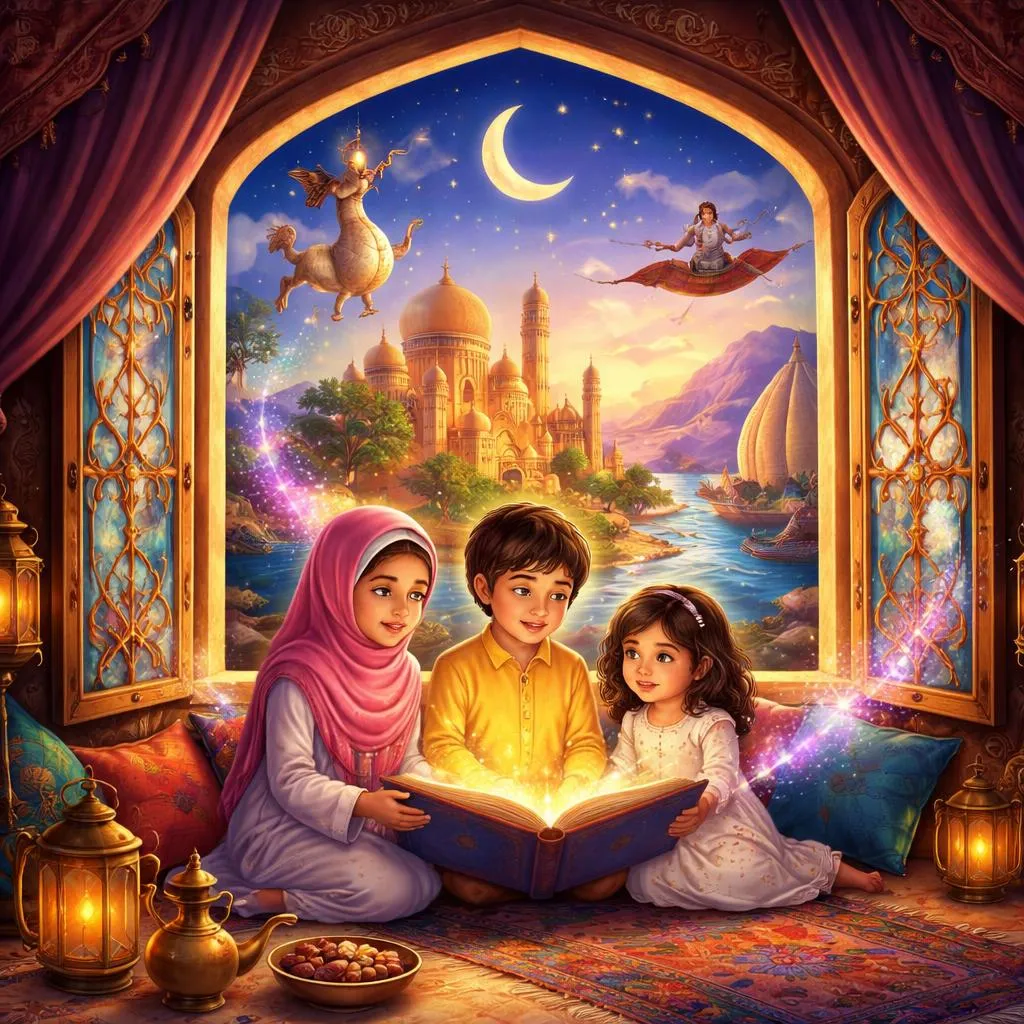

Tales told beneath desert stars. Stories passed through generations. Characters who have entertained children for centuries. Arabic children's stories carry the voices of a vast and varied culture. They introduce young readers to different ways of seeing the world. This article explores methods for using these culturally rich narratives in teaching.
What Defines an Arabic Children's Story?
An arabic children's story emerges from the rich storytelling traditions of the Arab world. Some come from ancient oral traditions. Tales told by firelight in desert camps. Stories shared in bustling marketplaces. These narratives carry wisdom accumulated over centuries.
Others come from classical Arabic literature. Stories from "One Thousand and One Nights" like Aladdin and Ali Baba. Tales of clever animals and foolish people. These stories have traveled worldwide while retaining their cultural origins.
Modern Arabic children's stories address contemporary life. Children in Cairo, Beirut, or Casablanca experience today's world. These stories show modern Arab childhood while maintaining cultural connections.
Vocabulary Learning Through Arabic Stories
Arabic stories introduce vocabulary about Arab culture. Traditional clothing words appear. Thobe, hijab, and keffiyeh gain meaning through story context. These words build understanding of cultural dress.
Food vocabulary fills these tales. Hummus, falafel, and dates appear in stories where characters share meals. These words connect to tastes and traditions.
Geography vocabulary emerges through settings. Desert, oasis, and wadi name physical features. City names like Cairo, Damascus, and Baghdad place stories in real locations.
Arabic children's stories also introduce words for cultural practices. Eid, Ramadan, and henna name celebrations and traditions. These words help learners understand Arab cultural life.
Simple Phonics Points in Arabic Stories
Arabic stories used in English translation offer unique phonics opportunities. Arabic words incorporated into English texts provide varied sound practice. Habibi (beloved) offers h and long e. Salaam (peace) provides s and long a. These words build phonological flexibility.
Names from Arabic tradition give sound practice. Ali has short a and long e. Layla features long a and long e. Yusef offers long u and short e. Each name becomes familiar through repetition.
Many Arabic stories include phrases repeated in Arabic alongside English translation. This dual language exposure builds phonemic awareness across languages.
Exploring Grammar Through Cultural Narratives
Arabic stories in translation provide clear grammar models. Past tense dominates traditional tales. "Once in Baghdad, there lived a merchant named Hassan." This consistent past tense builds familiarity with narrative forms.
Dialogue brings present and future tenses. "I will find the treasure," said Hassan. "The camel knows the way," his friend replied. These shifts occur naturally within story context.
Questions drive many Arabic tales. "Who can solve the riddle?" "Why does the moon follow me?" These questions model inquiry forms.
Learning Activities with Arabic Stories
Active engagement with Arabic narratives deepens learning. These activities bring cultural themes into productive language use.
Cultural Element Exploration After reading an Arabic story, identify cultural elements mentioned. Foods, clothing, celebrations, or customs. Research these elements further. Create simple presentations sharing findings. This builds research skills and cultural understanding.
Arabic Word Collection Create a class collection of Arabic words encountered in stories. Write each word, its meaning, and the story where it appeared. Practice pronunciation together. This builds vocabulary and cross-cultural connection.
Story Map with Cultural Details Create a story map for an Arabic tale. Include not just plot elements but cultural details noted. What did characters eat? What did they wear? Where did they live? This builds comprehension with cultural focus.
Comparison Discussion Compare an Arabic story with a familiar story from another culture. How are characters similar? How do settings differ? What values do both stories teach? This builds comparative thinking and cultural awareness.
Educational Games with Arabic Stories
Games add playful interaction with cultural narratives. These activities work well for groups or individuals.
Arabic Story Bingo Create bingo cards with elements from Arabic stories. Camel. Desert. Market. Mosque. Palm tree. As you describe story moments or call words, learners cover matching squares. This builds listening comprehension and cultural vocabulary.
Character Guess Game Describe a character from an Arabic story without naming them. "This character found a magical lamp. A genie appeared to grant wishes." Learners guess Aladdin. This builds descriptive language and character recall.
Story Scramble with Cultural Elements Write key events from an Arabic story on separate cards. Mix them up. Learners arrange in correct order while noting cultural elements along the way. This builds sequencing and cultural observation.
Printable Materials for Arabic Story Learning
Tangible resources support extended exploration of Arabic cultural themes. These materials work well for independent practice.
Arabic Word Cards Create cards with Arabic words introduced in stories on one side and English meanings on the other. Habibi, salaam, hummus, Eid. Use these for matching games or quick reviews.
My Arabic Story Response Page Provide a template for responding to an Arabic story. Story title, where it takes place, cultural elements noticed, what I learned, what I wondered. This builds comprehension and cultural reflection.
Cultural Elements Chart Create a simple chart for tracking cultural elements across multiple Arabic stories. Story title, foods, clothing, celebrations, setting columns. Learners fill in as they encounter new stories. This builds comparative cultural knowledge.
Story Map with Cultural Focus Provide a story map template with spaces for cultural notes alongside plot elements. Characters, setting, problem, solution, and cultural details sections. This builds integrated comprehension of narrative and culture.
The lasting value of arabic children's stories lies in their power to build bridges. Through these tales, English-speaking children enter worlds they might never otherwise know. They discover that children everywhere laugh and cry and dream. They learn that wise animals appear in stories across cultures. They meet characters whose lives differ from theirs while sharing common humanity. This cultural exposure builds empathy alongside language. Each Arabic story read together opens a window onto a rich tradition. The classroom becomes a place where cultural boundaries dissolve through the power of shared narrative. Children discover that stories connect us all, whatever language they speak.