
What Does “Same Word, Different Forms” Mean?
Many English words grow in families. One root can create many forms. Each form has a different job.
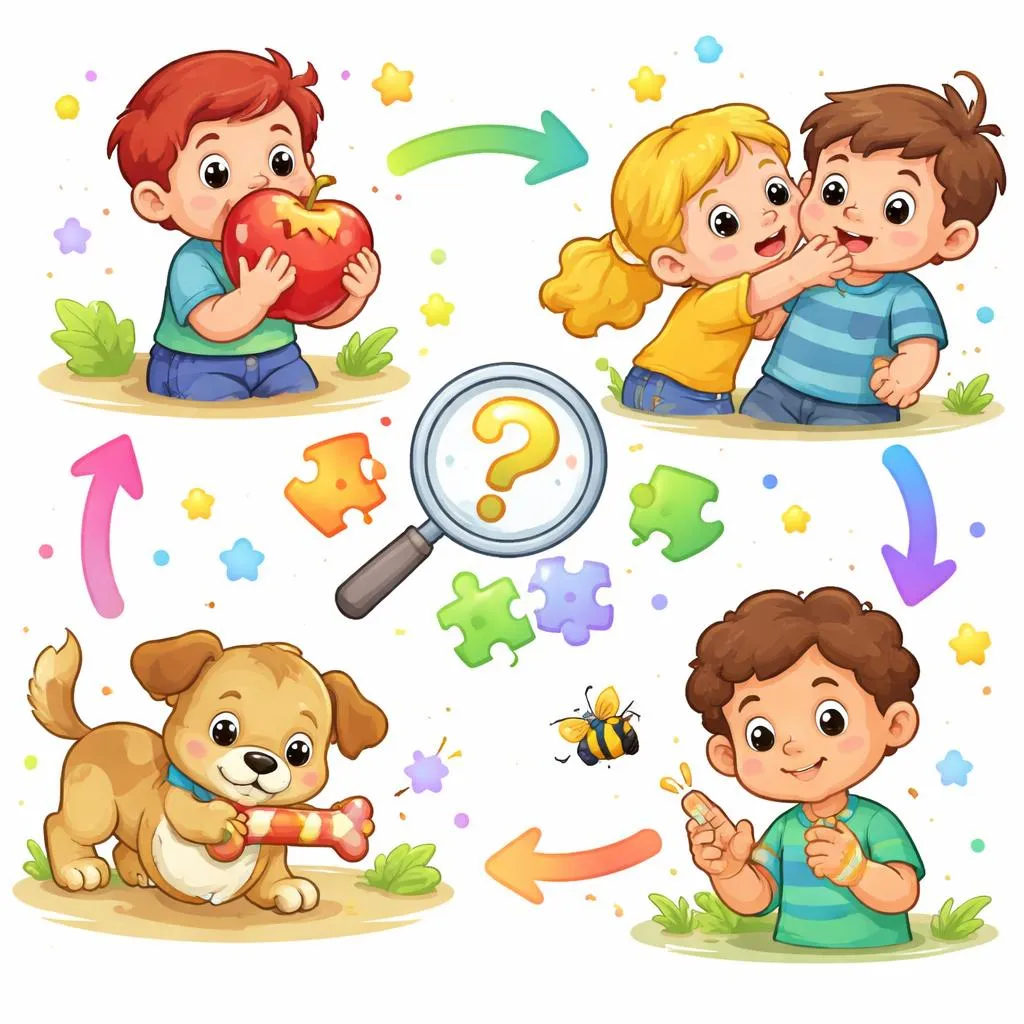
The family bite, biter, biting, bitten shows this clearly.
Bite is usually a verb.
Dogs do not bite strangers. Be careful not to bite your lip.
It can also be a noun.
I took a bite of apple.
One word. Two jobs.
Biter is a noun.
The puppy is a playful biter.
It names someone or something that bites.
Biting can be a verb form.
The rabbit is biting a carrot.
It can also be an adjective.
The wind feels biting.
Bitten is the past participle of bite.
The apple was bitten. The mosquito has bitten me.
One root creates many forms.
That is how word families help children grow vocabulary.
Personal Pronouns Change Their Form
Children already know forms can change.
Pronouns do this:
I → me → my we → us → our
Words change too.
Look at this family:
bite biter biting bitten
The root stays.
The form changes.
The grammar changes.
The meaning shifts too.
Bite often shows action.
Biter names the doer.
Biting may show action happening now.
Bitten often connects to past action.
Patterns like this make English easier.
Children learn to look for families.
That builds confidence.
From Verb to Noun to Adjective to Adverb – One Family, Many Words
This word family stretches across grammar.
Verb — bite
Do not bite the pencil.
Noun — bite
Have a small bite.
Noun — biter
The hamster is not a biter.
Verb form — biting
The puppy is biting a toy.
Adjective — biting
A biting wind blew outside.
Past participle — bitten
The sandwich looks bitten.
Many roles grow from one root.
That is the beauty of word families.
This family does not commonly create a regular adverb.
That matters too.
Not every root forms every type.
Children learn what exists in real English.
That is useful learning.
One Root, Many Roles – How Words Grow from Actions to Qualities
The root bite starts with action.
Teeth close on something.
Simple.
Concrete.
Easy for children.
Then the family grows.
Biter turns action into a person or thing.
Someone who bites.
Then biting can describe.
biting cold biting humor
Now the word carries feeling.
Then bitten describes a result.
a bitten cookie
Action became outcome.
This is how roots grow.
Children start seeing words as connected.
That helps vocabulary expand faster.
Same Meaning, Different Jobs – Is It a Verb or a Noun?
Children often mix forms.
Look at this:
? The dog is a bite. ? The dog is a biter.
A dog that bites is a biter.
Another:
? The bee has bite me. ? The bee has bitten me.
After has, use bitten.
Another:
? I am bitten the sandwich. ? I am biting the sandwich.
Present action needs biting.
Ask:
Is this action?
A person?
A result?
That often reveals the right form.
Grammar starts making sense.
Adjectives and Adverbs – When Do We Add -ly?
Children often learn:
Soft → softly Quick → quickly
They may wonder:
Can we say bitingly?
Yes, but children meet it rarely.
Focus first on biting as adjective.
biting wind biting criticism
This teaches something important.
An -ing form can sometimes act as an adjective.
Compare:
The dog is biting. The biting dog barked.
Same word.
Different jobs.
That is powerful grammar awareness.
Children begin noticing these shifts in reading.
That supports stronger comprehension.
Watch Out for Tricky Spelling Changes (Double Letters, y to i, and More)
This family has important spelling changes.
Present:
bite
Present participle:
biting
Drop the silent e.
That matters.
bite → biting
Then irregular past forms appear.
Past tense:
bit
Past participle:
bitten
Children often confuse:
bit bitten
Compare:
Yesterday the dog bit me. The dog has bitten me before.
Different grammar.
Different form.
Also notice:
bitten adds double t.
That is a useful spelling pattern.
This family teaches children to watch for irregular verbs.
English has many.
Seeing one helps prepare for others.
Let’s Practice – Can You Choose the Right Form?
Choose the correct word.
Mosquitoes can ___ people. Answer: bite The puppy is a playful ___. Answer: biter The rabbit is ___ a carrot. Answer: biting The apple has been ___. Answer: bitten
Now build sentences.
Use bite:
Sharks can bite.
Use biter:
That puppy is not a biter.
Use biting:
The cold air feels biting.
Use bitten:
My cookie looks bitten.
Mini challenge:
Which fits?
“The snake has ______ the mouse.”
Correct answer:
bitten
Little practice makes forms easier to remember.
Common Mistakes Children Make with bite, biter, biting, bitten
Many learners confuse bit and bitten.
? I have bit the apple. ? I have bitten the apple.
After have, use bitten.
Another:
? The dog is a biting. ? The dog is a biter.
A doer needs a noun.
Use biter.
Another:
? The wind is bitten. ? The wind is biting.
Description needs biting.
Small changes matter.
Children improve when they notice grammar clues.
That builds accuracy.
Bite in Everyday Reading and Speech
This family appears often.
In stories:
The wolf tried to bite.
In science:
Some insects bite.
In weather writing:
A biting wind swept through town.
In everyday speech:
Take one bite.
One family appears in many settings.
That repetition helps memory.
Children remember words they meet in real contexts.
That is how vocabulary grows naturally.
Bite Beyond Literal Meaning
Some forms carry figurative meanings too.
Biting humor
This means sharp or harsh humor.
Not actual teeth.
Bite off more than you can chew
An idiom.
It means take on too much.
Children may meet it in books later.
Even bite can mean interest.
That idea did not bite.
Advanced meanings grow from simple roots.
That makes language rich.
Children enjoy discovering this.
Why Irregular Verbs Like Bite Matter
Bite belongs to an important verb group.
Present: bite Past: bit Past participle: bitten
Children should learn these together.
Not separately.
Say them like a pattern.
bite, bit, bitten
Many irregular verbs work this way.
write, wrote, written drive, drove, driven
Learning one pattern supports many others.
That makes grammar easier later.
Word families connect with verb patterns too.
That is powerful learning.
Tips for Parents – Help Your Child Learn Word Families in a Fun Way
Use action games.
Pretend to bite an apple.
Pretend a rabbit is biting carrots.
Acting helps memory.
Try word family charts.
Write bite in the middle.
Add branches:
biter biting bitten
Children can see the family grow.
Use books.
Pause when a story uses bit or bitten.
Ask:
Why not use bite here?
That builds grammar thinking.
Try silly sentences too.
The dragon is a gentle biter. The giant cookie was bitten.
Funny examples stick.
Most importantly, celebrate noticing.
When children spot patterns, they become stronger readers.
That progress matters.
The family bite, biter, biting, bitten teaches much more than one root.
It teaches action.
It teaches grammar roles.
It teaches irregular verb patterns.
It teaches spelling changes.
It teaches figurative meaning too.
One small word can open many doors.
That is how vocabulary grows.
One family at a time.
And each new family gives children another bite of English learning.