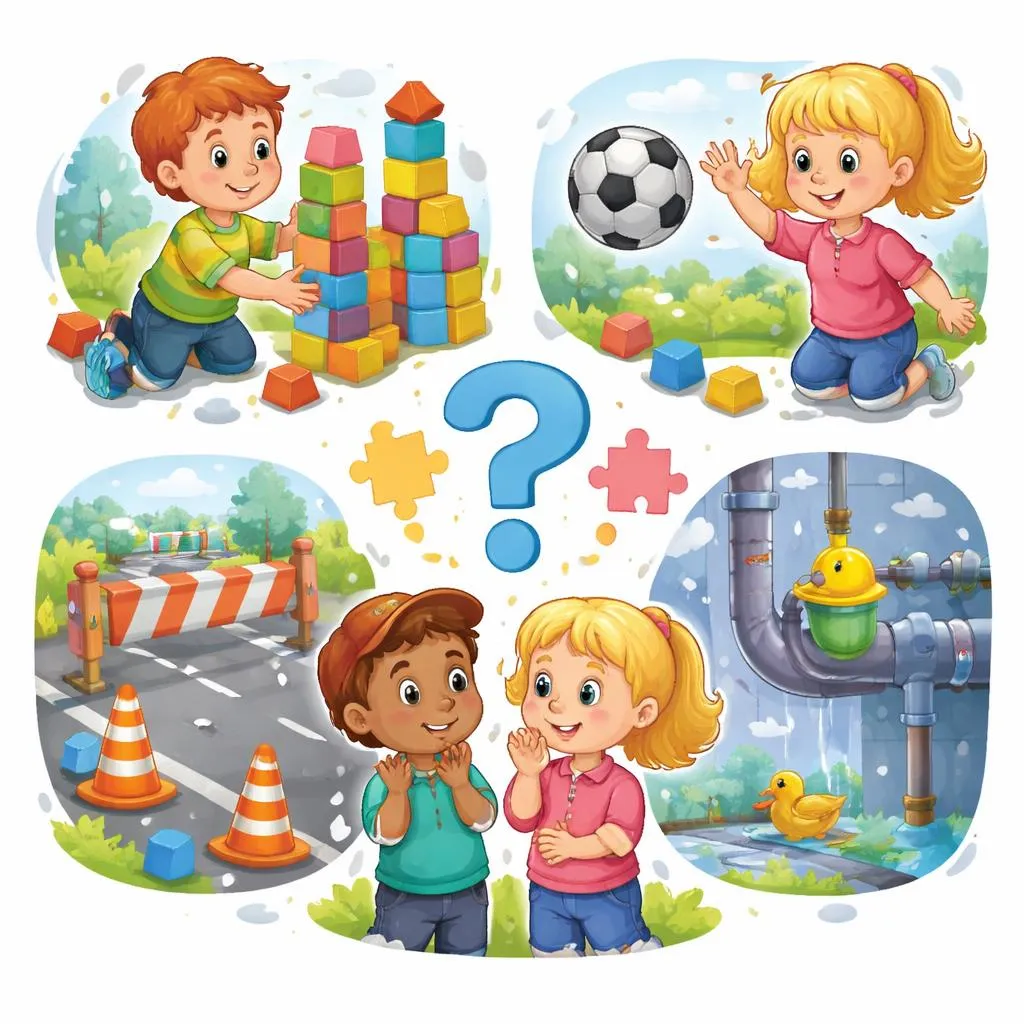

What Does “Same Word, Different Forms” Mean?
Many English words grow into families. One root can form many related words. Each form has its own job.
The family block, blocker, blocking, blockage is a great example.
Block can be a noun.
The toy block is blue. A city block is long.
It can also be a verb.
Trees block the road.
One word can do two jobs.
Blocker is a noun.
The goalie acts as a blocker.
It names a person or thing that blocks.
Blocking can be a verb form.
The truck is blocking traffic.
It can also be a noun.
Blocking is important in sports.
Blockage is a noun.
Leaves caused a blockage in the pipe.
It means something blocked or the state of being blocked.
One root.
Many forms.
That is how word families help children grow vocabulary.
Personal Pronouns Change Their Form
Children already know forms can change.
Pronouns do this:
I → me → my we → us → our
Words can change too.
Look at this family:
block blocker blocking blockage
The root stays.
The ending changes.
The grammar role changes.
Block may show action or name an object.
Blocker names a doer or tool.
Blocking often shows action in progress.
Blockage names a condition or result.
Patterns help children understand structure.
And structure supports better reading.
From Verb to Noun to Adjective to Adverb – One Family, Many Words
This family stretches across grammar.
Verb — block
Rocks block the stream.
Noun — block
Build a tower with blocks.
Noun — blocker
The player is a strong blocker.
Verb form or noun — blocking
The car is blocking the driveway. Blocking matters in football.
Noun — blockage
The drain has a blockage.
One root creates many roles.
That is the power of word families.
This family does not commonly form a regular adjective or adverb children use often.
That matters too.
Not every root grows in every direction.
Real usage is what matters.
One Root, Many Roles – How Words Grow from Actions to Qualities
The root block begins with an action.
Something stops movement.
Simple.
Concrete.
Easy for children.
Then the family grows.
Blocker turns action into a person or tool.
Someone or something does the blocking.
Then blocking can turn action into an idea.
Blocking takes skill.
Now action became concept.
Then blockage names a result.
The pipe has a blockage.
Action became condition.
This is how roots expand in meaning.
Children begin to see language as connected pieces.
That supports vocabulary growth.
Same Meaning, Different Jobs – Is It a Verb or a Noun?
Children often mix forms.
Look at this:
? The goalie is a block. ? The goalie is a blocker.
A person needs blocker.
Another:
? Leaves made a blocking in the drain. ? Leaves made a blockage in the drain.
A condition needs blockage.
Another:
? The truck is blockage the road. ? The truck is blocking the road.
Action in progress needs blocking.
Ask:
Is this an action?
A person?
A result?
That question helps children choose correctly.
Grammar becomes clearer.
Adjectives and Adverbs – When Do We Add -ly?
Children often ask whether every root makes an adverb.
Quick → quickly Soft → softly
But what about blockly?
That is not standard English.
Very useful lesson.
Not every root adds -ly.
This family teaches something important.
Some word families grow through nouns and verb forms more than adverbs.
That is normal.
Focus on real forms:
block blocker blocking blockage
Mastering real patterns matters most.
Children gain confidence through accurate forms.
That is stronger than guessing.
Watch Out for Tricky Spelling Changes (Double Letters, y to i, and More)
This family has useful spelling patterns.
block → blocking
Notice something important.
The final consonant doubles.
block → blocking
Double k stays.
Children may write:
? blocing
Correct:
? blocking
Important pattern.
Now look:
block → blocker
Add -er.
Again the k stays.
Then:
block → blockage
Add -age.
A new noun forms.
That suffix often names a result or condition.
Like:
postage breakage blockage
Word endings often carry meaning.
That helps children decode new words.
Let’s Practice – Can You Choose the Right Form?
Choose the correct word.
Fallen trees can ___ roads. Answer: block The team needs a strong ___. Answer: blocker The bus is ___ traffic. Answer: blocking Hair caused a pipe ___. Answer: blockage
Now build sentences.
Use block:
Clouds block the sun.
Use blocker:
The defender is a blocker.
Use blocking:
Blocking takes practice.
Use blockage:
There is a blockage in the sink.
Mini challenge:
Which fits?
“The rocks were ______ the stream.”
Correct answer:
blocking
Practice helps forms stay in memory.
Common Mistakes Children Make with This Word Family
Many learners confuse blocker and blocking.
? My brother is good at blocker. ? My brother is good at blocking.
Skill needs blocking.
Another:
? The road has a blocker. ? The road has a blockage.
Condition needs blockage.
Another:
? The tree blocker the road. ? The tree blocked the road.
Past tense needs blocked.
Small endings matter.
They change meaning.
They change grammar.
That is why word families are useful.
How These Words Appear in Everyday Reading
Children meet this family in many subjects.
In science:
A blockage stopped water flow.
In sports:
Good blocking helps teams win.
In stories:
Rocks blocked the cave entrance.
In city maps:
Walk two blocks north.
Interesting point:
Block even has multiple noun meanings.
Toy block.
Street block.
Solid block.
One word can carry many ideas.
That makes vocabulary richer.
One Root, Many Contexts
This family appears in different topics.
In sports:
blocker blocking
In construction:
concrete block
In health texts:
artery blockage
In technology:
block unwanted messages
One root works across subjects.
That helps memory grow.
Words learned in many contexts stay stronger.
Children benefit from seeing that.
Word Family Patterns Children Can Compare
Compare this family with others.
block → blocker
Like:
teach → teacher
paint → painter
Now compare:
block → blockage
Like:
break → breakage
Words form patterns.
Patterns support vocabulary growth.
Children who notice patterns become better word detectives.
That is exciting learning.
Tips for Parents – Help Your Child Learn Word Families in a Fun Way
Use building blocks as a word lesson.
Play while learning.
Ask:
Which block can block the path?
Fun and language can mix.
Make a word family chart.
Put block in the center.
Add:
blocker blocking blockage
Let children draw arrows.
Use sorting games.
Action or thing?
Person or result?
Sorting builds grammar awareness.
Read together and notice the family.
Pause at blocking in sports books.
Pause at blockage in science books.
Show how one root appears in many places.
Try sentence swaps.
Rocks block the road. The road has a blockage. The truck is blocking traffic.
One idea.
Three forms.
Wonderful practice.
Most of all, praise pattern noticing.
That skill helps with every new word family.
The family block, blocker, blocking, blockage teaches much more than one root.
It teaches verbs.
It teaches nouns.
It teaches suffixes.
It teaches spelling patterns.
It teaches how meaning grows across contexts.
One root can open many paths in English.
That is how vocabulary grows.
Word by word.
Pattern by pattern.
And every new word family helps children build stronger language, one block at a time.