
What Does “Same Word, Different Forms” Mean?
Many English words belong to families. One root can grow into many forms. Each form has a different job.
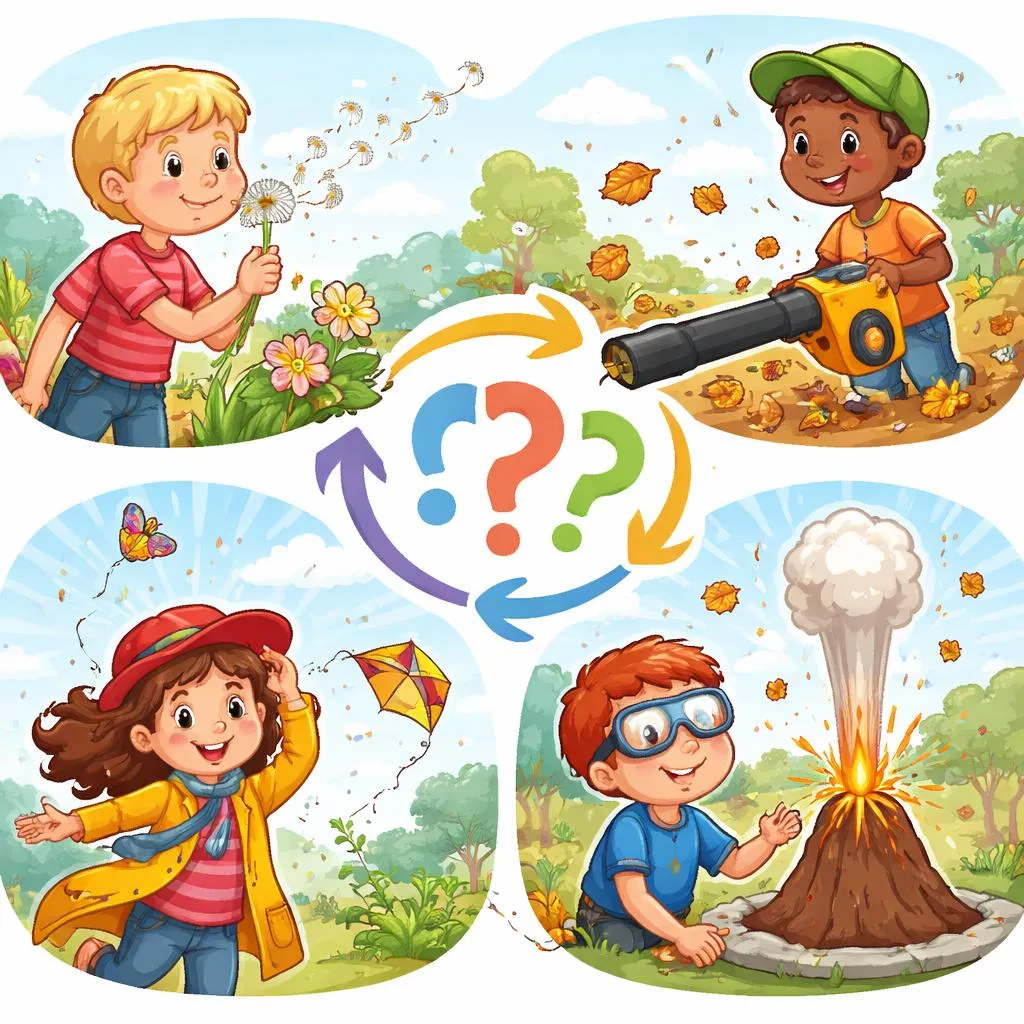
The family blow, blower, blowing, blown is a great example.
Blow is often a verb.
Wind can blow hard. Blow the bubbles gently.
It can also be a noun.
A strong blow shook the door.
One word can do two jobs.
Blower is a noun.
A leaf blower moves leaves.
It names a tool or something that blows.
Blowing can be a verb form.
The wind is blowing.
It can also be a noun.
The blowing of horns began.
Blown is the past participle.
The leaves were blown away. The candle has blown out.
One root creates many forms.
That is how word families help children grow vocabulary.
Personal Pronouns Change Their Form
Children already know forms can change.
Pronouns do this:
I → me → my they → them → their
Words do this too.
Look at this family:
blow blower blowing blown
The root stays.
The endings change.
The jobs change.
Blow often shows action.
Blower names a thing.
Blowing shows action happening.
Blown often shows completed action.
Patterns make grammar easier.
Children who notice patterns often become stronger readers.
From Verb to Noun to Adjective to Adverb – One Family, Many Words
This family stretches across grammar roles.
Verb — blow
Birds blow feathers in the wind.
Noun — blow
The boxer felt a hard blow.
Noun — blower
The gardener used a blower.
Verb form or noun — blowing
The wind is blowing. Blowing bubbles is fun.
Past participle or adjective — blown
The paper was blown away. A blown tire caused trouble.
One root.
Many roles.
That is word-building in action.
This family does not commonly form a regular adverb.
That matters too.
Not every root creates every form.
Real patterns matter most.
One Root, Many Roles – How Words Grow from Actions to Qualities
The root blow begins as action.
Air moves.
Simple.
Concrete.
Easy for children.
Then meaning grows.
Blower turns action into a tool.
Something performs the action.
Then blowing focuses on process.
The wind is blowing.
Action feels ongoing.
Then blown often shows result.
Seeds were blown across fields.
Action became outcome.
This is how word families expand.
Children begin seeing words as connected.
That supports deeper vocabulary learning.
Same Meaning, Different Jobs – Is It a Verb or a Noun?
Children often mix forms.
Look at this:
? The machine is a blowing. ? The machine is a blower.
A tool needs blower.
Another:
? The leaves are blowning away. ? The leaves are blowing away.
Use blowing.
Another:
? The wind has blow hard. ? The wind has blown hard.
After has, use blown.
Ask:
Is this action?
A tool?
A finished action?
That often helps children choose correctly.
Grammar starts making sense.
Adjectives and Adverbs – When Do We Add -ly?
Children often learn:
Slow → slowly Quick → quickly
Then they may wonder:
Can we say blowly?
No.
That is not standard English.
Useful lesson.
Not every root makes an adverb.
But this family has another interesting feature.
Blown can act as an adjective.
blown leaves blown glass
Past forms sometimes become descriptors.
Compare:
The wind has blown the hat away. The blown hat lay in mud.
Same form.
Different job.
Children can notice these patterns in reading.
That grows grammar awareness.
Watch Out for Tricky Spelling Changes (Double Letters, y to i, and More)
This family has important spelling changes.
blow → blowing
Drop nothing.
Just add -ing.
Simple.
Now irregular change:
blow → blown
Very important.
Children may guess:
? blowed
But correct form is:
? blown
This is an irregular pattern.
Also remember:
Present: blow Past: blew Past participle: blown
Three forms.
Very important family.
Children should learn them together.
blow, blew, blown
Like a pattern chant.
That helps memory.
Let’s Practice – Can You Choose the Right Form?
Choose the correct word.
The wind can ___ leaves away. Answer: blow The gardener used a leaf ___. Answer: blower The wind is ___ strongly. Answer: blowing The papers were ___ across the yard. Answer: blown
Now build sentences.
Use blow:
Please blow the candle out.
Use blower:
The blower cleared leaves.
Use blowing:
Cold wind is blowing.
Use blown:
The kite was blown away.
Mini challenge:
Which fits?
“The balloons had ______ into the trees.”
Correct answer:
blown
Practice helps forms stay in memory.
Common Mistakes Children Make with This Word Family
Many learners confuse blew and blown.
? Yesterday the wind blown hard. ? Yesterday the wind blew hard.
Past tense needs blew.
Another:
? The wind has blew hard. ? The wind has blown hard.
After has, use blown.
Another:
? The machine is blowing leaves. It is a blowing. ? It is a blower.
Tool needs noun form.
Small differences matter.
They build accurate English.
Blow in Everyday Reading
Children meet this family often.
In science:
Wind blows seeds.
In stories:
Wolves huff and blow.
In weather books:
Storms blow in from oceans.
In tool vocabulary:
A snow blower clears paths.
One family appears in many subjects.
That helps memory grow.
Words learned in context stay stronger.
That is natural vocabulary growth.
Blow Beyond Literal Meaning
This family has figurative meanings too.
Blow a chance
This means lose an opportunity.
Not actual air.
A big blow
Can mean disappointment.
Losing the game was a big blow.
Again figurative.
Children may meet these in stories later.
That shows words can grow beyond literal meaning.
Very exciting for young learners.
Word Family Patterns Children Can Compare
Compare:
blow → blower
Like:
teach → teacher
wash → washer
Now compare irregular verbs:
blow, blew, blown
Like:
grow, grew, grown
Children love spotting patterns.
Patterns help unlock many words.
One family can support others.
That is powerful learning.
Tips for Parents – Help Your Child Learn Word Families in a Fun Way
Use movement.
Blow bubbles.
Blow feathers.
Act out the word.
Physical action helps memory.
Make a word family chart.
Put blow in the center.
Add:
blower blowing blown
Let children draw arrows.
Practice irregular triples.
Say together:
blow, blew, blown
Like rhythm.
Children remember chants.
Read books with wind or weather.
Pause at these words.
Ask:
Why use blown here, not blowing?
That builds grammar thinking.
Use sentence swaps.
Winds blow. The wind is blowing. Leaves were blown away.
One root.
Three forms.
Wonderful practice.
Most of all, celebrate noticing.
When children see patterns, vocabulary grows faster.
The family blow, blower, blowing, blown teaches much more than one root.
It teaches verbs.
It teaches nouns.
It teaches irregular patterns.
It teaches spelling shifts.
It teaches literal and figurative meanings.
One root can open many doors in English.
That is how vocabulary grows.
Step by step.
Pattern by pattern.
And every new word family helps children’s language skills blow stronger every day.