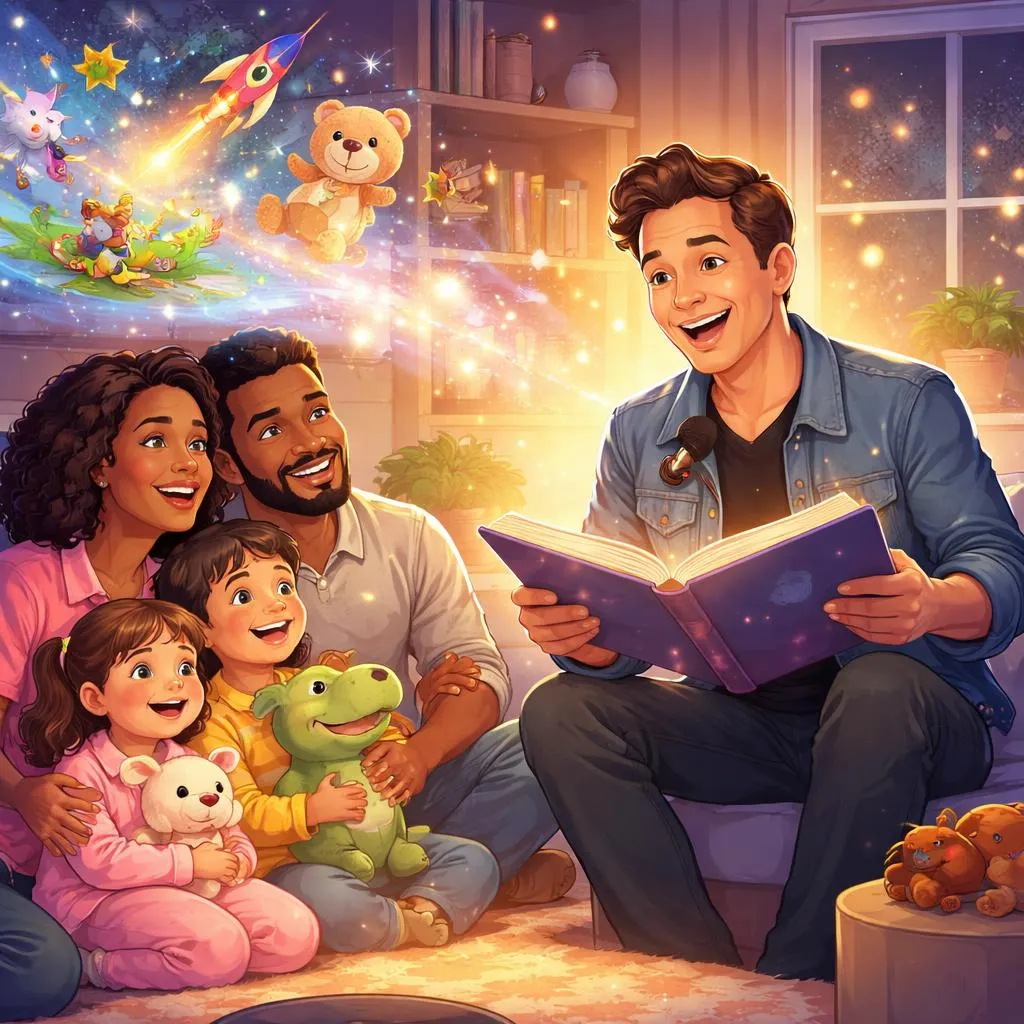

A familiar voice fills the room. It might sound like someone from a favorite movie or a singer your child loves. The voice tells a story with expression and warmth. This experience delights children and parents alike. More and more, we see celebrities read children's stories in videos, apps, and online platforms. This trend brings something special to family reading time.
Let us explore together why famous voices capture our attention and how we can make the most of these special story moments with our children.
<h2>What is the story?</h2> When celebrities read children's stories, they often choose beloved classics or new favorites. Many online programs feature famous actors, musicians, and athletes sharing tales that mean something to them.In one popular video, a well-known actress reads a story about a young girl who loves science. She uses different voices for each character. She makes the grandmother sound warm and wise. She makes the little sister sound bouncy and curious. Her training as an actress brings each character to life.
Another celebrity might read a classic like Where the Wild Things Are. His deep voice makes Max's imaginary journey feel real and exciting. When the wild things roar their terrible roars, listeners might feel a little shiver of delight.
These readings often include the book's illustrations on screen. Children see the pictures while hearing the famous voice. This combination of visual and audio creates a rich experience.
<h2>The message of the story</h2> The message matters more than who reads it. When celebrities read children's stories, they share important lessons along with the words. A story about a determined duck teaches persistence. A tale about sharing teaches generosity.But the celebrity's presence adds another layer. Children see someone successful taking time to read. This sends a message that reading matters. It says that stories are for everyone, even famous people.
Some celebrities choose stories that connect to their own lives. A famous athlete might read a book about perseverance. After reading, they might share a short message about never giving up. This personal connection makes the message more powerful.
We can talk with our children about this. Why do you think this person chose this story? What does it tell us about what they believe? These conversations help children think deeply about stories and their meanings.
<h2>Vocabulary learning</h2> When celebrities read children's stories, they often highlight vocabulary in special ways. Their training helps them emphasize important words naturally.A celebrity narrator might slow down for a new word. They might say it clearly and with expression. When the word enormous appears, they might stretch it out and make it sound truly big. Eee-nor-mous. Children hear the word's importance through this treatment.
Some celebrity reading programs include definitions. The video might pause briefly to explain a word. A butterfly icon might appear on screen with a simple definition. This happens gently, without interrupting the story flow.
After watching, we can use new words from the story. That celebrity used the word enormous. Can we find something enormous in our house? Maybe our sofa looks enormous compared to your toy chair. Using words in real life helps them stick.
<h2>Phonics points</h2> Professional narrators model excellent pronunciation. When celebrities read children's stories, children hear sounds produced clearly and correctly.A good reader pronounces each sound distinctly. They do not drop endings or mumble through difficult words. Children absorb these sound patterns naturally. They learn how words should sound.
We can notice together how the celebrity says certain words. Listen to how they say the word light. Can you hear the L at the beginning? Can you hear the T at the end? Sometimes we drop those sounds when we talk fast. The celebrity says them clearly.
We can practice making sounds like the celebrity. Let's try to say light just like they did. Put your tongue up for the L. Feel the T at the end. This playful practice builds awareness of sounds in words.
<h2>Grammar patterns</h2> Celebrity narrators bring grammar to life through their voices. When they read sentences, their tone shows how grammar works. They pause at commas. Their voice goes up at question marks. They slow down at periods.Children hear these patterns and internalize them. They learn that sentences end with a certain feeling. They learn that questions sound different from statements. This understanding develops without any formal teaching.
When a character asks a question, the celebrity's voice rises at the end. Where are you going, little mouse? Children hear that upward tilt and know a question is being asked. They will imitate this when they read aloud themselves.
After listening, we can practice making our voices go up for questions and down for statements. Let's try saying a sentence from the story the way the celebrity did. This play builds understanding of how spoken language works.
<h2>Learning activities</h2> After enjoying a celebrity reading, we can extend the experience with simple activities. These feel like play while building important skills.Encourage your child to become a narrator themselves. Let them choose a favorite book and read it like a celebrity. They can use different voices for characters. They can slow down for exciting parts. You might even record them on your phone. Children love hearing themselves tell stories.
Create a special storytelling space. Gather some cushions and blankets. Dim the lights a little. Announce that it is story time with a special guest. Then play a celebrity reading video together. The special setup makes the experience feel like an event.
Draw a picture of the celebrity narrator. What do you imagine they look like while reading? This helps children connect the voice to a person and makes the experience more personal.
<h2>Printable materials</h2> Many celebrity reading programs offer companion printables. These extend the learning and fun beyond the screen.Look for coloring pages featuring characters from the story. Your child can color while listening to the reading again. This multi-tasking builds focus and keeps little hands busy.
Some programs provide activity sheets related to the story's themes. If the story was about friendship, the printable might have space to draw a picture of a friend. If the story was about animals, there might be a simple maze.
You can also create your own printables. Print a picture of the celebrity narrator from the internet. Let your child write a thank you note to them for reading the story. This builds writing skills and gratitude.
Story maps help children remember what they heard. Draw simple boxes for beginning, middle, and end. Your child can draw something that happened in each part.
<h2>Educational games</h2> Games based on celebrity readings make learning active and memorable. These work well for family time or quiet afternoons.Play guess the celebrity voice. Find several different celebrity readings online. Play a short clip without showing the screen. Can your child guess who is reading? This builds listening skills and familiarity with different voices.
Play story detective. After watching a celebrity reading, ask questions about the story. What was the problem? How did the character solve it? Who helped them? Give points for correct answers. Take turns being the detective.
Create a celebrity reading club with friends or family. Each person chooses a different celebrity reading to watch. Then everyone shares what they watched and what they liked. This builds community around stories.
For younger children, play a simple matching game. Match the celebrity to the story they read. Print small pictures of celebrities and book covers. Can your child match them correctly?
These games show that celebrity readings offer more than passive entertainment. They become springboards for active learning and family connection.
When celebrities read children's stories, they bring their talent and fame to something important. They show that reading matters. They model expressive reading that children can imitate. They introduce stories to children who might not otherwise discover them.
But the real magic happens when we build on these experiences. The celebrity starts the story, but we continue it through talk and play. We connect the story to our own lives. We use new words and make new friends in our imaginations.
So next time you see a favorite actor or singer offering a story, gather your child and press play. Enjoy the performance together. Then turn off the screen and make the story your own. The celebrity opened the door, but you and your child walk through it together into the wonderful world of stories.