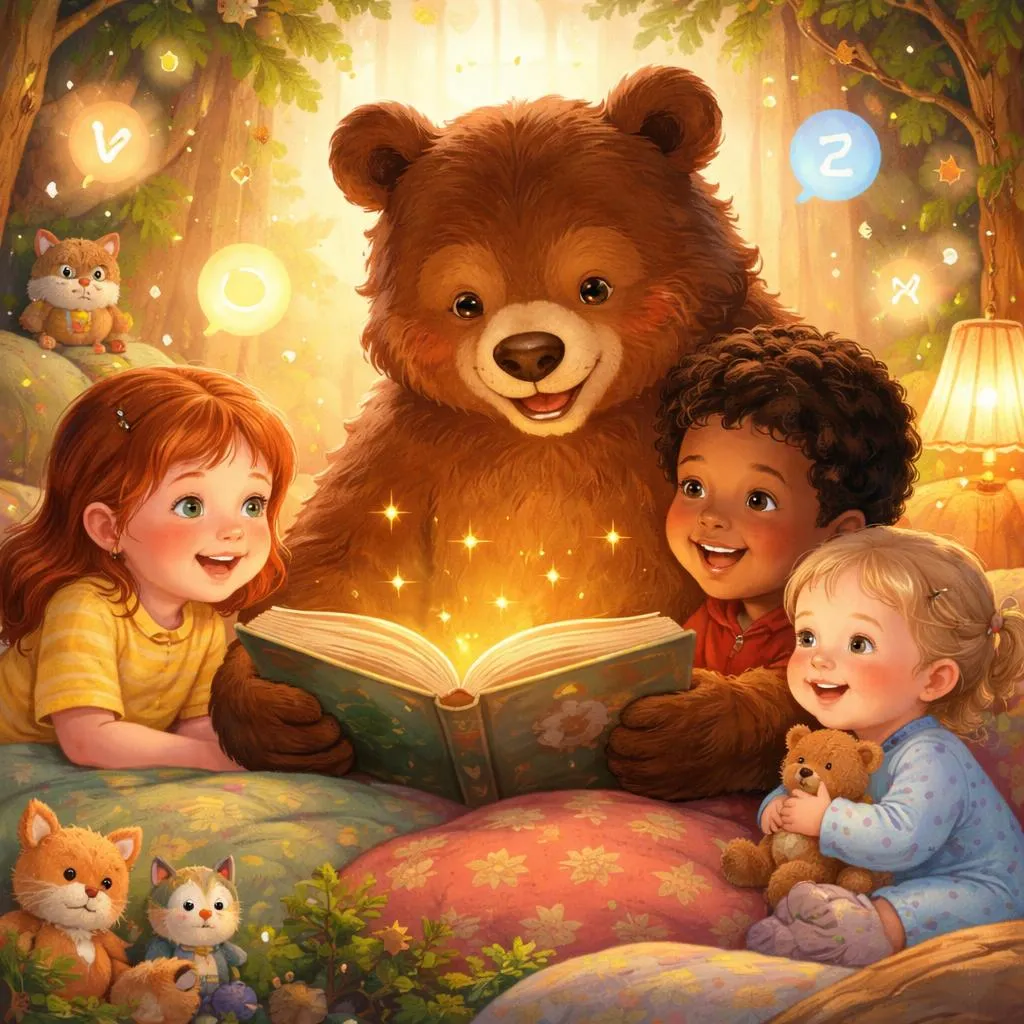

Certain animals appear repeatedly in children's literature. Bears rank among the most popular. They are large enough to seem powerful. They are fuzzy enough to seem huggable. This duality makes them perfect story characters. Children's bear stories range from wild adventures to gentle bedtime tales. The variety serves different learning needs. Some teach facts about real bears. Others use bears as stand-ins for human experiences. Both types support language development. The familiar animal provides comfort. The stories provide new words and ideas. Let us explore how these tales become effective teaching tools in early language classrooms.
What Are Children's Bear Stories?
Bear stories form a distinct category in children's literature. They feature bears as main characters. Some bears act like real animals. They live in forests. They hunt for food. They hibernate in winter. Other bears act like people. They wear clothes. They live in houses. They talk and make friends. Both types appear in classrooms and homes. Classic examples include Goldilocks and the Three Bears. Modern favorites include Paddington Bear and Winnie-the-Pooh. Each story offers unique language opportunities. Realistic bears teach nature vocabulary. Human-like bears teach social language and emotions.
Categories of Children's Bear Stories
Understanding different bear story types helps in selecting appropriate materials for specific learning goals.
Folktales and Fairy Tales: Goldilocks and the Three Bears is the most famous. It teaches size concepts, routines, and consequences. The repeated language supports emerging readers.
Classic Literary Bears: Winnie-the-Pooh stories use bears to explore friendship and problem-solving. The language includes richer vocabulary and gentle humor. These work well for slightly older children.
Realistic Bear Stories: Books about real bears teach factual information. Bear habitats, foods, and behaviors appear in simple language. These support content learning alongside language acquisition.
Bedtime Bear Stories: Gentle tales like Bear Snores On create calm reading experiences. Repetitive language and soothing rhythms support winding down. Perfect for end-of-day reading.
Adventure Bear Stories: Stories like We're Going on a Bear Hunt create excitement. Action verbs and sound words dominate. These build energetic vocabulary through participation.
Vocabulary Learning from Bear Stories
Bear narratives introduce vocabulary across multiple domains. The words connect to animals, nature, size, and daily activities.
Bear Words: bear, cub, fur, paw, claw, growl, hibernation, den, forest, cave. Size Words: big, small, medium, huge, tiny, large, little, enormous, miniature. Food Words: honey, berries, fish, porridge, bread, marmalade, picnic, snack. Action Words: sleep, wake, eat, walk, run, climb, search, find, lose, share. Home Words: cave, den, house, chair, bowl, bed, door, window, forest.
Each story context introduces these words naturally. Goldilocks teaches size words through the three bears' belongings. Paddington teaches food words through his love of marmalade. Realistic stories teach habitat words through forest settings.
Phonics Points in Bear Stories
Specific sound patterns appear frequently in bear-themed narratives. Identifying these supports decoding skills.
The /b/ sound: bear, big, brown, bed, bowl, berries. The character name starts with this sound. Practice saying bear words together. Feel the lips pressing.
The /h/ sound: honey, hungry, house, help, hibernation. Bears love honey. They get hungry. They need help. The sound appears in key contexts.
The /g/ sound: growl, gold, good, goodbye. Bears growl. Goldilocks visits. Good manners matter. The sound repeats throughout.
The /br/ blend: brown, brave, breakfast. Many bears are brown. Brave bears face challenges. Breakfast appears in food scenes.
Rhyming words: bear/care, chair/fair, bed/head. Many bear books use rhyme. Point out patterns naturally during reading.
Grammar Patterns in Bear Stories
Children's bear stories model essential grammar structures within engaging narratives.
Size Comparisons: The three bears demonstrate comparative language. "Daddy Bear's bowl is big. Mommy Bear's bowl is medium. Baby Bear's bowl is small." Superlatives appear too. "The biggest bed. The smallest chair."
Present Tense Action: Stories use present tense for ongoing action. "The bear walks through the forest. He looks for honey." This matches how children experience the world.
Past Tense Narrative: Many bear stories use simple past tense. "Goldilocks entered the house. She tasted the porridge." This provides past tense modeling.
Questions and Exclamations: Characters ask questions and express surprise. "Who has been sitting in my chair?" "What a big bear!" These patterns appear naturally in dialogue.
Prepositions: Bear stories use location words constantly. "In the forest. Under the bed. Through the door. Inside the cave." Pictures show these relationships clearly.
Learning Activities for Bear Stories
Active engagement transforms passive listening into language acquisition. These activities work with any bear story.
Bear Size Sorting: Use three bowls, chairs, or beds of different sizes. Label them small, medium, large. Students sort objects by size while saying the words. Connect to the three bears story.
Honey Pot Words: Decorate a jar as a honey pot. Fill with word cards from bear stories. Students pull a card, read the word, and use it in a sentence. "Bears eat honey." "The cub is small."
Bear Den Creation: Create a classroom bear den using blankets or a large box. Place bear books and stuffed bears inside. Students visit the den for independent reading. This builds reading motivation.
Hibernation Discussion: Real bears hibernate. What does that mean? Discuss winter sleep. What do bears do before hibernating? Eat lots of food. Find a den. Students draw bears sleeping in dens.
Bear Walk: Read We're Going on a Bear Hunt. Then take students on a bear walk around the school or playground. Use the story language. "We're going on a bear hunt. We're going to catch a big one."
Learning Activities for Group Settings
Collaborative learning builds language through interaction and shared experiences.
Story Sequencing with Bears: Create picture cards from a bear story. Small groups arrange cards in order and retell the story together. This builds narrative skills and teamwork.
Three Bears Role Play: Assign roles for Goldilocks and the three bears. Students act out the story using simple dialogue. This builds fluency through repeated phrases. "Someone has been eating my porridge!"
Bear Sort Game: Provide pictures of different bears. Story bears like Paddington and Winnie-the-Pooh. Real bears like grizzlies and pandas. Small groups sort into categories and explain their sorting rules.
Bear Habitat Creation: Groups create dioramas showing bear habitats. Forests for brown bears. Ice for polar bears. Bamboo forests for pandas. Label habitat features in English.
Educational Games from Bear Stories
Games transform learning into playful competition. These require minimal preparation.
Goldilocks Memory: Create pairs of cards showing items from the three bears' house. Bowl, chair, bed, bear. Place face down. Students flip two cards looking for matches. Name each item when flipping.
Bear Hunt Actions: Call out obstacles from We're Going on a Bear Hunt. "Long grass!" Students make swishing arm movements. "Mud!" Students pretend to squelch through mud. This builds listening and physical response.
Honey Pot Toss: Decorate a box as a honey pot. Students stand at a distance and toss word cards into the pot. Before tossing, they must read the word and use it in a sentence.
Bear Says: Play like Simon Says with bear actions. "Bear says climb a tree." "Bear says catch a fish." "Bear says go to sleep for winter." Students follow commands using bear movements.
Printable Materials for Bear Stories
Ready-to-use printables extend learning beyond story time into independent practice.
Vocabulary Flashcards: Create cards with bear pictures on one side and words on the other. Bear, cub, paw, fur, growl, den, forest, honey, fish, berries. Use for matching games or quick review.
Three Bears Size Cards: Create cards showing the three bears and their belongings. Students match each bear to the correctly sized bowl, chair, and bed. This builds size vocabulary.
Coloring Pages: Print outline drawings of bears in various settings. Forest, cave, house, picnic. Students color while discussing with partners. "My bear is brown." "This bear eats fish."
Bear Mini-Book: Fold paper to create a small book. Each page shows one bear fact or story element. Bears sleep in winter. Bears eat honey. Bears have fur. Students illustrate each page.
Comprehension Questions: Prepare simple questions for specific bear stories. "Why did Goldilocks go into the house?" "What does Paddington eat?" "Where do real bears live?" Answer in complete sentences.
Daily Life Connections to Bear Stories
Linking story themes to daily experiences makes learning relevant and personal.
Bear and Baby Comparison: Compare bear families to human families. Mother bears care for cubs just like human mothers. Cubs play and learn like children. Draw parallels using simple language.
Food Preferences: Bears love honey and berries. What foods do students love? Create a class chart of favorite foods. Use complete sentences. "I love apples." "Maria loves bread."
Bedtime Routines: Bears sleep in dens. Where do students sleep? Discuss bedtime routines using sequence words. First, I brush my teeth. Then, I read a book. Finally, I go to sleep.
Size Exploration: The three bears teach size concepts. Find small, medium, and large objects in the classroom. Label them. Compare heights of students. Who is tallest? Smallest? This builds comparative language.
Printable Flashcards from Bear Stories
Effective flashcards support multiple learning styles and review methods.
Picture-Word Cards: Front shows simple bear drawing or printed image. Back shows word in English. Use for self-study, partner practice, or classroom displays.
Word-Definition Cards: One card shows "hibernation." Matching card shows "when bears sleep all winter." Students match words to simple definitions. This builds reading comprehension.
Story Sequence Cards: Create cards showing main events from specific bear stories. Students arrange in order and retell using complete sentences. This builds narrative skills.
Emotion Cards: Bears in stories feel many emotions. Create cards showing happy bear, sad bear, scared bear, angry bear. Match emotions to story moments. "Goldilocks felt scared when the bears came home."
Phonics Practice from Bear Words
Use bear vocabulary to practice specific phonics patterns.
Initial Sound Sort: Provide picture cards from bear stories. Bear, cub, paw, fur, growl, den, fish. Students sort by beginning sound. B words. C words. P words. This builds phonemic awareness.
Rhyming Bear Hunt: Find words that rhyme with bear. Care, chair, fair, hair, pear, share. Create rhyming pairs. Use in sentences. "The bear takes care." "Sit on the chair."
Syllable Clapping: Clap syllables in bear vocabulary. Bear (1). Hi-ber-na-tion (4). Pad-ding-ton (3). This builds phonological awareness through physical movement.
Vowel Sound Sort: Sort bear words by vowel sounds. Bear has the /air/ sound. Bed has the /e/ sound. Big has the /i/ sound. This builds vowel discrimination.
Grammar Patterns Practice
Use bear story sentences to practice specific grammar structures naturally.
Size Word Practice: Practice comparative and superlative forms using bears. "Papa Bear is big. Mama Bear is bigger. Baby Bear is biggest?" Actually Baby Bear is smallest. Discuss the pattern.
Question Formation: Practice asking questions about bear stories. Model question words. "Who ate the porridge?" "What did Goldilocks break?" "Where do bears live?" "Why do bears hibernate?" Students ask and answer with partners.
Present Tense Verbs: Practice present tense using bear facts. "Bears eat berries." "A cub plays with its mother." "Bears sleep in winter." Students create their own fact sentences.
Preposition Practice: Use bear figures and classroom objects to practice prepositions. "Put the bear in the cave." "Put the bear under the chair." "Put the bear next to the honey pot."
The Lasting Appeal of Bear Stories
Children's bear stories continue teaching new generations of language learners. The familiar animal provides comfort while stories provide new words. Goldilocks teaches size concepts through repeated patterns. Paddington teaches kindness through his adventures. Realistic bears teach nature facts through engaging narratives. The variety ensures materials for every learning level and interest. For language educators, bear stories offer rich teaching opportunities within engaging frameworks. Vocabulary builds through meaningful contexts. Phonics develops through sound patterns. Grammar models appear naturally. Discussions explore emotions and choices. All from creatures that are simultaneously wild and cuddly. That duality mirrors language learning itself. New words feel wild at first. With practice, they become familiar and comforting. Bear stories guide that journey with warmth and wisdom.