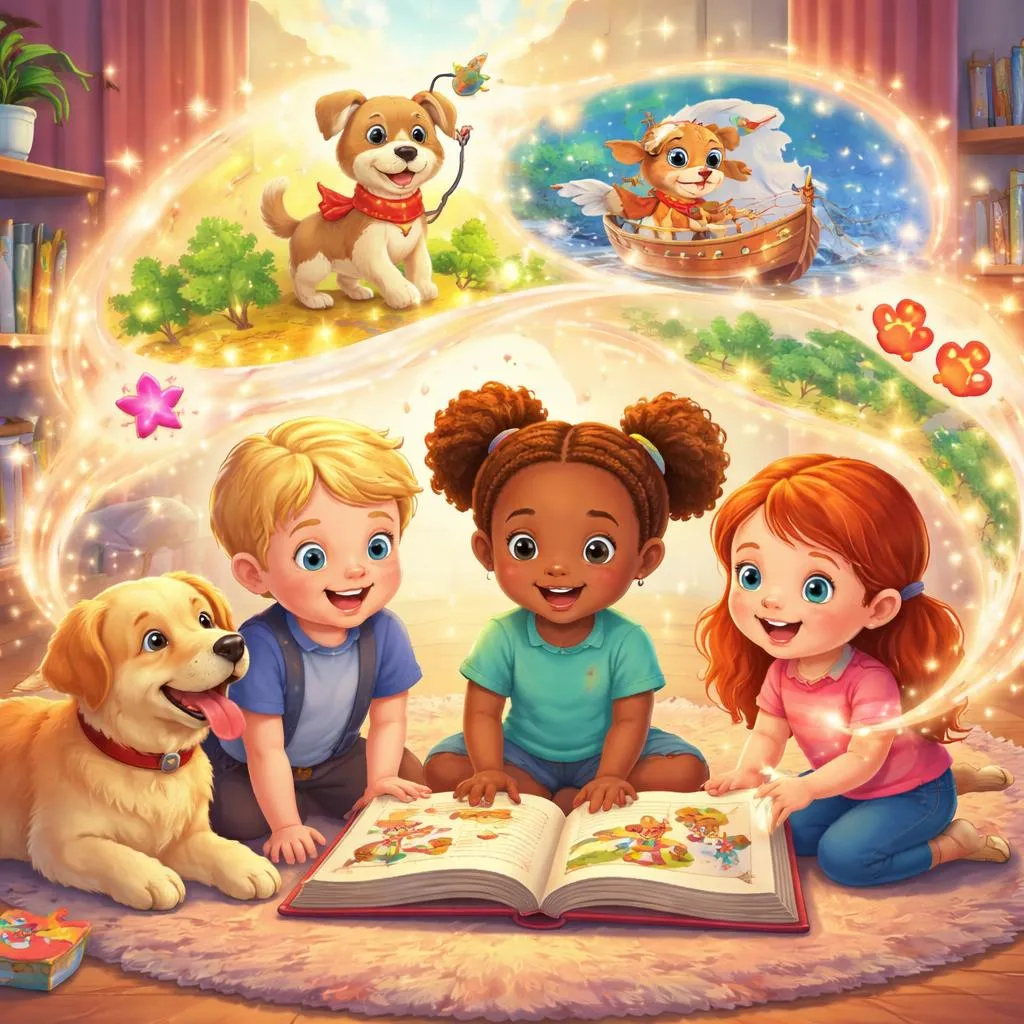

Dogs appear everywhere in children's lives. Some children have pet dogs at home. Others see dogs in parks and neighborhoods. All children recognize their friendly nature. Children's dog stories build on this familiarity. They feature characters children already love. They explore themes of friendship and loyalty. They introduce vocabulary about animals, emotions, and daily life. The stories connect to real experiences. Children understand the context immediately. This comprehension allows them to focus on new words and phrases. Let us explore how dog stories support language development and emotional learning in early childhood.
What Are Children's Dog Stories?
These are narratives featuring dogs as main characters. Some dogs act like real dogs. They bark, fetch, and wag their tails. They live with families and go on adventures. Other dogs act more like people. They talk, wear clothes, and have human problems. Both types appear in children's literature. Classic examples include "Clifford the Big Red Dog," "Go, Dog. Go!" and "Harry the Dirty Dog." These stories use dogs to explore themes children understand. Friendship, loyalty, curiosity, and belonging all appear through canine characters. The familiar animal makes these concepts accessible.
Categories of Children's Dog Stories
Understanding different story types helps in selecting appropriate materials for specific learning goals.
Realistic Dog Stories: These show dogs behaving as real dogs do. They fetch sticks. They dig holes. They wag tails when happy. They sleep in dog beds. These stories teach accurate animal vocabulary and behaviors. "Harry the Dirty Dog" shows a dog who loves to play and get dirty.
Talking Dog Stories: Dogs in these stories speak and think like people. They have conversations. They express feelings. They solve problems. These stories explore human themes through canine characters. They teach emotion vocabulary and dialogue patterns.
Working Dog Stories: These feature dogs with jobs. Guide dogs for the blind. Search and rescue dogs. Farm dogs who herd sheep. Police dogs who help officers. These stories teach vocabulary about work and helping.
Pet Relationship Stories: These focus on the bond between children and their dogs. Daily routines. Playtime. Training. Vet visits. The love between child and pet. These stories teach relationship vocabulary and daily life language.
Adventure Dog Stories: Dogs go on exciting journeys. They might get lost and find their way home. They might explore new places. They might help someone in danger. These stories teach action vocabulary and sequence language.
Vocabulary Learning from Dog Stories
Dog narratives introduce vocabulary across multiple domains. Words connect to animals, body parts, actions, and emotions.
Dog Words: dog, puppy, paw, tail, fur, ear, nose, bark, wag, fetch, dig, sniff, lick, growl. Breed Words: labrador, golden retriever, beagle, poodle, bulldog, German shepherd, dachshund, collie. Pet Care Words: food, water, bowl, leash, collar, tag, bed, crate, toy, bone, treat, vet, groom, walk. Action Words: run, jump, play, chase, catch, hide, find, follow, protect, help, rescue, save. Emotion Words: happy, excited, sad, lonely, scared, brave, loyal, friendly, gentle, playful.
Each story introduces words in meaningful contexts. A fetching game teaches action words. A vet visit teaches care vocabulary. A lost dog story teaches emotion words.
Phonics Points in Dog Stories
Specific sound patterns appear through key vocabulary. Identifying these helps build decoding skills.
The /d/ sound: dog, dig, dirty, David, down. The main character starts with this sound. Practice saying dog words together.
The /p/ sound: puppy, paw, play, pet, please. Puppies are small dogs. Paws are dog feet. Play is what dogs do.
The /b/ sound: bark, ball, bone, big, brown. Dogs bark. They chase balls. They chew bones. The sound appears frequently.
The /l/ sound: lick, leap, loyal, little, labrador. Dogs lick. They leap. They are loyal. The sound carries meaning.
Rhyming words: dog/log, pup/cup, tail/pail, play/day. Simple rhymes help children remember key words.
Grammar Patterns in Dog Stories
Children's dog stories model various grammatical structures within their narratives.
Present Tense Description: Stories describe dogs using present tense. "The dog runs fast." "He wags his tail when happy." "She loves to fetch the ball." This matches how children observe real dogs.
Past Tense Narrative: Adventure stories use past tense. "Harry dug a hole in the garden." "Clifford helped the children." "The lost dog found his way home." This provides past tense modeling.
Imperative Sentences for Commands: Dog training stories use commands. "Sit." "Stay." "Fetch." "Come." This models imperative mood clearly.
Questions to Dogs: Children ask dogs questions. "Where are you going?" "What did you find?" "Do you want to play?" Questions model conversational patterns.
Because Sentences: Causal language explains dog behavior. "The dog barked because he heard a noise." "He wagged his tail because he was happy." "She dug because she wanted to hide her bone." This builds causal understanding.
Learning Activities for Dog Stories
Active engagement helps children internalize vocabulary and themes through hands-on learning.
Dog Puppet Play: Create simple dog puppets from paper bags or socks. Students use puppets to act out dog behaviors. Bark, wag, fetch, sleep. Use action vocabulary. This builds kinesthetic learning.
Pet Care Chart: Create a chart showing how to care for a dog. Feed, water, walk, brush, play, vet. Use care vocabulary. Discuss who has dogs at home and what they do for them.
Dog Breed Sorting: Provide pictures of different dog breeds. Sort by size, fur type, or job. Use descriptive language. "This dog is big." "This dog has curly fur." "This dog helps blind people."
Lost Dog Poster: Create a poster for a lost dog. Include description, name, and where last seen. Use descriptive vocabulary. Color, size, fur, special markings. This builds descriptive writing.
Dog Biscuit Counting: Use dog biscuit treats or pictures for counting activities. Count, sort, pattern. Use number words. "Five biscuits for the big dog. Three for the puppy."
Learning Activities for Group Settings
Collaborative learning builds language through interaction and shared experiences.
Story Sequencing with Dog Pictures: Create picture cards showing a dog's day. Wake up, eat, play, walk, sleep. Groups arrange in order and describe using complete sentences. This builds sequence language.
Dog Show: Hold a pretend dog show. Each student brings a stuffed dog or draws one. Describe the dog to the class. "This is Max. He is brown. He likes to run." This builds descriptive oral language.
Vet Visit Role Play: Set up a pretend vet clinic. Students take turns being vet, pet owner, and dog. Practice veterinary vocabulary. "What seems to be the problem?" "He needs a shot." "She is healthy." This builds functional language.
Dog Training Game: One student plays the trainer. Others play dogs. Trainer gives commands. "Sit!" "Stay!" "Come!" Dogs follow commands. This builds listening comprehension and imperative understanding.
Educational Games for Dog Stories
Games make learning playful and memorable.
Dog Bingo: Create bingo cards with dog-related pictures. Dog, puppy, bone, ball, leash, bowl, bed, vet. Call out words. Students cover matching pictures. First to cover a row wins.
Memory Match with Dog Cards: Create pairs of cards with dog pictures. Dog/dog. Bone/bone. Ball/ball. Place face down. Students flip two looking for matches. Name pictures when flipping.
Fetch Game: Toss a soft toy like a ball. Student who catches it must name a dog word before tossing to someone else. This builds quick vocabulary recall.
What's Missing Game: Place several dog items on a tray. Toy dog, bone, ball, leash, bowl. Students study. Cover tray. Remove one item. Students identify what disappeared. Name it in English.
Printable Materials for Dog Stories
Ready-to-use printables extend learning beyond story time.
Dog Vocabulary Flashcards: Create cards with dog pictures on one side and words on the other. Dog, puppy, paw, tail, fur, ear, bone, ball, leash, bowl, bed, vet. Use for matching games or quick review.
Dog Breed Cards: Create cards showing different dog breeds with names. Labrador, poodle, beagle, bulldog, German shepherd. Discuss characteristics of each.
Dog Care Sequence Cards: Create cards showing steps of dog care. Fill food bowl. Give water. Go for walk. Brush fur. Play fetch. Go to vet. Students arrange in order.
Dog Coloring Pages: Print outline drawings of dogs in various activities. Running, fetching, sleeping, eating. Students color while discussing with partners.
My Dog Worksheet: Create a simple worksheet for children with dogs. "My dog's name is ___." "He is ___." "He likes to ___." For children without dogs, imagine a dream dog.
Daily Life Connections to Dog Stories
Linking story themes to daily experiences makes learning relevant and personal.
Real Dog Observations: If possible, observe a real dog. Visit a dog owner's home or watch dogs in a park. Use observation vocabulary. "The dog is running." "He is wagging his tail." "She is sniffing the ground."
Pet Sharing: Students with dogs can share photos or stories about their pets. Use descriptive language. Practice asking questions. "What is your dog's name?" "What does he like to eat?"
Dog Safety: Discuss how to approach unfamiliar dogs safely. Ask owner first. Let dog sniff hand. Be gentle. Use safety vocabulary and imperative forms. "Ask first." "Be gentle." "Move slowly."
Service Dog Awareness: Discuss dogs who help people. Guide dogs for blind people. Therapy dogs in hospitals. Police dogs. Use helping vocabulary. "The dog helps his owner cross the street."
Printable Flashcards from Dog Stories
Effective flashcards support multiple learning styles.
Picture-Word Cards: Front shows simple dog drawing or printed image. Back shows word in English. Dog, puppy, paw, tail, fur, ear, nose, bark, wag, fetch, bone, ball, leash, bowl.
Breed Cards: Create cards showing different dog breeds with names and simple descriptions. "Labrador: friendly family dog." "Poodle: curly fur, very smart." "Beagle: small, loves to sniff."
Action Cards: Create cards showing dog actions. Running, jumping, fetching, digging, sleeping, eating. Students act out actions while others guess. This builds verb vocabulary.
Emotion Cards: Create cards showing dog emotions with simple faces. Happy, sad, scared, excited, tired. Discuss when dogs feel these emotions.
Phonics Practice from Dog Words
Use dog vocabulary for targeted phonics instruction.
Initial Sound Sort: Provide dog picture cards. Dog, puppy, paw, bone, ball, leash, bowl, vet. Students sort by beginning sound. D words. P words. B words. L words. V words. This builds phonemic awareness.
Syllable Clapping: Clap syllables in dog vocabulary. Dog (1). Pup-py (2). La-bra-dor (3). Gold-en re-tri-e-ver (6). This builds phonological awareness.
Rhyming Word Hunt: Find words that rhyme with dog words. Dog/log/frog. Ball/tall/small. Bone/alone/phone. Play/day/say. Create rhyming pairs and use in sentences.
Vowel Sound Sort: Sort dog words by vowel sounds. Dog has short /o/. Puppy has short /u/ in first syllable, long /e/ in second. Bone has long /o/. Ball has /aw/ sound. This builds vowel discrimination.
Grammar Patterns Practice
Use dog story sentences to practice specific grammar structures.
Present Tense Practice: Practice present tense using dog descriptions. "Dogs bark." "Puppies play." "My dog sleeps on his bed." Students create sentences about real or imaginary dogs.
Past Tense Practice: Write sentences with missing verbs. "The dog ___ the ball." Students choose from "fetch" or "fetched." "He ___ in the yard." Choose from "dig" or "dug." "They ___ home." Choose from "run" or "ran." Discuss correct choices.
Imperative Practice: Practice giving commands as if training a dog. "Sit!" "Stay!" "Fetch!" "Come!" "Roll over!" Students take turns giving and following commands. This builds imperative understanding.
Because Sentences: Practice causal sentences using "because." "The dog barked because he heard a noise." "He wagged his tail because he was happy." "She dug because she wanted to hide her bone." Students create because sentences about dogs and other topics.
The Loyal Appeal of Dog Stories
Children's dog stories offer unique value in language classrooms. Dogs are familiar and beloved. Children bring prior knowledge and positive feelings. This foundation supports language acquisition. New words connect to known concepts. Grammar patterns appear in engaging contexts. The themes of loyalty, friendship, and adventure resonate deeply. Children learn vocabulary about animals, care, and emotions. They practice describing, narrating, and questioning. They explore what it means to be a good friend through canine examples. For educators, dog stories provide rich material across multiple domains. Vocabulary builds through meaningful contexts. Grammar models appear in authentic narratives. Discussions explore feelings and relationships. The stories connect classroom learning to children's own experiences with pets and animals. That combination creates memorable, meaningful language acquisition.