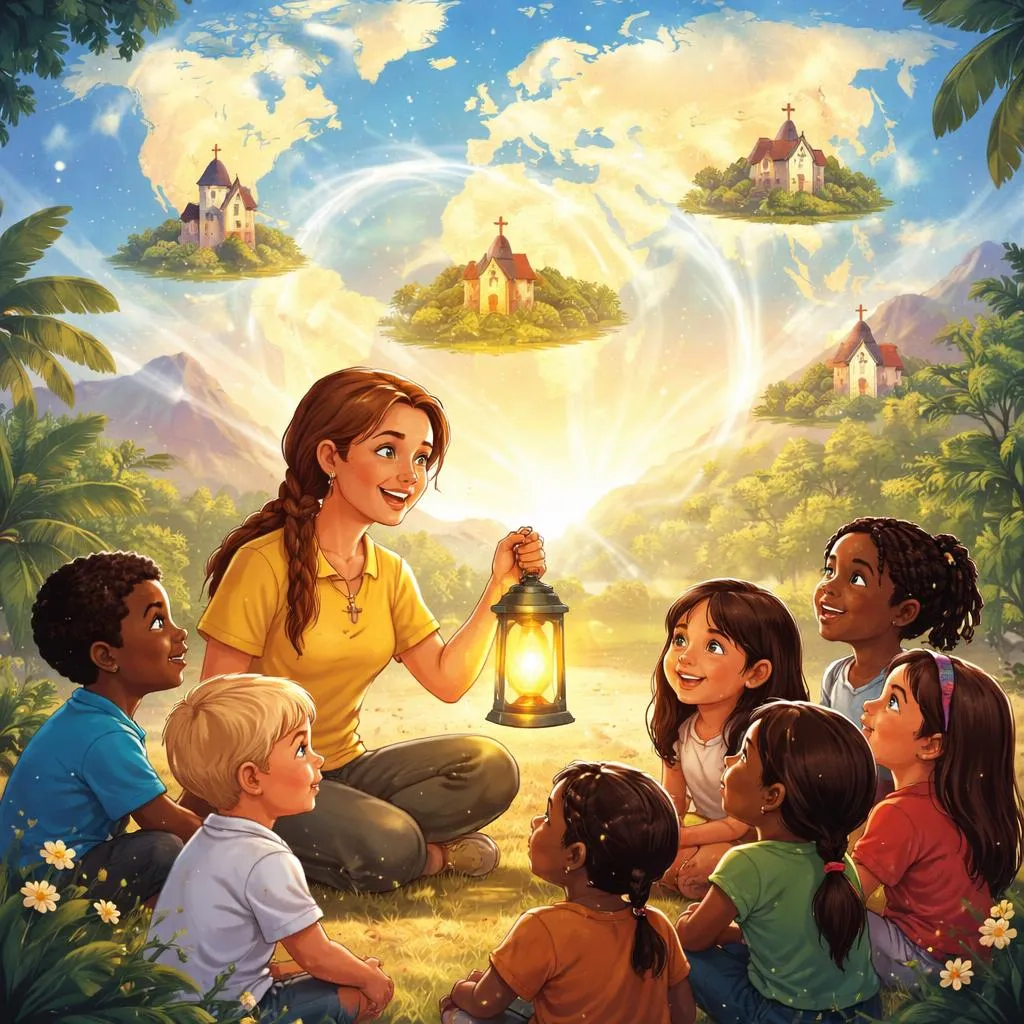

Brave travelers leave familiar shores. They cross oceans to share faith with strangers. They learn new languages. They adapt to unfamiliar customs. Children's missionary stories bring these real-life adventures to young listeners. They show faith in action across cultures. This article explores methods for using these inspiring tales in teaching.
What Defines a Missionary Story for Children?
A children's missionary story tells about someone who shares their faith in a new place. Some stories follow historical figures. David Livingstone in Africa. Amy Carmichael in India. Hudson Taylor in China. These real people lived adventurous lives of service.
Other stories feature modern missionaries. Families who move to another country. Workers who serve in hospitals or schools. People who translate Bibles or teach reading. These contemporary accounts show faith still in motion.
Some missionary stories focus on specific challenges. Learning a difficult language. Adjusting to strange foods. Missing family back home. Finding friends in new places. These human details make missionaries relatable.
Vocabulary Learning Through Missionary Stories
Missionary stories introduce vocabulary about travel and service. Journey, voyage, and passage describe the travel. Mission, service, and calling describe the purpose. These words gain meaning through story context.
Geography vocabulary fills these tales. Continent, country, village, and river name locations. Africa, Asia, and South America become real places where stories happened. This builds world awareness alongside vocabulary.
Cultural vocabulary emerges naturally. Customs, language, tradition, and festival describe new cultures encountered. Learners discover words for cultural difference and adaptation.
Children's missionary stories also introduce words for challenges. Difficult, strange, lonely, and brave describe missionary experiences. These adjectives help learners discuss overcoming obstacles.
Simple Phonics Points in Missionary Stories
Missionary stories offer useful phonics material. Place names provide varied sound practice. Africa features short a and long e. India has short i. China offers ch and long e. These names become familiar through story repetition.
Missionary names give sound practice. Livingstone contains ing and stone. Carmichael offers multiple syllables for stretching skills. Each name builds phonological flexibility.
Words for foreign items appear in these stories. Safari, sari, and kimono may appear. Each offers unique sound patterns while building cultural vocabulary.
Exploring Grammar Through Missionary Narratives
Missionary stories provide clear grammar models. Past tense dominates historical accounts. "David Livingstone traveled through Africa for many years." This past tense shows completed action appropriate for biography.
Present tense appears in modern stories. "The Thompson family serves at a clinic in Nepal." This present describes ongoing work.
Future tense expresses hopes and plans. "Next year, they will move to a new village." "They hope to open a school someday." These structures show forward-looking faith.
Learning Activities with Missionary Stories
Active engagement with missionary narratives deepens learning. These activities bring global faith into productive language use.
World Map Journey After reading a missionary story, find the location on a world map. Trace the journey taken. Mark the home country and the mission field. Discuss how far the travel was. This builds geography awareness alongside story comprehension.
Missionary Journal Writing Imagine being a missionary in a new place. Write a journal entry about the first day. What feels strange? What feels exciting? Who did you meet? This builds empathy and creative writing.
Cultural Object Exploration If a missionary story mentions cultural objects, explore them further. Show pictures of clothing, food, or homes from that culture. Discuss how they differ from familiar items. This builds cultural awareness and descriptive language.
Prayer Card Creation Create simple prayer cards for missionaries mentioned in stories. Include name, location, and one need. This connects story learning to current faith practice.
Educational Games with Missionary Stories
Games add playful interaction with global faith narratives. These activities work well for groups or individuals.
Missionary Story Bingo Create bingo cards with elements from missionary stories. Africa. Boat. Bible. Hospital. Language. Family. As you describe story moments or call words, learners cover matching squares. This builds listening comprehension and story knowledge.
Character Guess Game Describe a missionary without naming them. "This person went to Africa. He was a doctor and explorer. A city is named after him." Learners guess Livingstone. This builds descriptive language and character recall.
Story Scramble Write key events from a missionary story on separate cards. Mix them up. Learners arrange events in correct order. This builds comprehension of narrative structure.
Printable Materials for Missionary Story Learning
Tangible resources support extended exploration of global faith themes. These materials work well for independent practice.
Missionary Word Cards Create cards with missionary story vocabulary on one side and simple definitions or pictures on the other. Mission, journey, Africa, translate, clinic. Use these for matching games or quick reviews.
My Missionary Story Page Provide a template for responding to a missionary story. Who, where, when, what they did, what I learned. This builds comprehension and personal connection.
World Map Marking Page Provide a simple world map. Learners mark locations of missionary stories read. Add story titles to the map. This builds geography awareness alongside story recall.
Missionary Comparison Chart Create a simple chart comparing two missionaries from different times or places. Name, home country, mission location, work type, challenge columns. Learners fill in information. This builds analytical thinking.
The lasting value of children's missionary stories lies in their expansion of young vision. These tales show that faith travels. It crosses oceans and mountains. It speaks new languages and eats strange foods. Children who hear these stories begin to see themselves as part of something larger. The world becomes smaller. Distant people become neighbors. Each missionary story read together builds vocabulary while growing hearts that care about the whole world. The classroom becomes a launching pad for global compassion.