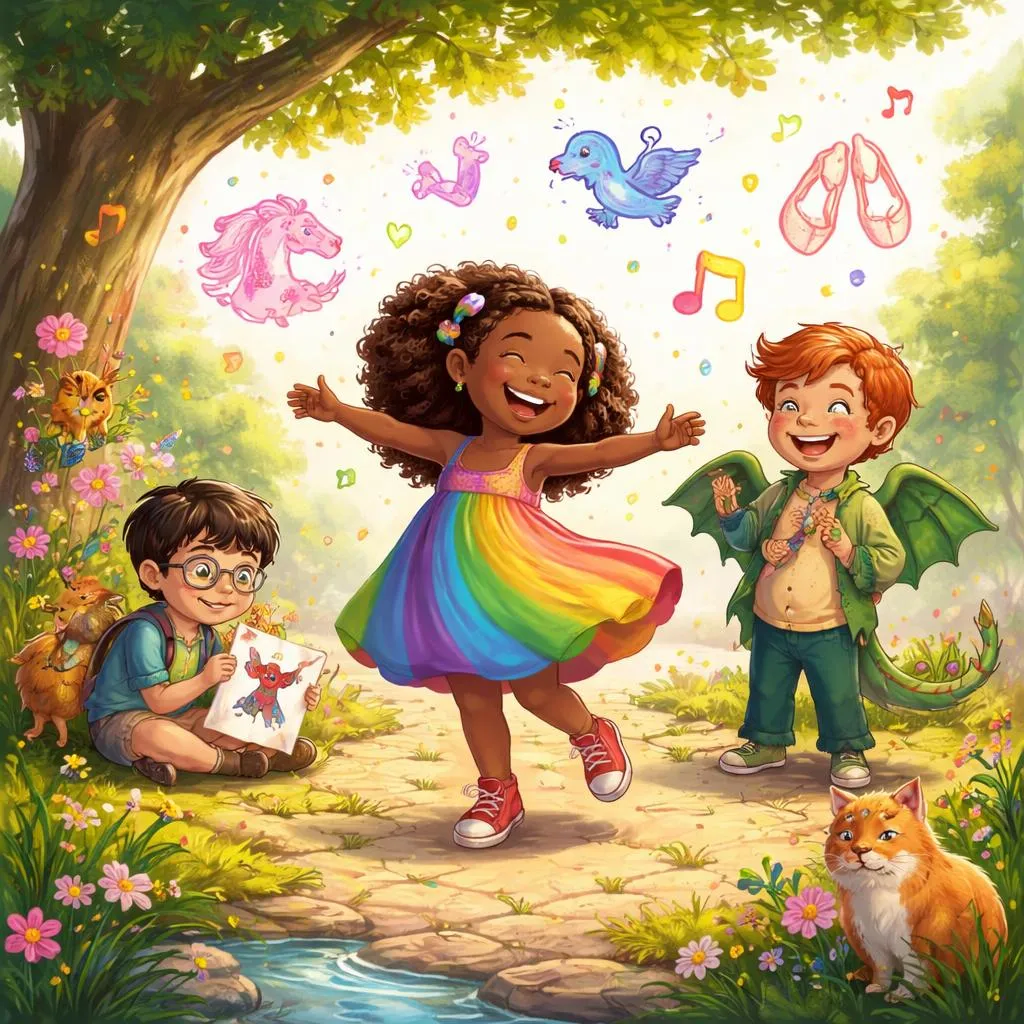

The journey to understanding oneself begins early. Children wonder if they fit in. They notice differences between themselves and others. They sometimes wish to be different. Children's stories about being yourself address these universal feelings with gentleness and wisdom. They feature characters who learn that their unique qualities are not weaknesses but strengths. They show that trying to be someone else never works as well as being who you really are. This article explores how these affirming stories can help children develop confidence and self-acceptance.
What Are Children's Stories About Being Yourself? Children's stories about being yourself are narratives that celebrate individuality and self-acceptance. The main character typically struggles with feeling different. They may try to change themselves to fit in. They might hide their true interests or talents. They could feel embarrassed about something unique to them. The story follows their journey toward self-acceptance. Along the way, they discover that what makes them different also makes them special. By the end, they embrace their true self. These stories send a powerful message to young readers. You are enough exactly as you are. Your differences are not problems to fix. They are gifts to share.
Meaning and Explanation Behind Self-Acceptance Stories These stories address a fundamental human need. The need to belong while also being true to oneself. Young children face this tension daily. They want friends and acceptance. They also have unique personalities, interests, and ways of being. Sometimes these two things conflict. A child who loves something unusual might hide that love. A child who looks different might wish to look like everyone else. A child who thinks differently might stay quiet.
Children's stories about being yourself validate these experiences. They say, "You are not alone. Others have felt this way." The characters model how to navigate these feelings. They try fitting in and discover it does not work. They finally embrace themselves and find that true belonging follows.
These stories also teach something important about friendship. Real friends accept you as you are. Trying to be someone else might attract people, but they like the false version. Being yourself attracts people who like the real you. This lesson serves children throughout life.
Categories or Lists of Being Yourself Stories Children's stories about being yourself appear in many forms. Each approaches the theme differently.
Animal Stories: Animals make the theme accessible and gentle.
A striped zebra who wishes for plain fur.
A slow turtle who cannot keep up with friends.
A bird who cannot sing but can dance beautifully.
A fish with shiny scales who feels too noticeable.
Talent and Interest Stories: Characters with unusual passions or abilities.
A child who loves bugs when others find them creepy.
Someone who prefers reading to running.
A boy who wants to dance instead of play sports.
A girl who loves math when friends like art.
Physical Difference Stories: Characters who look different from others.
A child with glasses feeling self-conscious.
Someone with a birthmark learning it is beautiful.
A tall girl who towers over classmates.
A small boy who wishes to be bigger.
Cultural Identity Stories: Characters navigating multiple cultural worlds.
A child whose family speaks another language at home.
Someone who celebrates different holidays.
A child with a name others cannot pronounce.
Stories about feeling between two cultures.
Gender Expression Stories: Gentle explorations of identity and interests.
A boy who likes pink and sparkly things.
A girl who prefers short hair and trucks.
Characters who do not fit gender stereotypes.
Neurodiversity Stories: Characters whose brains work differently.
A child with autism who sees the world uniquely.
Someone with ADHD whose energy is a gift.
Stories about different ways of thinking and learning.
Daily Life Examples from Being Yourself Stories Children's stories about being yourself connect directly to classroom experiences. A child who loves dinosaurs when others have moved on to other things understands the character who feels different. Someone who speaks two languages recognizes the child navigating two cultures. A quiet child sees themselves in the character who thinks before speaking.
Teachers can draw these connections during discussion. "Remember how the character felt when others laughed? Has that ever happened here?" "The character finally found friends who liked the real them. Who are your real friends?"
The stories also provide language for talking about differences. Children learn words like unique, special, individual, and original. They learn that "different" is not a bad word. These conversations build a classroom culture where everyone's true self is welcome.
Vocabulary Learning from Being Yourself Stories These stories introduce rich vocabulary related to identity and emotions.
Identity Words: Individual, unique, special, original, different, same, similar, personality.
Emotion Words: Proud, embarrassed, confident, shy, comfortable, awkward, accepted, rejected.
Acceptance Words: Embrace, celebrate, appreciate, value, honor, respect, include, welcome.
Difference Words: Unusual, extraordinary, remarkable, distinctive, particular, rare, uncommon.
Teachers can introduce these words during reading. Point them out in the text. Use them in discussion. Add them to a word wall. The vocabulary becomes meaningful through connection to the story's theme.
Phonics Points in Being Yourself Stories The language in these stories offers phonics practice opportunities.
Beginning Sounds: Self starts with S. Special starts with SP. Unique starts with U. Practice these beginning sounds. Find other words with the same starts.
Word Families: Being yourself stories often use words from common families. Different and confident share the ent sound. Celebrate and relate share the ate sound.
Syllable Practice: Identity words help with syllable counting. In-di-vi-du-al has five. Per-so-nal-i-ty has five. Ce-le-brate has three. Practice clapping syllables.
Compound Words: Yourself is a compound word. Your plus self. Others include someone, everyone, and nobody. Recognizing compounds helps decoding.
Teachers can pause during reading to notice these patterns. The meaningful content provides motivation to attend to words.
Grammar Patterns in Being Yourself Stories These stories provide natural contexts for grammar instruction.
Reflexive Pronouns: Being yourself stories use reflexive pronouns naturally. Be yourself. He accepted himself. She believed in herself. This grammar point becomes clear in context.
Comparatives: Characters compare themselves to others. She was taller than the other children. He felt different from his friends. These comparisons model comparative structures.
Modal Verbs: Stories about identity use modals for possibility and advice. You can be yourself. You should accept who you are. You might feel different sometimes. These models appear naturally.
First Person Narrative: Many being yourself stories use first person. I felt strange. I tried to change. I learned to love myself. This provides models for personal writing.
Teachers can point out these patterns during reading. The grammar learning happens within the meaningful context.
Learning Activities for Being Yourself Stories Activities help children internalize the message of self-acceptance.
Activity 1: All About Me Books Create simple folded books where children celebrate themselves. Pages for favorite things, special talents, what makes them unique, people who love them. This builds self-awareness and pride.
Activity 2: Compliment Circles Sit in a circle. Each child receives a compliment from classmates about something genuine. "I like how you always help others." "You tell the funniest jokes." This builds community and self-esteem.
Activity 3: Unique Talent Show Create a classroom talent showcase where children share something they do well. Not performance pressure, just sharing. Singing, drawing, telling jokes, solving puzzles, making friends. Every talent matters.
Activity 4: Difference Discussion Read a story, then discuss differences in the classroom. What makes each person special? How do our differences make our class better? Create a chart of classroom strengths.
Activity 5: Self-Portrait with Words Children draw themselves and surround the drawing with words that describe them. Kind, funny, smart, creative, helpful. This combines art with self-affirmation.
Printable Materials for Being Yourself Stories Printable resources extend learning from these stories.
All About Me Template: Pages with prompts for children to complete. My name is... I am good at... I love... I feel proud when... I am special because...
Compliment Cards: Printable cards for children to write compliments to classmates. "I like you because..." These can be exchanged and collected.
Unique Qualities Chart: A chart listing positive qualities. Children mark which qualities they see in themselves. Builds vocabulary for self-description.
My Story Response Sheet: Simple form for responding to being yourself stories. How did the character feel? How did the story end? How did it make you feel?
Affirmation Bookmarks: Printable bookmarks with positive messages. "Be yourself." "You are enough." "You are special." "Your differences are gifts."
Educational Games for Being Yourself Stories Games reinforce the theme while building skills.
Game: Unique Bingo Create bingo cards with various qualities and interests. Has a pet. Likes to draw. Speaks two languages. Can whistle. Children find classmates who match each square. This celebrates diversity.
Game: Talent Scavenger Hunt Give children a list of talents to find in classmates. Find someone who can jump rope. Find someone who can count to ten in another language. Find someone who can make someone laugh. This builds appreciation for others.
Game: Compliment Circle Pass Sit in a circle. Pass a small object. When music stops, the child holding it receives a compliment from the group. Everyone participates in affirming each other.
Game: Identity Charades Children act out things they love or are good at without speaking. Others guess. "You love to read!" "You are good at soccer!" This celebrates individual interests.
Game: Same and Different Sort Give children cards with various traits. Sort into "Same as me" and "Different from me" piles. Discuss how both categories are valuable.
Connecting Being Yourself Stories to Other Subjects These stories connect naturally to many curriculum areas.
Art Connection: Create self-portraits in various styles. Explore artists with unique styles like Van Gogh or Frida Kahlo. Discuss how their uniqueness made their art special.
Music Connection: Listen to music from different cultures and genres. Discuss how musicians express their unique selves through sound. Create classroom music that reflects everyone.
Social Studies Connection: Learn about people from history who were themselves despite pressure to conform. Rosa Parks. Einstein. Jackie Robinson. Their uniqueness changed the world.
Science Connection: Explore biodiversity. Why is variety important in nature? How do different adaptations help species survive? Connect to human diversity.
Writing Connection: Children write their own "being yourself" stories. A character who learns to accept something unique about themselves. This applies the theme creatively.
The Lifelong Message Children's stories about being yourself carry a message that lasts a lifetime. The pressure to conform never completely disappears. Adults still feel it at work, in social situations, in communities. Learning early that being yourself is enough creates a foundation that supports people forever.
These stories also teach something about how to treat others. If every person is unique and valuable, then every person deserves respect. The child who learns to accept themselves also learns to accept others. They become the classmate who includes everyone. The friend who celebrates differences. The person who makes others feel safe being themselves.
This ripple effect matters enormously. One story can change how a child sees themselves. That changed child changes how they treat others. Those others feel safer being themselves. The classroom becomes a place where everyone belongs. And that classroom changes the world, one child at a time.
The stories themselves are simple. A penguin who cannot swim but loves to dance. A crayon labeled the wrong color. A bird who marches instead of flies. But the message inside them is profound. You are enough. Be yourself. The world needs exactly who you are.