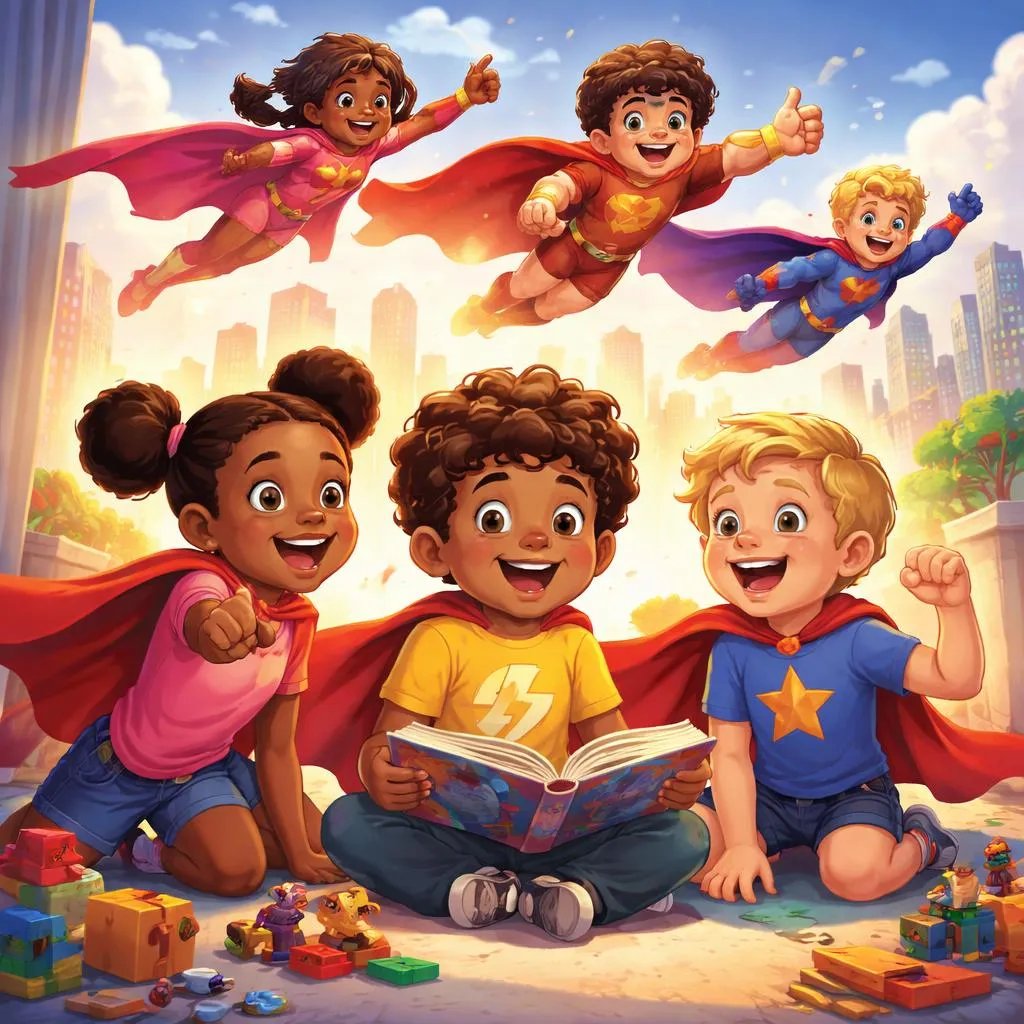

What Are Children's Stories About Superheroes? Let us explore this exciting genre of children's literature together. Children's stories about superheroes feature characters with extraordinary abilities. These heroes use their powers to help others and fight evil. Some superheroes have super strength or the ability to fly. Others can become invisible or move at incredible speeds. Many superheroes have special costumes and secret identities. They often face villains who want to cause harm. The stories follow heroes as they overcome challenges and save the day. Superheroes model courage, kindness, and standing up for what is right. Children identify with the heroes' struggles and triumphs deeply. The stories inspire imagination and creative play in young readers. Superhero tales appear in picture books, chapter books, and graphic novels.
Meaning and Purpose of Superhero Stories Superhero stories serve multiple important purposes in child development. They teach that ordinary people can do extraordinary things sometimes. Many superheroes start as regular people facing everyday problems. This shows children that heroism is possible for anyone. The stories also explore moral choices and their consequences clearly. Heroes choose to use their powers for good, not evil. Children learn that power comes with responsibility always. Superhero narratives also provide models for facing fears and challenges. Heroes confront terrifying villains and dangerous situations bravely. This inspires children to face their own smaller fears. The stories also celebrate helping others and protecting the vulnerable. Heroes risk everything to save people they do not even know.
Common Elements in Superhero Stories We can identify several elements common to superhero tales. Extraordinary powers set heroes apart from ordinary people. These abilities might be super strength, flight, or special senses. A secret identity protects the hero and their loved ones. Clark Kent hides Superman, Peter Parker hides Spider-Man. A costume creates a recognizable symbol for the hero. Capes, masks, and emblems appear in distinctive designs. A nemesis provides an ongoing villain to oppose the hero. The Joker battles Batman, Lex Luthor fights Superman. An origin story explains how the hero got their powers. Accidents, birthright, or training create different origins. A sidekick sometimes accompanies the hero on adventures. Robin, Bucky, and others support their heroes loyally. A secret headquarters provides a base for operations. Caves, mansions, and hidden fortresses appear frequently.
Categories of Superhero Stories We can organize superhero stories into several helpful categories. Traditional superheroes have powers beyond normal human abilities. Superman, Wonder Woman, and Spider-Man belong here. Everyday superheroes have no special powers at all. They use courage, kindness, and cleverness to help others. Animal superheroes feature creatures with heroic qualities. Mighty Mouse, and other animal heroes appear. Girl superheroes star female characters as main heroes. Supergirl, Ms. Marvel, and many others inspire girls. Team superheroes work together to fight evil collectively. The Avengers and Justice League are famous examples. Humorous superheroes add comedy to heroic adventures. They might have silly powers or face ridiculous situations. Reluctant superheroes did not ask for their powers. They learn to accept responsibility despite wanting normal lives.
Daily Life Connections Through Superhero Stories Superhero stories connect to children's everyday experiences meaningfully. Facing a bully at school feels like facing a supervillain. Children need courage just like superheroes do. Standing up for someone being picked on requires bravery. This is exactly what superheroes do in their stories. Keeping promises and telling the truth matters daily. Superheroes model integrity and honesty always. Helping others, even in small ways, makes a difference. Superheroes dedicate their lives to helping people. Feeling different or strange happens to many children. Superheroes often feel like outsiders too initially. We can point out these connections during reading. "You showed courage like a superhero when you stood up for your friend." "Helping clean up was a heroic thing to do."
Vocabulary Learning from Superhero Stories Superhero stories introduce rich adventure vocabulary for children. Superhero means a heroic character with extraordinary abilities. Power means the ability to do something special or extraordinary. Strength means being physically powerful and strong. Courage means facing danger without giving in to fear. Villain means an evil character who causes harm to others. Nemesis means a long-standing enemy who always opposes. Costume means special clothes worn to show identity. Mask means something worn to hide or protect the face. Cape means a long garment worn flowing from shoulders. Secret identity means hiding who you really are from others. We can teach these words with picture cards showing examples. Use them in sentences about favorite superheroes and their adventures.
Phonics Points in Superhero Stories Superhero stories provide useful phonics practice with exciting vocabulary. Super has the long U and ER ending. Hero has the long E and long O. Power has the OW diphthong and ER ending. Strength has the STR blend and ENG and TH. Courage has the OUR combination and GE ending. Villain has the short I and short A and L sound. Nemesis has the short E and short E and short I. Costume has the short O and long U and silent E. Mask has the short A and SK blend. Cape has the long A and silent E. Action words offer valuable sound patterns. Fly has the FL blend and long I. Fight has the long I and GH silent. Save has the long A and silent E. We can focus on one sound pattern from each story. Find all words with that sound in the superhero tale. Write them on shield or cape shapes for practice.
Grammar Patterns in Superhero Narratives Superhero stories model useful grammar for young readers naturally. Past tense tells what happened in the adventure. "Superman flew faster than a speeding bullet yesterday." Present tense describes what heroes do generally. "Spider-Man fights crime throughout New York City." Future tense shows what heroes will do next. "Wonder Woman will save the world once again." Questions explore hero motivations and challenges. "Who is that masked hero?" "Why does the villain want to destroy the city?" Commands appear in moments of danger. "Look out!" "Stop right there, villain!" Descriptive language paints exciting action scenes vividly. "The mighty, powerful hero soared through the dark night sky." Prepositional phrases describe locations and movements. "Through the city, above the clouds, into the secret lair." We can point out these patterns during reading.
Learning Activities for Superhero Stories Many activities deepen engagement with superhero themes. Create a superhero identity for yourself including name and powers. Draw yourself in costume with your special abilities. Design a superhero shield symbol representing your values. Display it in classroom as reminder of heroic qualities. Write a superhero origin story explaining how powers were gained. Include challenges faced and lessons learned along the way. Act out superhero adventures with friends and classmates. Practice using powers to help others in need. Create a superhero training course with physical challenges. Build strength, speed, and agility like real heroes. Make superhero thank you cards for real-life heroes. Give them to firefighters, teachers, and community helpers. These activities make superhero concepts personally meaningful.
Printable Materials for Superhero Learning Printable resources support deep engagement with superhero themes. Create a superhero profile sheet with name, powers, and origin. Include space for drawing hero in action. Design a villain creation page with name, evil plan, and weakness. Children invent opponents for their heroes to face. Make a comic strip template for telling superhero stories. Several panels for drawing sequential action scenes. Create a superhero mask template to color and wear. Cut out and attach string for dramatic play. Design a "Real Life Hero" nomination form for community helpers. Recognize those who show heroic qualities daily. Make a superhero training certificate for completing challenges. Award for courage, kindness, or helping others demonstrated. These printables structure superhero exploration activities effectively.
Educational Games About Superheroes Games make superhero learning playful and interactive. Play "Superhero Charades" acting out heroes without words. Others guess which hero is being portrayed dramatically. Create "Match the Power" pairing heroes with their abilities. Superman with flight, Spider-Man with web-slinging. Play "Villain or Hero?" sorting characters into categories. Decide if each character fights for good or evil. Design "Superhero Says" like Simon Says with heroic actions. "Superhero says fly through the sky." "Superhero says save the day." Play "Secret Identity" guessing heroes from clues. "I am strong, wear a red cape, and come from Krypton." Create "Superpower Bingo" with different abilities on cards. Flight, strength, invisibility, and speed included. These games build superhero knowledge through active participation.
Teaching That Anyone Can Be a Hero Superhero stories teach that heroism is not about powers only. Ordinary people show heroism every day in many ways. Firefighters rush into burning buildings to save lives. Teachers help children learn and grow into good people. Parents work hard to provide for their families always. Doctors and nurses heal the sick and injured daily. Friends who stand up for each other show heroism. Children who include others on the playground are heroes. Saying sorry when wrong takes courage and strength. Helping with chores without being asked shows character. Being kind to someone who is sad matters deeply. These everyday heroes do not wear capes at all. But they make the world better through their actions. Children learn that they can be heroes right now.
The Hero's Journey Many superhero stories follow the hero's journey pattern. The hero starts in an ordinary world like everyone else. A call to adventure disrupts their normal life initially. They might refuse the call because they feel afraid. A mentor appears to guide and prepare them. They cross into a special world of adventure and danger. Tests and challenges prove their growing abilities. They face their greatest fear in a final confrontation. They return transformed with new wisdom and power. This pattern resonates deeply with children's experiences. They face their own calls to grow and change. They have mentors in parents and teachers guiding them. They overcome challenges and become stronger each time. The hero's journey mirrors growing up beautifully.
Overcoming Fear Through Superheroes Superheroes model facing and overcoming fear courageously. They feel afraid sometimes but act despite fear. This teaches children that courage is not absence of fear. Courage means feeling afraid and doing it anyway. Heroes also have weaknesses and vulnerabilities always. Superman has kryptonite, Batman has no powers at all. This shows that everyone has limitations to accept. Heroes sometimes fail before they succeed finally. They get back up and try again persistently. This resilience inspires children facing their own failures. The message is that falling down is not failure. Staying down is the only real failure ever. Superheroes always get back up to fight again.
The Importance of Teamwork Many superheroes learn that working together is powerful. The Avengers accomplish what no single hero could. Justice League combines strengths to overcome threats. Teamwork appears in superhero stories frequently. Heroes must trust each other and communicate well. They each contribute their unique abilities to succeed. Children learn that they need others sometimes too. No one can do everything alone completely. Asking for help is not weakness but wisdom. Helping others makes the whole group stronger always. The stories model collaboration and mutual support beautifully. These lessons apply to classroom, family, and community life.
Moral Complexity in Superhero Stories Some superhero stories explore morally complex situations. Heroes sometimes face choices with no perfect answer. They must choose between conflicting good options. This introduces children to ethical thinking gradually. Villains sometimes have understandable motivations too. They might have experienced tragedy or injustice themselves. This does not excuse their actions but explains them. Children learn that people are complicated usually. Good and evil are not always simple categories. The stories build critical thinking about moral questions. They prepare children for nuanced ethical reasoning later. Yet the core message remains that helping others matters. Heroes ultimately choose to use power for good.