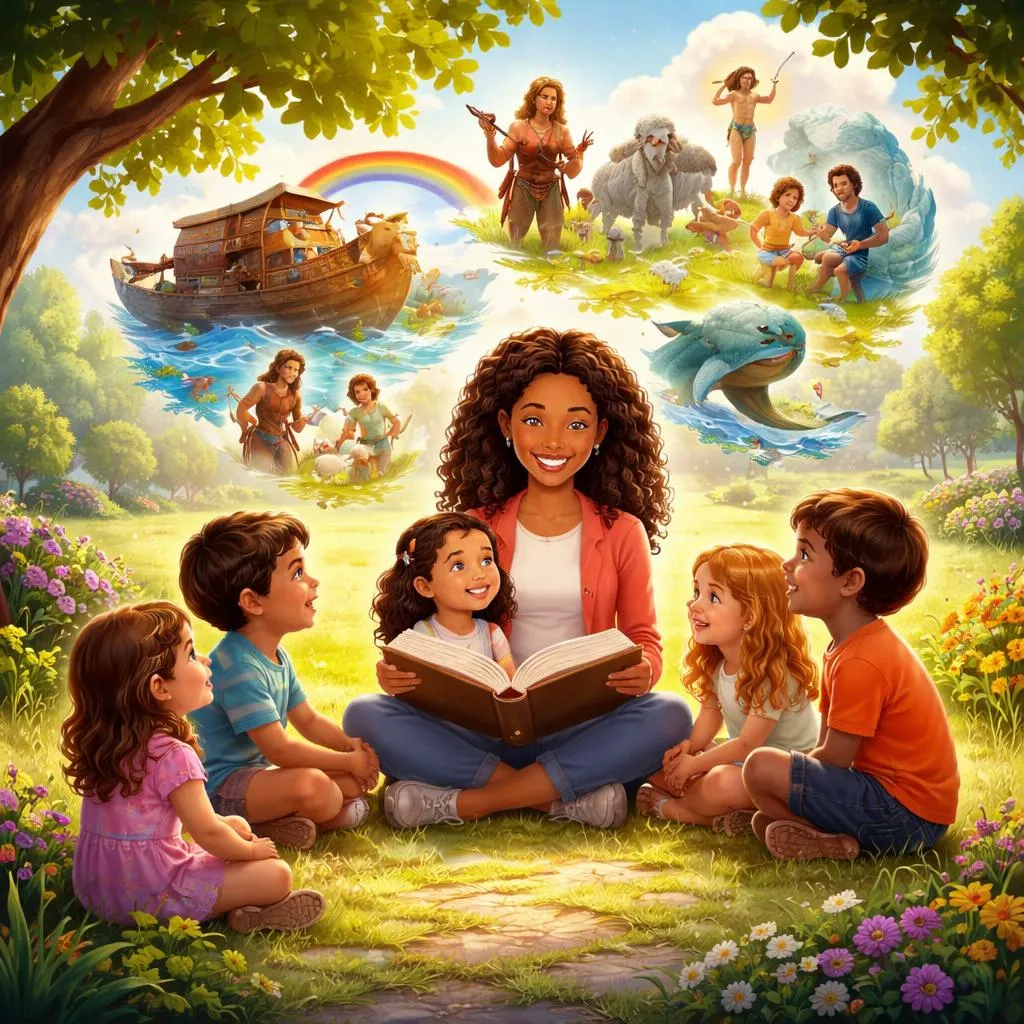

A world created in seven days. A great ark saving life from flood. A baby in a basket floating on water. These stories have shaped faith for thousands of years. Children's stories bible bring these ancient narratives to young hearts in accessible form. They build foundation for spiritual understanding. This article explores methods for using these sacred tales in teaching.
What Defines a Bible Story for Children?
A children's stories bible presents biblical narratives at appropriate levels for young audiences. The stories maintain core meaning while simplifying complex language. Noah still builds an ark. David still faces Goliath. Jesus still welcomes children. The essential content remains.
These versions use language children understand. Abstract concepts receive concrete treatment. Big words become simpler. Long passages become manageable episodes. The focus stays on main narrative lines.
Illustrations often support these stories. Pictures show ancient settings and clothing. They depict ark animals and giant warriors. Visual support helps young readers comprehend stories from unfamiliar times and places.
Why Use Bible Stories for Language Learning?
Bible stories offer several advantages for language development. First, they present culturally significant content. These stories appear in art, music, and literature throughout history. Understanding them provides keys to countless cultural references.
Second, these stories feature clear narrative structure. Stories typically follow problem-solution patterns young minds easily grasp. This predictability supports comprehension for language learners.
Third, the content carries emotional weight. Characters experience fear, joy, gratitude, and hope. This emotional content makes language more memorable. Words connect to feelings learners recognize.
Fourth, these stories appear in versions at many language levels. Simple versions exist for beginners. More detailed retellings challenge advanced learners. This range allows differentiation within classrooms.
Vocabulary Learning Through Bible Stories
Bible stories introduce vocabulary in meaningful contexts. Words for ancient life appear naturally. Ark, desert, temple, and shepherd become real through story events. Learners understand these words through narrative role.
Action words gain power through memorable moments. Part, build, follow, and trust appear repeatedly. Each verb connects to crucial character choices. This connection supports long-term retention.
Abstract concepts become concrete through story. Faith shows through Noah building despite no rain. Courage appears as David steps toward Goliath. Forgiveness comes alive when Joseph embraces brothers. Abstract nouns gain meaning through example.
Children's stories bible also introduce words for emotions. Jealousy drives Cain. Fear fills Jonah. Joy erupts when Israelites cross Red Sea. This emotional vocabulary helps learners name their own feelings.
Simple Phonics Points in Bible Stories
Bible stories offer useful phonics material. Names provide practice with various sound patterns. Noah features long o. Moses contains long o and z sound. Goliath offers soft g and th practice. These names become familiar through repetition.
Many Bible story retellings use rhythmic language. "The walls came tumbling down" repeats "ow" sound. "Daniel in the lion's den" features repeated n sounds. These patterns support phonemic awareness.
Alliteration appears in descriptive passages. "Great fish" in Jonah. "Burning bush" for Moses. "Golden calf" in Exodus. These pairs highlight initial sounds in memorable combinations.
Exploring Grammar Through Sacred Narratives
Bible stories provide clear grammar models. Past tense dominates narration. "God told Noah to build an ark. Noah obeyed." This consistent past tense builds familiarity with narrative forms.
Commands appear frequently as God speaks. "Go." "Build." "Do not be afraid." These imperatives show simplest sentence form in meaningful context.
Questions drive many stories. "Where is your brother?" God asks Cain. "Who is my neighbor?" prompts Good Samaritan tale. These questions model inquiry forms.
Conditional sentences appear in promises. "If you obey, I will bless you." "If you forget, you will suffer." These structures show cause and effect clearly.
Learning Activities with Bible Stories
Active engagement with Bible narratives deepens learning. These activities bring ancient stories into active language use.
Story Sequence with Pictures Create simple drawings showing key moments from a Bible story. Learners arrange pictures in correct order and retell story using visual support. This builds comprehension and narrative skills.
Character Interview Role Play Assign character roles from a Bible story. One learner plays character. Others ask questions. What did you feel when...? Why did you...? This builds question formation and empathy.
Modern Day Retelling Challenge learners to retell a Bible story in modern times. David and Goliath becomes a small person facing huge challenge today. Daniel in lion's den becomes someone staying true to beliefs under pressure. This builds creative language use.
Lesson Discussion Circle After reading a Bible story, gather to discuss its meaning. What did characters learn? What can people today learn? Do learners agree with lesson? This builds critical thinking and opinion expression.
Educational Games with Bible Stories
Games add playful interaction with sacred narratives. These activities work well for groups or individuals.
Bible Story Bingo Create bingo cards with elements from multiple Bible stories. Ark. Lion. Giant. Basket. Sea. As you describe story moments, learners cover matching elements. This builds listening comprehension and story knowledge.
Character Guess Game Describe a Bible character without naming them. "This person built a big boat. He saved his family and many animals." Learners guess Noah. This builds descriptive language and character recall.
Story Scramble Write key events from a Bible story on separate cards. Mix them up. Learners arrange events in correct order. This builds comprehension of narrative structure.
Printable Materials for Bible Story Learning
Tangible resources support extended exploration of Bible narratives. These materials work well for independent practice.
Bible Word Cards Create cards with Bible vocabulary on one side and simple definitions or pictures on the other. Ark, covenant, prophet, disciple, miracle. Use these for matching games or quick reviews.
My Favorite Bible Story Page Provide a template for responding to a Bible story. Story title, main character, what happened, what it teaches, why I like it. This builds comprehension and personal connection.
Story Map Template Create a simple map template for plotting Bible stories. Characters, setting, problem, God's help, ending, lesson. Learners fill this in after reading. This builds narrative comprehension and analysis.
Promise Cards Many Bible stories feature God's promises. Create cards with these promises written simply. "I will be with you." "I will take care of you." "I love you." Learners match promises to stories where they appear. This builds comprehension and memory.
The lasting value of children's stories bible lies in their depth and spiritual significance. These narratives have shaped faith for millennia. Understanding them provides foundation for religious life. Abraham's journey teaches trust. Moses' leadership shows courage. Jesus' parables reveal God's love. Learners gain more than language from these stories. They gain access to faith that has sustained generations. Each story read together builds vocabulary while planting seeds for spiritual growth. The classroom becomes a place where ancient words still speak to young hearts.