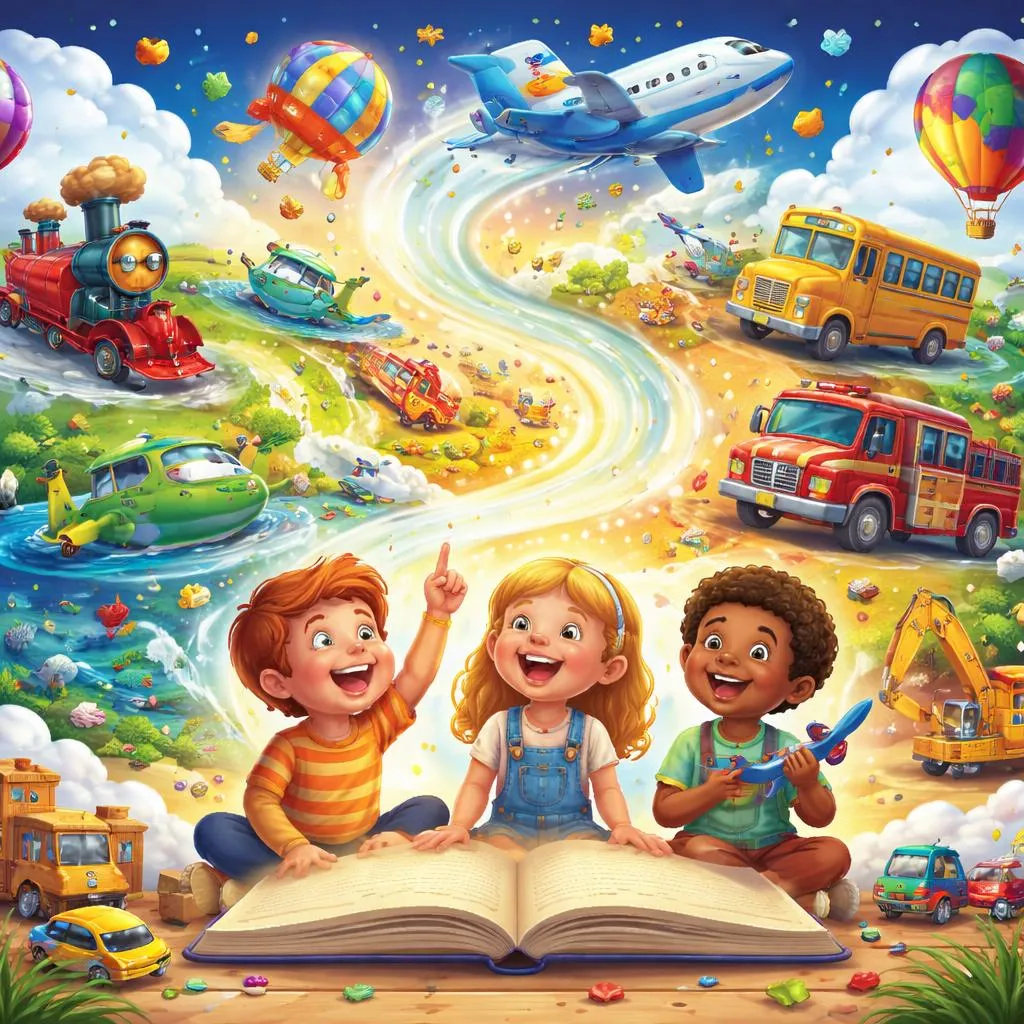

Wheels turning on busy roads. Trains racing along tracks. Planes soaring through clouds. Boats crossing wide oceans. Children's story books about transport tap into natural fascination with things that move. They carry young readers on journeys near and far. This article explores methods for using these moving tales in teaching.
What Defines a Transport Story for Children?
A children's story book about transport features vehicles at the heart of narrative. Some stories follow specific vehicles on adventures. A little train that could. A brave fire truck. A busy garbage truck. These tales give vehicles personalities and purposes.
Other stories use transport to explore journeys. Characters travel somewhere by different means. They might take a bus, then a train, then a boat. The transport becomes part of adventure.
Some transport stories explain how vehicles work. Simple introductions to engines, wheels, and steering. These informational stories satisfy curious minds while building vocabulary.
The best transport stories balance facts with fun. They teach about vehicles while telling good stories.
Vocabulary Learning Through Transport Stories
Transport stories introduce rich vocabulary about vehicles. Car, truck, train, plane, and boat name major transport types. Each category has its own related words.
Vehicle parts vocabulary appears naturally. Wheels, engine, steering wheel, and wings name components. These concrete nouns build vocabulary through story context.
Action words for movement fill these tales. Drive, fly, sail, and race describe how vehicles move. Each verb connects to specific transport types.
Children's story books about transport also introduce words for places. Road, track, sky, and water name where vehicles travel. These location words build spatial vocabulary.
Simple Phonics Points in Transport Tales
Transport stories offer excellent phonics material through vehicle names. Car has ar. Truck has tr and short u. Train has long a. Plane has long a. Boat has long o. Each provides sound practice.
Sound words fill transport stories. Vroom, beep, choo-choo, and whoosh provide onomatopoeic sound-symbol connection. Children enjoy making these sounds.
Action words offer varied sound patterns. Drive has dr. Fly has fl. Sail has long a. Race has long a and soft c. Each word builds phonics foundations.
Exploring Grammar Through Journey Narratives
Transport stories provide clear grammar models. Present tense describes how vehicles work. "Trains run on tracks. Planes fly through the air." This present expresses general truths.
Past tense narrates story events. "The little train climbed up the mountain. It pulled all the cars behind it." This past tense shows completed journey actions.
Prepositions appear frequently in transport stories. Through the tunnel. Over the bridge. Across the water. Down the track. Each preposition gains meaning through journey context.
Learning Activities with Transport Stories
Active engagement with transport narratives deepens learning. These activities bring vehicle themes into productive language use.
Vehicle Sort Activity After reading transport stories, create sorting activity. Vehicles that go on land, water, air categories. Learners sort toy vehicles or pictures into correct categories. This builds classification skills and vocabulary.
Transport Word Collection Create a class collection of transport words from stories. Group by category. Land: car, truck, train. Water: boat, ship, submarine. Air: plane, helicopter, rocket. This builds organized vocabulary.
Journey Map Drawing After a story featuring a journey, draw the route taken. Mark starting point, stops along way, and destination. Label with place names and transport used. This builds sequencing and spatial understanding.
Vehicle Part Labeling Provide simple vehicle drawings with lines pointing to parts. Learners label using vocabulary from stories. Wheel, window, door, wing, propeller. This builds vocabulary and connects words to visual representation.
Educational Games with Transport Stories
Games add playful interaction with vehicle themes. These activities work well for groups or individuals.
Transport Bingo Create bingo cards with transport story elements. Car. Train. Plane. Boat. Wheel. Engine. As you describe story moments or call words, learners cover matching squares. This builds listening comprehension and transport vocabulary.
Transport Charades Act out different vehicles without speaking. Driving a car. Flying a plane. Riding a train. Sailing a boat. Others guess what vehicle. This builds comprehension and movement connection.
Vehicle Sound Game Play recordings of vehicle sounds. Engine starting. Train whistle. Boat horn. Plane taking off. Learners identify vehicle making sound. This builds auditory discrimination.
Printable Materials for Transport Story Learning
Tangible resources support extended exploration of transport themes. These materials work well for independent practice.
Transport Word Cards Create cards with transport vocabulary on one side and simple definitions or pictures on the other. Car, train, plane, boat, wheel, engine. Use these for matching games or quick reviews.
My Transport Story Page Provide a template for writing an original transport story. What vehicle, where it goes, who drives, what happens on journey. This builds narrative skills with transport themes.
Vehicle Comparison Chart Create a simple chart comparing different vehicles. Vehicle name, where it goes, how many wheels, what powers it. Learners fill in information. This builds comparative thinking.
Journey Map Template Provide simple map template with starting point, path, and destination. Learners draw and label journey from a transport story. This builds comprehension and sequencing.
The lasting value of children's story books about transport lies in their connection to movement. Children love things that go. They watch cars pass. They hear trains rumble. They see planes cross sky. Stories that feature these familiar objects capture attention immediately. The vocabulary learned connects to real-world observation. Words like wheel and engine describe what children actually see. Each transport story read together builds vocabulary while feeding fascination with how things move. The classroom becomes a place where vehicles of all kinds can visit through pages.