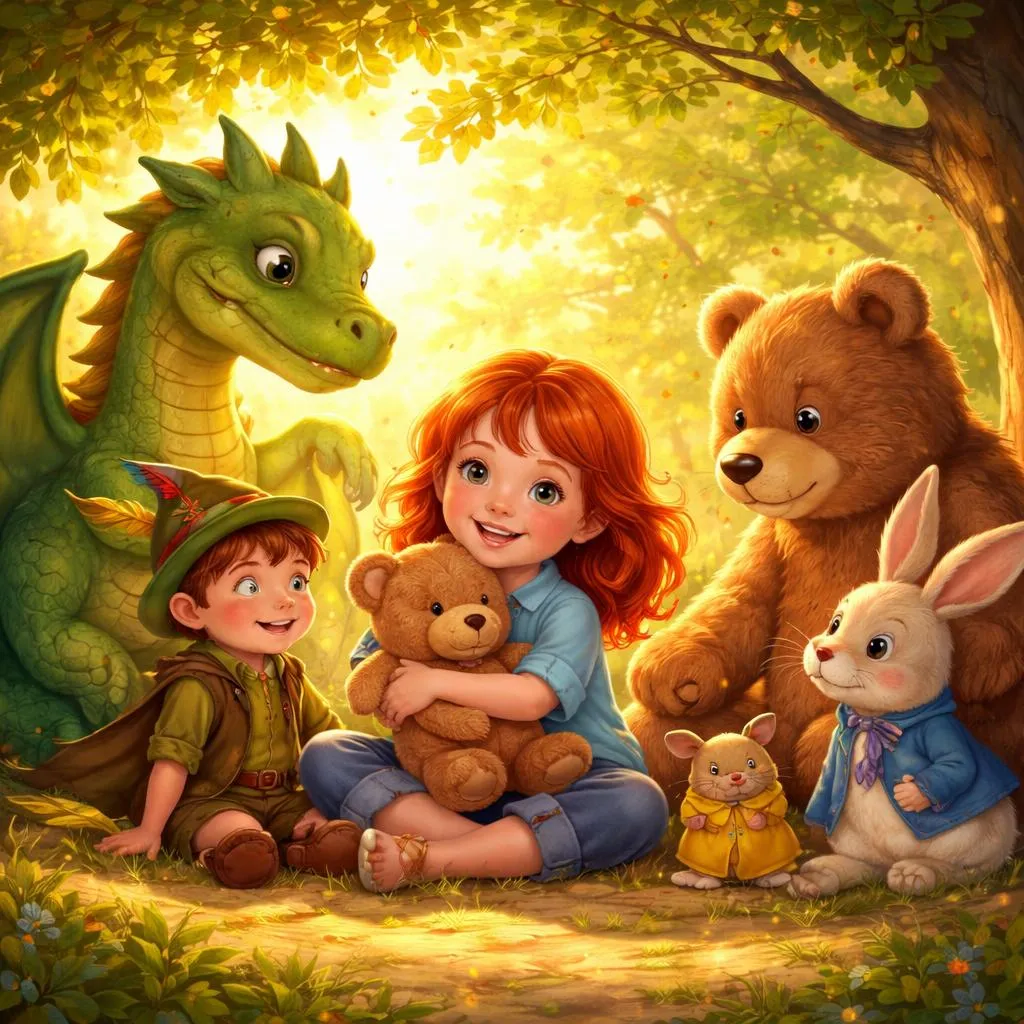

A curious monkey in a yellow hat. A bear with very little brain. A spider who can write words. These figures live only in books, yet they feel completely real. Children's story characters accompany readers through childhood and beyond. They teach, comfort, and inspire. This article explores methods for using these memorable characters in teaching.
What Defines a Children's Story Character?
A children's story character is the personality driving a narrative. Some characters are human. A boy who never grows up. A girl who falls into wonderland. Others are animals with human qualities. A rabbit in a blue coat. A mouse who rides a motorcycle. Still others are completely imaginary. A troll under a bridge. A grinch who hates holidays.
The best characters have distinct personalities. Readers know how they will react. Brave characters face danger. Shy characters grow through stories. Funny characters make readers laugh. These consistent traits make characters predictable and beloved.
Characters also change through stories. They learn lessons. They overcome fears. They make friends. This growth teaches readers that people can change too.
Why Focus on Characters for Language Learning?
Children's story characters offer several advantages for language development. First, characters provide memory anchors. Readers remember what the character did and said. This recall carries the associated language with it.
Second, characters generate emotional connection. Readers care what happens to beloved characters. This caring motivates attention and comprehension. Language attached to emotional moments sticks longer.
Third, characters demonstrate language in action. How does a brave character speak? How does a shy character talk? Characters model different registers and styles of communication.
Fourth, characters support prediction. Readers who know a character can guess what they might say or do. This prediction engages readers actively with text.
Categories of Children's Story Characters
Children's story characters fall into several categories. Each offers unique learning opportunities.
Human Characters These characters look and act like real people. They face problems children recognize. Making friends. Feeling scared. Learning new things. Readers see themselves in these characters.
Animal Characters These characters have animal bodies but often human personalities. They might wear clothes and talk. They face adventures in animal worlds. These characters combine familiarity with imaginative distance.
Fantasy Characters Monsters, dragons, fairies, and giants populate this category. They exist only in imagination. Their differences from real life make them fascinating. Their problems often mirror human concerns.
Talking Object Characters Toys that come alive. Vehicles with personalities. Household items that talk. These characters transform everyday objects into story heroes. They show that anything can have a story.
Vocabulary Learning Through Characters
Character study introduces rich descriptive vocabulary. Appearance words describe how characters look. Tall, small, furry, spotted, colorful all describe physical traits. These adjectives build visual vocabulary.
Personality words describe how characters act. Brave, shy, kind, grumpy, curious name character traits. These words help learners discuss behavior and motivation.
Character actions bring verbs to life. A brave character faces danger. A curious character explores. A kind character helps others. Each verb connects to character traits.
Children's story characters also introduce words for relationships. Friend, enemy, family, helper name character connections. These words help learners understand story dynamics.
Simple Phonics Points Through Character Names
Character names provide excellent phonics material. Names appear repeatedly throughout stories. This repetition builds familiarity with sound patterns. Peter features short e and er. Winnie contains short i and long e. Each name offers sound practice.
Many character names use alliteration. Peter Pan repeats P. Mickey Mouse repeats M. Donald Duck repeats D. These patterns highlight initial sounds memorably.
Character names from other cultures introduce varied sound patterns. Spanish names offer different syllable rhythms. Japanese names provide vowel practice. This diversity enriches phonics learning.
Exploring Grammar Through Character Descriptions
Character descriptions provide clear grammar models. Present tense describes ongoing traits. "Curious George is always getting into trouble." This present expresses lasting characteristics.
Past tense narrates character actions. "The little engine worked hard and finally reached the top of the hill." This past tense shows completed actions.
Comparatives appear when comparing characters. "Winnie the Pooh is friendlier than Eeyore." "Peter Pan is braver than Captain Hook." These structures support comparison skills.
Learning Activities with Story Characters
Active engagement with characters deepens learning. These activities bring beloved figures into productive language use.
Character Trait Charts After meeting a character, create a simple chart listing their traits. What do they look like? How do they act? What do they like? What do they fear? This builds descriptive vocabulary and character analysis.
Character Comparison Compare two characters from different stories. How are they similar? How are they different? Would they be friends? This builds comparative thinking and language.
Character Letter Writing Write a letter to a favorite character. Ask questions. Share thoughts. Offer advice. This builds authentic writing practice with genuine engagement.
New Character Creation Using traits from studied characters, create an original character. Name, appearance, personality, likes, dislikes. Draw the character and write a short introduction. This builds creative language use.
Educational Games with Story Characters
Games add playful interaction with beloved figures. These activities work well for groups or individuals.
Character Guess Game Describe a character without naming them. "This character is a small brown bear. He loves honey. His friend is a piglet." Learners guess Winnie the Pooh. This builds descriptive language and character knowledge.
Character Bingo Create bingo cards with character names or pictures. Call out character descriptions or actions. Learners cover matching characters. This builds listening comprehension and character recognition.
Character Matching Create cards with character names on some and character descriptions on others. Learners match names to descriptions. This builds reading comprehension and character knowledge.
Printable Materials for Character Learning
Tangible resources support extended exploration of character themes. These materials work well for independent practice.
Character Word Cards Create cards with character trait words on one side and simple definitions or pictures on the other. Brave, kind, curious, grumpy, friendly. Use these for matching games or quick reviews.
My Favorite Character Page Provide a template for writing about a favorite character. Character name, story title, appearance, personality, favorite thing about them. This builds descriptive writing and personal connection.
Character Comparison Chart Create a simple chart comparing two characters. Name, story, appearance, personality, actions columns. Learners fill in information. This builds analytical thinking.
New Character Template Provide a template for creating an original character. Space for drawing, name line, appearance description, personality description, likes and dislikes. This builds creative writing.
The lasting value of children's story characters lies in their power to accompany readers through life. Long after stories fade, characters remain. Readers remember how Curious George always found adventures. They recall how the Little Engine never gave up. These memories carry more than nostalgia. They carry the language that brought characters to life. Brave, curious, kind, and determined become more than vocabulary words. They become qualities connected to beloved friends. Each character encountered builds language skills while shaping understanding of what people can be. The classroom becomes a place where characters visit regularly, each one bringing new words and new ways of being.