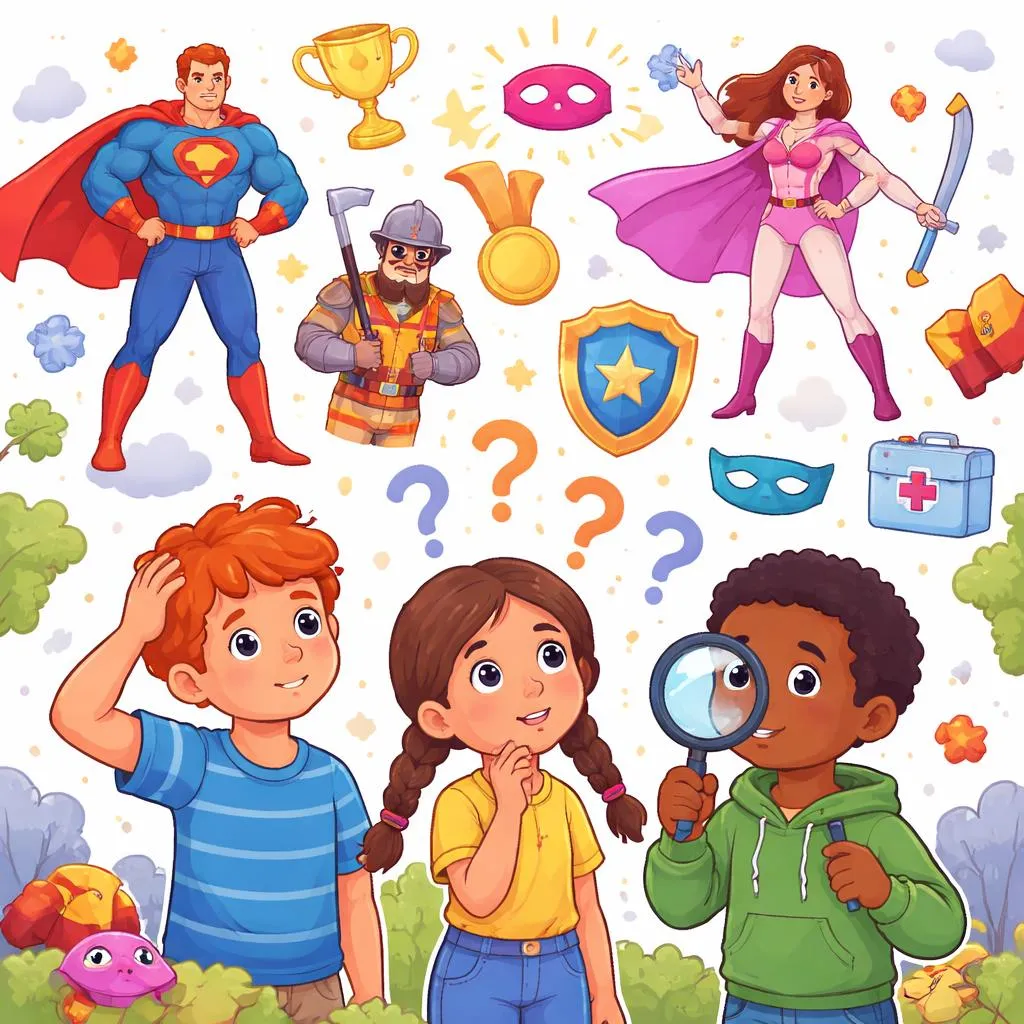

Life’s Little Embarrassment
Meet Sam the squirrel. He loves story time. Last week, Sam told a tale. He wanted to say the knight was a hero. But he shouted, “The knight is heroicism!” Everyone giggled. Grandma thought the knight was a feeling. Sam felt red in the face. This happens to many kids. Today, we learn a word family. Think of them as tools in a box. Each tool has a special job. We call them hero, heroic, heroism, and heroine. They look similar but work differently. After reading this, you will understand them perfectly.
Core Comparison Zone: Deep Analysis
Sam’s day continues. We follow him everywhere. First, meet the members.
Hero is the brave star. He does great deeds. We call him “Brave Star”. Heroic is the brave painter. It describes how brave someone is. We call it “Brave Painter”. Heroism is the bravery name. It talks about the idea of courage. We call it “Bravery Name”. Heroine is the brave lady. She does great deeds too. We call her “Brave Lady”.
Now, let’s explore five ways they differ.
Time Dimension
Clocks tick. Calendars flip. Words show when things happen.
At home, Sam calls Dad a hero often. Dad acts heroic today. Sam learns about heroism daily. Mom is a heroine every day.
At the playground, Sam sees a hero rescue a cat. The jump looks heroic now. The crowd cheers heroism. The girl is a heroine.
At school, Sam reads about a hero in history. The soldier fought heroic battles. The book teaches heroism. Joan is a heroine.
In nature, Sam spots a hero saving a bird. The climb seems heroic. Nature shows heroism. The ranger is a heroine.
Each word shows time. Hero is a person now or always. Heroic describes current bravery. Heroism is an everlasting idea. Heroine is a female person now.
Job Dimension
Words have jobs in sentences. Some act. Some describe.
At home, hero works. “Dad is a hero.” Heroic decorates. “His act is heroic.” Heroism names. “Heroism inspires us.” Heroine works. “Mom is a heroine.”
At the playground, hero works. “The boy is a hero.” Heroic decorates. “The jump is heroic.” Heroism names. “Cheers show heroism.” Heroine works. “The girl is a heroine.”
At school, hero works. “The soldier is a hero.” Heroic decorates. “The battle was heroic.” Heroism names. “History records heroism.” Heroine works. “Joan is a heroine.”
In nature, hero works. “The ranger is a hero.” Heroic decorates. “The climb is heroic.” Heroism names. “Nature needs heroism.” Heroine works. “She is a heroine.”
Brave Star does deeds. Brave Painter adds color. Bravery Name labels the idea. Brave Lady does deeds too.
Partners Dimension
Some words need friends. Others stand alone.
At home, hero stands alone. “He is a hero.” Heroic needs “is” or “was”. “It is heroic.” Heroism needs “of”. “The idea of heroism.” Heroine needs “a” or “the”. “She is a heroine.”
At the playground, hero stands alone. “See the hero.” Heroic needs “is”. “The jump is heroic.” Heroism needs “shows”. “It shows heroism.” Heroine needs “the”. “The heroine smiles.”
At school, hero stands alone. “Read about a hero.” Heroic needs “was”. “The battle was heroic.” Heroism needs “teaches”. “It teaches heroism.” Heroine needs “a”. “A heroine saves.”
In nature, hero stands alone. “Meet a hero.” Heroic needs “seems”. “The climb seems heroic.” Heroism needs “needs”. “Nature needs heroism.” Heroine needs “the”. “The heroine helps.”
Brave Star is independent. Brave Painter likes linking verbs. Bravery Name likes “of”. Brave Lady likes articles.
Nuances Dimension
Small choices change meaning. Let’s see tiny differences.
At home, say “Dad is a hero” for the person. Say “His act is heroic” for the quality. Say “Heroism guides us” for the idea. Say “Mom is a heroine” for the woman.
At the playground, “The boy is a hero” names him. “The jump is heroic” describes it. “Cheers show heroism” talks about courage. “The girl is a heroine” names her.
At school, “The soldier is a hero” points to him. “The battle was heroic” describes it. “History records heroism” names the concept. “Joan is a heroine” points to her.
In nature, “The ranger is a hero” names him. “The climb is heroic” describes it. “Nature needs heroism” talks about courage. “She is a heroine” names her.
Use Brave Star for people. Use Brave Painter for qualities. Use Bravery Name for ideas. Use Brave Lady for women.
The Trap
This part is long. Many kids fall into traps. We fix them together.
Trap one: Using “heroism” as a person. Wrong: “My dad is a heroism.” Right: “My dad is a hero.” Why? “Heroism” is an idea, not a person. Only “hero” or “heroine” names people. Memory tip: “Ideas don’t wear shoes, people do.”
Trap two: Using “heroic” to name a person. Wrong: “She is a heroic.” Right: “She is a heroine.” Why? “Heroic” describes actions, not people. Use “hero” or “heroine” for persons. Memory tip: “Add ‘ic’ for actions, add ‘ine’ for ladies.”
Trap three: Mixing “hero” and “heroine” incorrectly. Wrong: “The man is a heroine.” Right: “The man is a hero.” Why? “Heroine” is for females. “Hero” is for males. Memory tip: “‘Hero’ for him, ‘heroine’ for her.”
Trap four: Using “hero” as an adjective. Wrong: “He did a hero act.” Right: “He did a heroic act.” Why? “Hero” is a noun. It cannot describe. Use “heroic” to describe brave deeds. Memory tip: “Nouns name, adjectives describe.”
Trap five: Confusing all four in one sentence. Wrong: “The heroism heroine heroic hero.” Right: “The heroic heroine is a hero.” Clear now. Always ask: Is it a person? A quality? An idea? Memory tip: “Person, quality, idea—pick one.”
These traps trip many. Practice spotting them. Soon you will dodge them easily.
Detailed Summary
Let’s tie it all together. If you talk about a brave person, use “hero” for a male or “heroine” for a female. If you describe a brave action, use “heroic”. If you talk about the idea of bravery, use “heroism”. Remember their partners. “Hero” and “heroine” stand alone with articles. “Heroic” needs “is” or “was”. “Heroism” likes “of”. Keep these rules in mind. You will master the word family.
Practice
Task A: Best Choice. Fill in the blank. Choose between two options.
Scene: Home. Dad says, “I want to be a ___.” Options: hero / heroic. Answer: hero. Because it names a person.
Scene: Playground. Sam shouts, “That jump is ___!” Options: heroism / heroic. Answer: heroic. Because it describes the jump.
Scene: School. Teacher asks, “Who is a famous ___?” Options: heroine / heroic. Answer: heroine. Because it names a woman.
Task B: Eagle Eyes. Find and fix mistakes. Read the paragraph.
“Yesterday, I saw a heroism. She was a heroic. Her act showed hero. She is a heroine.”
Fixes: “Yesterday, I saw a hero. She was a heroine. Her act showed heroism. She is heroic.”
Task C: Be the Director. Create sentences. Use two forms.
Scene: Family dinner. Use “hero” and “heroic”. Sample: Dad is my hero. His cooking is heroic.
Scene: Nature hike. Use “heroine” and “heroism”. Sample: The ranger is a heroine. Her work shows heroism.
What You Learned
You learned to tell hero, heroic, heroism, and heroine apart. You practiced using them in real scenes. You spotted common mistakes and fixed them. You gained confidence in choosing the right word.
Your Action Step
Spot a hero today. Say one sentence with “heroic” at dinner. Draw a picture of a heroine this afternoon. Keep practicing every day.