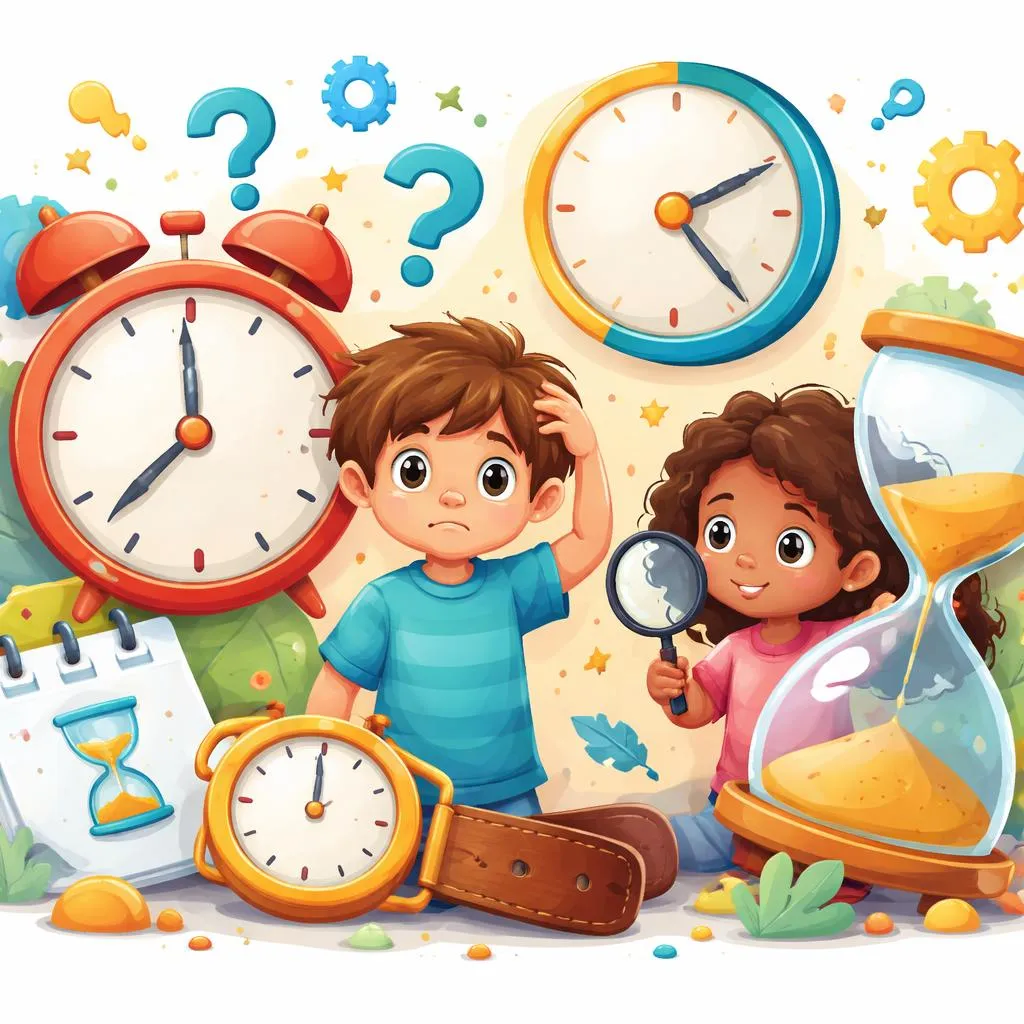

Life’s Little Embarrassment
Meet Sam the squirrel. He loves baking cookies. Last Sunday, Sam helped Mom. He wanted to say “Wait an hour.” He shouted, “Set the hourly!” Everyone laughed. They thought he meant a clock. Sam felt silly. This happens to many kids. Today, we learn a word family. Think of them as tools in a box. Each tool has a special job. We call them hour, hourly, hourglass, and hourlong. They look alike but work differently. After reading this, you will understand them perfectly.
Core Comparison Zone: Deep Analysis
Sam’s day continues. We follow him everywhere. First, meet the members.
Hour is the time unit. It measures sixty minutes. We call it “Time Keeper”. Hourly is the clock ticker. It happens every hour. We call it “Clock Ticker”. Hourglass is the sand timer. It counts time with sand. We call it “Sand Timer”. Hourlong is the duration measurer. It lasts for one hour. We call it “Duration Measurer”.
Now, let’s explore five ways they differ.
Time Dimension
Clocks tick. Calendars flip. Words show when things happen.
At home, Sam waits an hour for cookies. He checks the hourly clock. He turns the hourglass over. He bakes for an hourlong time.
At the playground, Sam plays for an hour. He drinks water hourly. He times races with an hourglass. He slides for an hourlong session.
At school, Sam studies for an hour. He stretches hourly. He uses an hourglass for focus. He reads for an hourlong period.
In nature, Sam watches clouds for an hour. He blinks hourly. He times shadows with an hourglass. He hikes for an hourlong trek.
Each word shows time. Hour is a unit. Hourly repeats every hour. Hourglass is a tool. Hourlong is a duration.
Role Dimension
Words have jobs. Some name. Some describe.
At home, hour names time. “Wait an hour.” Hourly describes frequency. “Checks hourly.” Hourglass names a tool. “Use the hourglass.” Hourlong describes length. “An hourlong bake.”
At the playground, hour names time. “Play for an hour.” Hourly describes routine. “Drinks hourly.” Hourglass names a tool. “Race with hourglass.” Hourlong describes activity. “An hourlong slide.”
At school, hour names time. “Study for an hour.” Hourly describes habit. “Stretches hourly.” Hourglass names a tool. “Focus with hourglass.” Hourlong describes session. “An hourlong read.”
In nature, hour names time. “Watch for an hour.” Hourly describes pattern. “Blinks hourly.” Hourglass names a tool. “Time with hourglass.” Hourlong describes journey. “An hourlong hike.”
Time Keeper names units. Clock Ticker describes frequency. Sand Timer names objects. Duration Measurer describes spans.
Partners Dimension
Some words need friends. Others stand alone.
At home, hour stands alone. “An hour passes.” Hourly needs “every” or “each”. “Every hourly chime.” Hourglass needs “the” or “an”. “The hourglass ticks.” Hourlong needs “for” or “an”. “For an hourlong wait.”
At the playground, hour stands alone. “One hour left.” Hourly needs “every”. “Every hourly break.” Hourglass needs “the”. “The hourglass falls.” Hourlong needs “an”. “An hourlong game.”
At school, hour stands alone. “Two hours study.” Hourly needs “each”. “Each hourly stretch.” Hourglass needs “the”. “The hourglass helps.” Hourlong needs “an”. “An hourlong test.”
In nature, hour stands alone. “Three hours watch.” Hourly needs “every”. “Every hourly blink.” Hourglass needs “the”. “The hourglass measures.” Hourlong needs “an”. “An hourlong trek.”
Time Keeper is independent. Clock Ticker likes “every/each”. Sand Timer likes articles. Duration Measurer likes “for/an”.
Nuances Dimension
Small choices change meaning. Let’s see tiny differences.
At home, say “wait an hour” for duration. Say “check hourly” for regular intervals. Say “turn hourglass” for the timer. Say “bake hourlong” for length.
At the playground, “play an hour” is total time. “drink hourly” is every hour. “race hourglass” uses the tool. “slide hourlong” is one-hour fun.
At school, “study an hour” is time spent. “stretch hourly” is routine. “focus hourglass” is the tool. “read hourlong” is session length.
In nature, “watch an hour” is observation time. “blink hourly” is regular. “time hourglass” uses tool. “hike hourlong” is journey span.
Use Time Keeper for units. Use Clock Ticker for frequency. Use Sand Timer for objects. Use Duration Measurer for spans.
The Trap
This part is long. Many kids fall into traps. We fix them together.
Trap one: Using “hourly” as a noun. Wrong: “I waited an hourly.” Right: “I waited an hour.” Why? “Hourly” is an adjective or adverb. It describes frequency. It cannot name a time unit. Only “hour” names the unit. Memory tip: “Hourly describes, hour names.”
Trap two: Using “hour” to describe frequency. Wrong: “He drinks hour.” Right: “He drinks hourly.” Why? “Hour” is a noun. It names time. To describe something happening every hour, use “hourly”. Memory tip: “Hour names, hourly describes.”
Trap three: Using “hourglass” as a duration. Wrong: “The game lasted an hourglass.” Right: “The game lasted an hour.” Or “Used an hourglass.” Why? “Hourglass” is a physical timer. It does not measure duration directly. Use “hour” or “hourlong” for duration. Memory tip: “Hourglass is a thing, not time.”
Trap four: Mixing “hourlong” and “hourly” incorrectly. Wrong: “He exercises hourlong every day.” Right: “He exercises hourly every day.” Or “He exercises for an hourlong session.” Why? “Hourly” means every hour. “Hourlong” means lasting one hour. Context decides. Memory tip: “Hourly repeats, hourlong lasts.”
Trap five: Confusing all four in one sentence. Wrong: “The hourly hour hourglass hourlong.” Right: “He checks the hourglass every hour. He exercises for an hourlong session.” Clear now. Always ask: Is it a unit? Frequency? Tool? Duration? Memory tip: “Unit, frequency, tool, duration—pick one.”
These traps trip many. Practice spotting them. Soon you will dodge them easily.
Detailed Summary
Let’s tie it all together. If you name a time unit, use “hour”. If you describe something happening every hour, use “hourly”. If you name the sand timer, use “hourglass”. If you describe something lasting one hour, use “hourlong”. Remember their partners. “Hour” stands alone. “Hourly” likes “every” or “each”. “Hourglass” likes “the” or “an”. “Hourlong” likes “for” or “an”. Keep these rules in mind. You will master the word family.
Practice
Task A: Best Choice. Fill in the blank. Choose between two options.
Scene: Home. Mom says, “Wait for one ___.” Options: hour / hourly. Answer: hour. Because it names the time unit.
Scene: Playground. Sam shouts, “Drink water ___!” Options: hourglass / hourly. Answer: hourly. Because it means every hour.
Scene: School. Teacher says, “Use the ___ to focus.” Options: hourlong / hourglass. Answer: hourglass. Because it is the timer tool.
Task B: Eagle Eyes. Find and fix mistakes. Read the paragraph.
“Yesterday, I waited an hourly. He drinks hour. She used an hourlong timer. They exercised hourly for an hourglass.”
Fixes: “Yesterday, I waited an hour. He drinks hourly. She used an hourglass. They exercised for an hourlong session.”
Task C: Be the Director. Create sentences. Use two forms.
Scene: Family baking. Use “hour” and “hourly”. Sample: I bake for an hour. I check the oven hourly.
Scene: Nature hike. Use “hourglass” and “hourlong”. Sample: I time with an hourglass. I hike for an hourlong trek.
What You Learned
You learned to tell hour, hourly, hourglass, and hourlong apart. You practiced using them in real scenes. You spotted common mistakes and fixed them. You gained confidence in choosing the right word.
Your Action Step
Track time with an hourglass today. Say “hourly” when you drink water. Draw a picture of an hourlong activity this afternoon. Keep practicing every day.