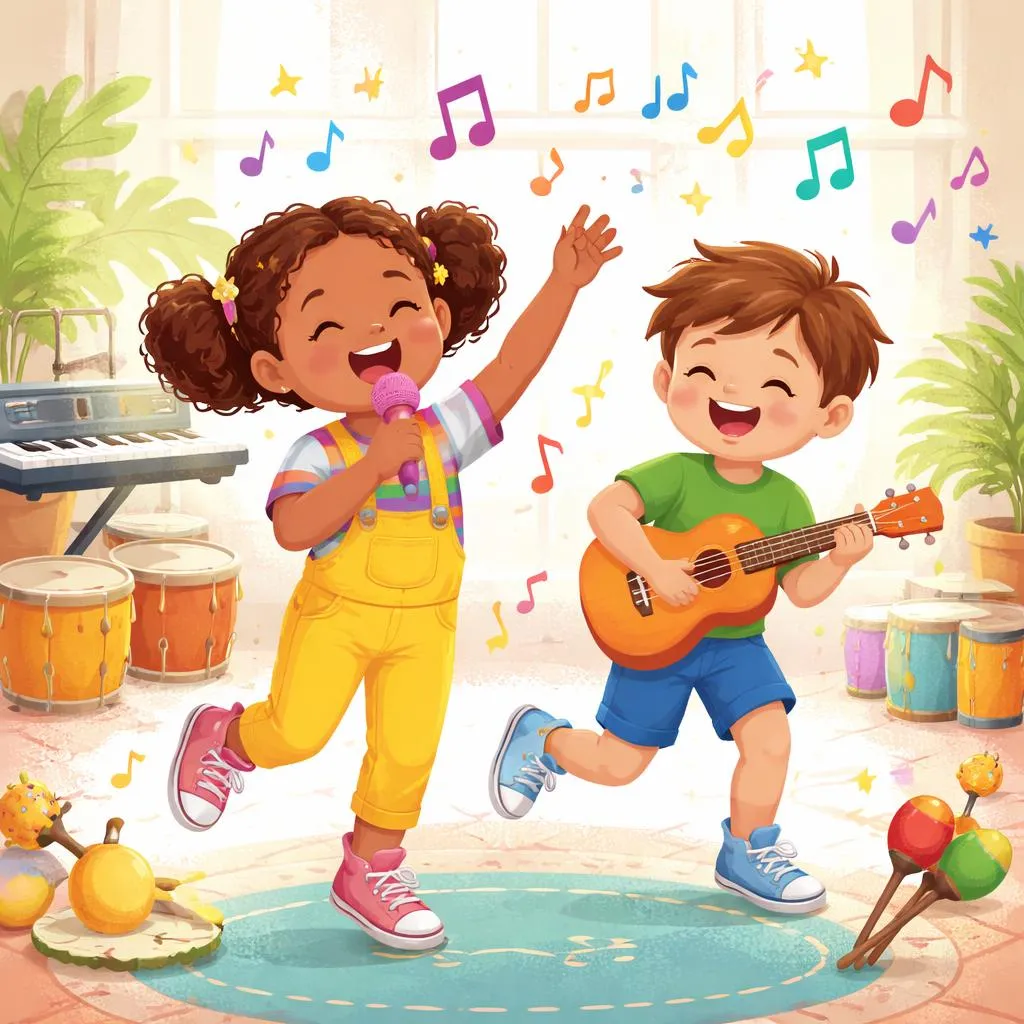

Music fills our world. A lullaby at bedtime. A song in the car. Birds singing at dawn. English gives us a beautiful family of words for this universal language. The root is “music.” From this root come three more words. “Musical” describes anything related to music or someone with a gift for it. “Musician” names the person who makes music. “Musically” describes how someone does something with musical skill or rhythm. These four words help children talk about sounds and songs. They also help children discover their own musical side. Let us explore this harmonious family.
What Does “Same Word, Different Forms” Mean? One art takes different word shapes. “Music” is the noun. Music makes us feel happy or calm. “Musical” is the adjective. The musical instruments filled the room. “Musical” can also be a noun. We watched a musical on stage. “Musician” is the person noun. A musician practices every day. “Musically” is the adverb. She played the piano musically and with feeling. Your child sees this pattern in other words. “Art” becomes “artist” and “artistic.” “Music” follows a similar logic. Learn the root. Then add endings.
Personal Pronouns Change Their Form Pronouns shift shape too. “I” becomes “me.” “She” becomes “her.” “We” becomes “us.” This shows that English changes words for grammar. Our word family “music” changes for grammar as well. But it also changes for meaning. A noun names an art or person. An adjective describes. An adverb describes an action. Learning these roles helps your child talk about sound and rhythm clearly.
From Noun to Adjective to Person to Adverb – One Family, Many Words “Music” is the noun. Music helps me focus on homework. “Musical” is the adjective. She has musical talent. “Musical” is also a noun. We saw a school musical last spring. “Musician” is the person noun. A great musician practices scales daily. “Musically” is the adverb. The band played musically together. This family gives your child five meanings from one small root. One root. Five ways to celebrate sound.
One Root, Many Roles – How Words Grow from Art to People Let us follow a musical moment. A child hears music on the radio. The child finds the song musical and catches the rhythm. The child decides to become a musician one day. The child taps musically on the table following the beat. See how “music” runs through all four sentences. Each form adds a new layer. Your child can say “I love music.” “This song is very musical.” “I want to be a musician.” “I tapped musically.” One root tells a whole story of rhythm.
Same Meaning, Different Jobs – Is It a Noun or an Adjective? How does your child know the job? Look at the sentence position. As a subject or object, use the noun “music.” Example: “Music helps me sleep.” Before a noun or after “be,” use the adjective “musical.” Example: “She has a musical voice.” For the stage show noun, use “a” or “the.” Example: “We watched a musical about cats.” For the person, use “a” or “the.” Example: “He is a talented musician.” Before a verb or at the end of a clause, use the adverb “musically.” Example: “The choir sang musically.” Endings give clues. “Music” is the art noun. “-al” signals an adjective or a show noun. “-ian” signals a person. “-ally” signals an adverb.
Adjectives and Adverbs – When Do We Add -ly? This family shows the “-ly” rule clearly. Take the adjective “musical.” Add “-ly” to make “musically.” No spelling change. Many adjectives work this way. “Quick” becomes “quickly.” “Magical” becomes “magically.” “Musical” becomes “musically.” Also note that “musical” as a noun does not become an adverb. We use “musically” for the adverb form. Most “-al” adjectives become “-ally” adverbs. “Logical” becomes “logically.” “Practical” becomes “practically.” “Musical” becomes “musically.”
Watch Out for Tricky Spelling Changes (Double Letters, y to i, and More) “Music” has no double letters. Ends with a “c.” When we add “-al” to make “musical,” keep the “c.” No change. “Music” + “al” = “musical.” When we add “-ian” to make “musician,” we change the “c” to “ci.” “Music” becomes “musician.” This change is common. “Magic” becomes “magician.” “Politics” becomes “politician.” “Music” becomes “musician.” When we add “-ally” to make “musically,” keep the “cal.” “Musical” + “ly” = “musically.” No double letters. The “c” to “ci” change is the main challenge. Practice “music” to “musician” separately.
Let’s Practice – Can You Choose the Right Form? Try these simple sentences with your child.
(Music / Musical) helps me feel calm. (Answer: Music)
She has very (music / musical) parents. (Answer: musical)
My cousin is a talented (musical / musician). (Answer: musician)
The choir sang (music / musically) at the concert. (Answer: musically)
We went to see a (music / musical) about a lion king. (Answer: musical)
Make your own sentences from daily life. Say “Let us listen to music.” Say “You have a musical laugh.” Say “A musician plays with heart.” Say “The birds chirped musically this morning.”
Tips for Parents – Help Your Child Learn Word Families in a Fun Way Listen to music together every day. Different kinds. Classical. Jazz. Pop. Folk. As you listen, use the words. Say “This music makes me happy.” Say “The flute has a musical sound.” Say “A musician created this piece.” Say “The notes flow musically.” This habit builds appreciation and vocabulary.
Play the musician game. Take turns pretending to be different musicians. “Today I am a drummer.” “Now you are a pianist.” “Now we are violinists.” Use the words. “The musician plays beautifully.” “This musical instrument is loud.” “We play musically together.” This game builds imagination and language.
Read books about famous musicians. Mozart. Ella Fitzgerald. Beethoven. Lin-Manuel Miranda. Pause during reading. Ask “What music did they make?” Ask “What made them musical?” Ask “How did they become a musician?” Ask “Did they play musically?” These questions build inspiration.
Create a family band. Use pots as drums. Use spoons as rhythm sticks. Use voices as singers. Say “Let’s make music.” Say “This is our musical family.” Say “You are a wonderful musician.” Say “We play musically together.” This activity builds joy and connection.
Find music in nature. Listen to birds. Listen to wind. Listen to rain. Say “Nature makes music too.” Say “The bird’s song is musical.” Say “The bird is a natural musician.” Say “The rain falls musically on the roof.” This builds observation and wonder.
Use “musically” for rhythm in daily life. When your child walks with a beat, say “You walk musically.” When your child speaks in a singsong voice, say “You talk musically.” When your child taps a spoon on a cup, say “You tap musically.” This connects the adverb to real moments.
Distinguish “musical” as adjective and noun. Say “Musical can describe a thing. A musical voice. Musical can also be a show. We saw a musical on Broadway.” This builds metalinguistic awareness.
Now you have a complete guide. Listen to music everywhere. Appreciate every musical moment. Celebrate every musician. Act musically with rhythm and joy. This word family does more than teach English. It teaches that sound connects us. It teaches that music lives in every child. It teaches that you are already a musician of your own life. Keep playing. Keep singing. Keep growing together. One word family at a time.