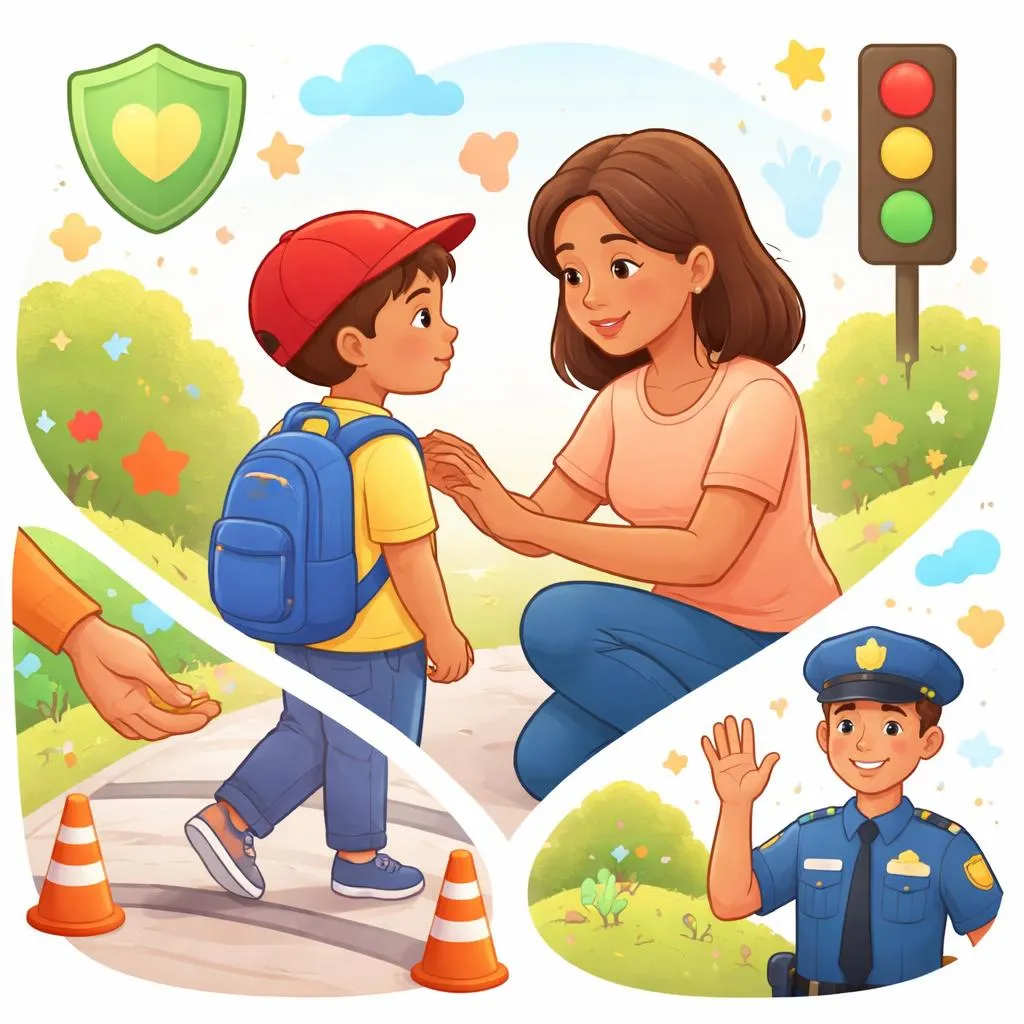

Every child hears the word “obey.” Parents say it. Teachers say it. Signs say it. But obedience is not about losing freedom. It is about staying safe and showing respect. English gives us a clear family of words for this important concept. The root is “obey.” From this root come three more words. “Obedience” names the quality of following rules. “Obedient” describes a person who follows rules. “Obediently” describes how someone follows rules. These four words help children understand why rules exist. They also help children learn self-control. Let us explore this respectful family.
What Does “Same Word, Different Forms” Mean? One action takes different word shapes. “Obey” is the verb. You obey traffic lights to stay safe. “Obedience” is the noun. Obedience keeps a classroom calm. “Obedient” is the adjective. An obedient dog waits for a command. “Obediently” is the adverb. The child obediently held their parent’s hand. Your child sees this pattern in other words. “Follow” becomes “follower.” “Listen” becomes “listener.” “Obey” gives us even more structure.
Personal Pronouns Change Their Form Pronouns shift shape too. “I” becomes “me.” “She” becomes “her.” “We” becomes “us.” This shows that English changes words for grammar. Our word family “obey” changes for grammar as well. But it also changes for meaning. A verb shows action. A noun names a quality. An adjective describes. An adverb describes an action. Learning these roles helps your child talk about rules and respect clearly.
From Verb to Noun to Adjective to Adverb – One Family, Many Words “Obey” is the verb. You obey the crossing guard. “Obedience” is the quality noun. Obedience to safety rules prevents accidents. “Obedient” is the adjective. An obedient student raises their hand. “Obediently” is the adverb. She obediently put her toys away. This family gives your child four tools for talking about following rules. One root. Four ways to understand respect.
One Root, Many Roles – How Words Grow from Actions to Character Let us follow an obedience story. A child learns to obey the “stop” sign at the pool. Obedience to this rule prevents running near water. The child becomes an obedient swimmer who listens to lifeguards. The child obediently walks along the wet edge. See how “obey” runs through all four sentences. Each form adds a new layer. Your child can say “I obey the rules.” “Obedience keeps me safe.” “I am an obedient child.” “I act obediently.” One root tells a whole story of safety and respect.
Same Meaning, Different Jobs – Is It a Verb or a Noun? How does your child know the job? Look at the sentence position. After “must,” “will,” or “learn to,” use the verb. Example: “Soldiers must obey orders.” As a subject or object, use the noun “obedience.” Example: “Obedience shows respect.” Before a noun or after “be,” use “obedient.” Example: “He is an obedient son.” Before a verb or at the end of a clause, use “obediently.” Example: “The dog obediently sat.” Endings give clues. “Obey” is the verb. “-ience” signals a quality noun. “-ient” signals an adjective. “-iently” signals an adverb.
Adjectives and Adverbs – When Do We Add -ly? This family shows the “-ly” rule clearly. Take the adjective “obedient.” Add “-ly” to make “obediently.” No spelling change. Many adjectives work this way. “Quick” becomes “quickly.” “Patient” becomes “patiently.” “Obedient” becomes “obediently.” Also from the noun “obedience,” we do not make an adverb. The adverb comes from the adjective. Most adjectives ending in “-ient” become “-iently” adverbs. “Patient” becomes “patiently.” “Obedient” becomes “obediently.”
Watch Out for Tricky Spelling Changes (Double Letters, y to i, and More) “Obey” has no double letters. Ends with “ey.” When we add “-ience” to make “obedience,” we drop the “y” and change it to “i.” “Obey” becomes “obedience.” The “y” changes to “i.” Then add “-ence.” This “y to i” rule is common. “Carry” becomes “carriage.” “Marry” becomes “marriage.” “Obey” becomes “obedience.” When we add “-ient” to make “obedient,” we also change “y” to “i” and add “-ent.” “Obey” becomes “obedient.” When we add “-ly” to “obedient,” keep the “t.” No change. “Obedient” + “ly” = “obediently.” Practice the “y to i” change with “obey.”
Let’s Practice – Can You Choose the Right Form? Try these simple sentences with your child.
Please (obey / obedience) the library rules. (Answer: obey)
(Obey / Obedience) to safety rules saves lives. (Answer: Obedience)
The (obedient / obediently) student finished their work first. (Answer: obedient)
She (obedient / obediently) followed the path. (Answer: obediently)
A good dog (obeys / obedience) its owner. (Answer: obeys)
Make your own sentences from daily life. Say “You must obey the ‘walk’ signal.” Say “Obedience helps everyone stay safe.” Say “You are an obedient helper.” Say “She obediently brushed her teeth.”
Tips for Parents – Help Your Child Learn Word Families in a Fun Way Explain why rules exist. Do not just say “Obey me.” Say “We obey the seatbelt rule because it keeps us safe.” Say “Obedience to the stove rule prevents burns.” Say “You are being obedient when you hold my hand in the parking lot.” This builds understanding, not just compliance.
Play the obedience game. Give simple, kind commands. “Please put the book on the shelf.” “Please sit on the chair.” “Please hand me the spoon.” When your child follows, say “You obeyed!” “That was obedient!” “You acted obediently!” “Your obedience makes me proud.” This game builds listening skills and vocabulary.
Read books about rules and consequences. Many children’s books show characters who choose to obey or disobey. Pause during reading. Ask “Did the character obey?” Ask “What happened because of obedience?” Ask “Was the character obedient?” Ask “Did they act obediently?” These questions build cause-and-effect thinking.
Distinguish “obedience” from “blind obedience.” Teach your child to obey safety rules and trusted adults. Also teach them to question if a rule feels wrong or unsafe. Say “You should obey your teacher. But if someone asks you to keep a bad secret, you should tell me.” This nuance builds critical thinking and safety.
Use “obedient” as praise. When your child follows a rule without being reminded, say “That was very obedient.” When your child stops an unsafe action, say “I appreciate your obedience.” This positive framing makes obedience feel good.
Model obedience yourself. Let your child see you obey traffic laws. Let them see you follow store rules. Let them see you listen to a coach or boss. Say “I am obeying the speed limit to keep us safe.” Actions teach louder than words.
Do not expect perfect obedience. Children are learning. When they disobey, stay calm. Say “You did not obey the rule about touching the stove. That is dangerous. Let us try again.” This teaches that obedience is a skill to practice, not a trait you either have or don’t.
Now you have a complete guide. Obey rules that protect you. Appreciate obedience in yourself and others. Be an obedient learner. Act obediently when safety matters. This word family does more than teach English. It teaches that rules are not enemies. Rules are friends that keep us safe. It teaches that obedience shows respect. It teaches that every child can learn self-control. Keep obeying. Keep growing together. One word family at a time.