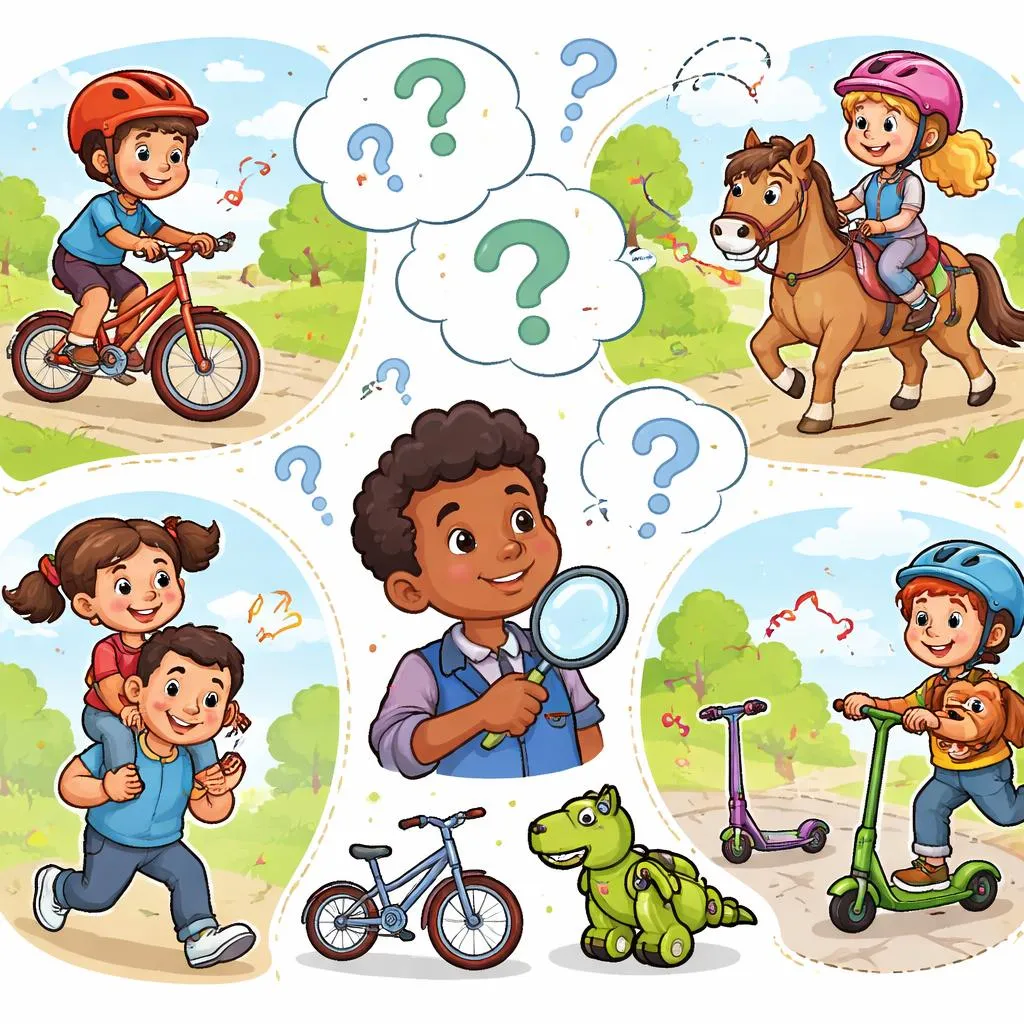

What Does “Same Word, Different Forms” Mean?
Many English words belong to families.
One root can grow into several forms.
The family ride, rider, riding, rideable shows this clearly.
All these words connect to movement on something.
But they do different jobs.
Ride can be a verb or a noun. Rider is a noun. Riding can be a noun, adjective, or verb form. Rideable is an adjective.
One root.
Different forms.
Different meanings.
That is how word families work.
When children notice these patterns, vocabulary grows faster.
Reading often becomes easier too.
Personal Pronouns Change Their Form
Children already know forms can change.
They know:
I, me, my he, him, his
Same core meaning.
Different forms.
Word families work in a similar way.
Look at these:
I ride a bike. The rider wears a helmet. Riding is fun. This pony is rideable.
Connected meanings.
Different grammar roles.
That is the pattern.
From Verb to Noun to Adjective to Adverb – One Family, Many Words
This word family teaches many useful patterns.
Ride as a Verb
Ride often shows action.
Examples:
Children ride bicycles. We ride horses.
Action word.
Very common.
Ride as a Noun
Ride can also be a noun.
Examples:
The bus ride was long. The roller coaster ride was exciting.
Same spelling.
Two jobs.
Important to notice.
Rider as a Noun
Rider means a person who rides.
Examples:
The rider held the reins. Every bike rider needs a helmet.
The suffix -er often means a person who does something.
Compare:
teach → teacher paint → painter ride → rider
Very useful pattern.
Riding as a Word with Many Jobs
Riding can work in several ways.
As a noun:
Riding is good exercise.
As an adjective:
She wore riding boots.
As a verb form:
They are riding now.
One form.
Many roles.
Excellent learning example.
Rideable as an Adjective
Rideable means suitable or safe to ride.
Examples:
The horse is gentle and rideable. This trail is rideable for beginners.
The suffix -able often means can be.
Compare:
washable readable rideable
Patterns repeat.
One Root, Many Roles – How Words Grow from Actions to Qualities
Look at the growth.
ride → action ride → experience rider → person riding → activity or description rideable → quality
One root.
Many roles.
This is how English expands.
Children can learn much from suffixes.
-er -ing -able
Small endings change meaning.
Same Meaning, Different Jobs – Is It a Verb or a Noun?
Children may mix these forms.
That is normal.
Look here:
I ride every day.
Verb.
The train ride was smooth.
Noun.
Different jobs.
Now compare:
riding lessons rideable horse
Both describe.
But they are not the same.
Riding often connects to activity.
Rideable means suitable for riding.
Important distinction.
Adjectives and Adverbs – When Do We Add -ly?
This family does not use an -ly adverb form here.
That matters too.
Not every word family includes every form.
But this family teaches adjective endings through -able.
That is valuable.
Children learn that families can grow in different ways.
Watch Out for Tricky Spelling Changes (Double Letters, y to i, and More)
This family has useful spelling patterns.
Ride to Rider
Add -r sound through -er ending.
ride + er
Simple pattern.
Ride to Riding
Drop silent e before adding -ing.
ride → riding
Very important spelling rule.
Children should notice this.
Other examples:
make → making bake → baking
Same pattern.
Ride to Rideable
Keep the base word.
Add -able.
ride + able
Clear pattern.
Riding and Rideable Are Not the Same
Easy to confuse.
But meanings differ.
riding horse rideable horse
Close.
But not identical.
Worth practice.
Let’s Practice – Can You Choose the Right Form?
Try these.
- I can ______ a bicycle.
Answer: ride
Verb.
- The ______ wore a helmet.
Answer: rider
Noun.
- Horse ______ takes practice.
Answer: riding
Noun.
- That pony is calm and ______.
Answer: rideable
Adjective.
- The bus ______ was fun.
Answer: ride
Noun.
Practice builds confidence.
Children learn grammar through patterns.
Tips for Parents – Help Your Child Learn Word Families in a Fun Way
Word families can be playful.
Build a Word Family Chart
Write ride in the center.
Add:
rider riding rideable
Show how endings change meaning.
Visual learning helps.
Explore -er Words
Find more.
runner swimmer rider
Children quickly notice the pattern.
Practice Silent e Rules
Try:
ride → riding
Then compare:
write → writing
Great spelling pattern.
Use Real-Life Examples
Ask:
Who is the rider?
Is this bike ride fun?
Is the trail rideable?
Real language supports memory.
Play “Word Builder”
Give children endings.
-er -ing -able
Let them build new forms.
Very engaging.
Why This Word Family Helps Reading Growth
This family appears in stories and nonfiction.
Adventure books use rider.
Sports books use riding.
Nature books may use rideable.
These words help reading comprehension.
They also support writing.
Children can describe actions and qualities better.
Common Mix-Ups Children Make Ride and Rider
Very common.
One is action.
One is person.
Different roles.
Ride and Riding
Children may confuse them.
Compare:
a horse ride horse riding
Related.
But different structures.
Riding and Rideable
Easy to mix.
Remember:
riding boots rideable horse
Different meanings.
Helpful distinction.
How One Word Family Builds Bigger Vocabulary
This family teaches transferable patterns.
Children may later understand:
drive, driver, driving skate, skater, skating
Patterns repeat.
One family unlocks others.
That grows vocabulary naturally.
Through connections.
Learning ride, rider, riding, rideable as One Family
These words teach more than definitions.
They show how one root can become action, person, activity, and quality.
That is powerful language learning.
They also show how endings shape meaning.
A small change can create a new word role.
When children understand ride, rider, riding, rideable as one connected family, they begin seeing English as patterns instead of isolated words.
And once those patterns become familiar, reading, spelling, and expression often become much easier and much more enjoyable.