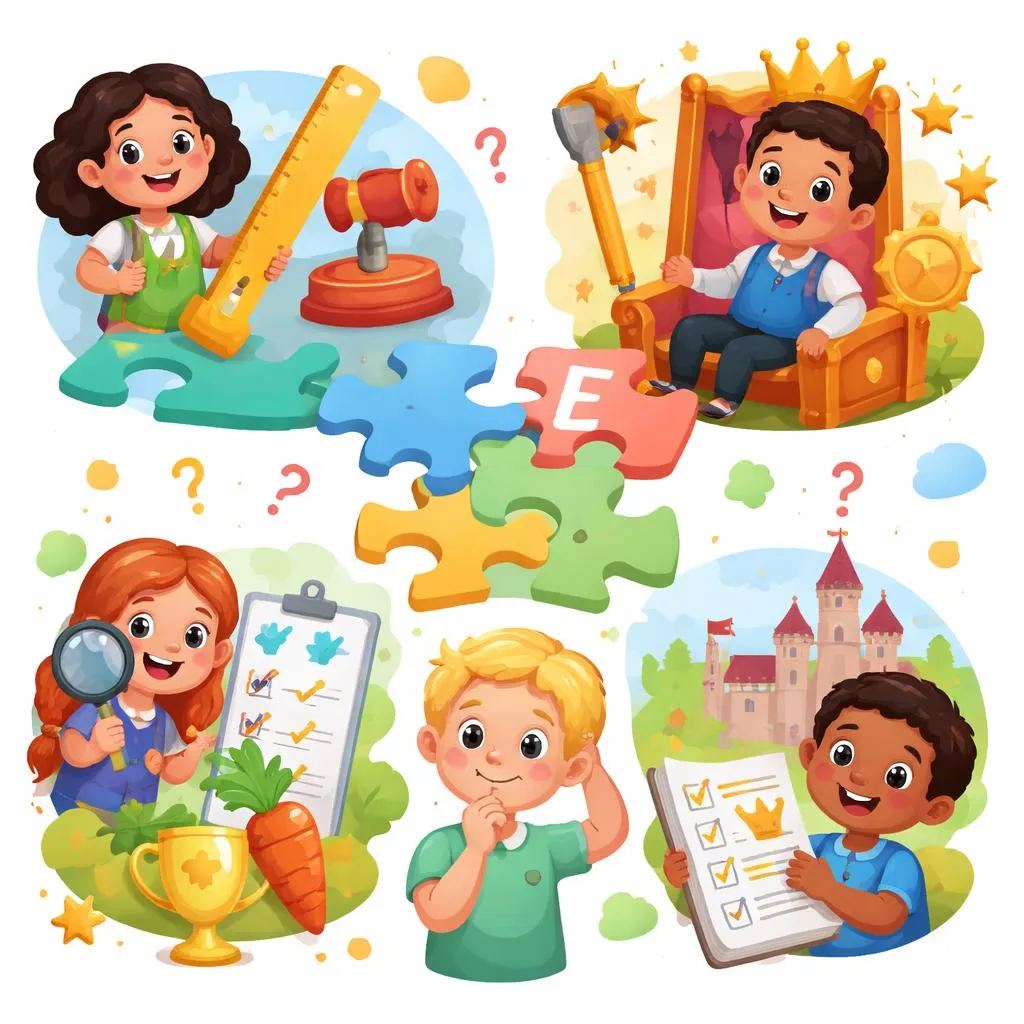

What Does “Same Word, Different Forms” Mean?
Many English words belong to families.
One root word can grow into many forms.
The family rule, ruler, ruling, rulable shows this clearly.
These words connect in meaning.
But each has a different job.
That is important for children to notice.
Rule can be a noun or verb. Ruler can be a noun. Ruling can act as noun, adjective, or verb form. Rulable is an adjective.
One root can do many things.
That is how word families help vocabulary grow.
Personal Pronouns Change Their Form
Children already understand form changes.
For example:
he, him, his we, us, our
Same core idea.
Different forms.
Word families work in a similar way.
Look at this family:
The class has a rule. A ruler measured the page. The judge made a ruling. The game seems rulable.
Same root.
Different uses.
That is the pattern.
From Verb to Noun to Adjective to Adverb – One Family, Many Words
This word family shows several grammar roles.
Rule as a Noun
A rule can mean a guide or law.
Examples:
Our classroom has a rule about sharing. Safety rules help everyone.
It names a thing.
That makes it a noun.
Rule as a Verb
Rule can also show action.
Examples:
Kings once ruled large lands. Facts should rule our decisions.
Now it is a verb.
Same spelling.
Different role.
Ruler as a Noun
Ruler has two common meanings.
It can mean a person who governs.
The ruler led wisely.
It can also mean a measuring tool.
I need a ruler for math.
Same word.
Two meanings.
Very interesting for learners.
Ruling as a Word with Several Jobs
Ruling can act in more than one way.
As a noun:
The court made a ruling.
As an adjective:
The ruling group changed policy.
As a verb form:
The queen is ruling the kingdom.
One form.
Many roles.
Rulable as an Adjective
Rulable means able to be ruled or guided by rules.
Examples:
Some games are easily rulable. A clear system makes tasks rulable.
Less common word.
Still useful for word family learning.
One Root, Many Roles – How Words Grow from Actions to Qualities
This family grows in clear ways.
rule shows action or law ruler names a person or tool ruling names a decision or describes power rulable describes possibility
One root expands.
Children begin to see patterns.
That strengthens vocabulary.
Same Meaning, Different Jobs – Is It a Verb or a Noun?
This matters in reading.
Look at rule:
That is an important rule.
Noun.
Good ideas should rule.
Verb.
Now compare:
The ruler was fair. Use a ruler for straight lines.
Same spelling.
Two meanings.
Then compare:
The judge made a ruling. The ruling family lived there.
Noun.
Adjective.
Different jobs again.
Adjectives and Adverbs – When Do We Add -ly?
Some word families use -ly.
This one does not build a common adverb form like many others.
That matters too.
Children should learn patterns and exceptions.
Not every family has all forms.
For example:
quick → quickly safe → safely
But rulingly is not a common learning word.
That is useful to notice.
Word families can be complete or partial.
Watch Out for Tricky Spelling Changes (Double Letters, y to i, and More)
This family has spelling patterns too.
Rule to Ruler
Add -r.
rule → ruler
Simple growth.
Rule to Ruling
Drop silent e.
Then add -ing.
rule → ruling
Very common pattern.
Compare:
make → making ride → riding
Strong pattern.
Rule to Rulable
Add -able.
rule → rulable
This shows possibility.
Like:
breakable washable
Useful suffix.
Watch for Meaning Changes
Some children confuse ruler the tool and ruler the leader.
Context helps.
Look at nearby words.
That often solves confusion.
Let’s Practice – Can You Choose the Right Form?
Try these examples.
- Every game needs a ______.
Answer: rule
Noun.
- Wise leaders should ______ fairly.
Answer: rule
Verb.
- Use a ______ to draw a line.
Answer: ruler
Noun.
- The judge made a final ______.
Answer: ruling
Noun.
- The system seems easy and ______.
Answer: rulable
Adjective.
Practice helps forms stay clear.
Tips for Parents – Help Your Child Learn Word Families in a Fun Way
Word learning can be playful.
Make a Word Family Chart
Write rule in the center.
Add:
ruler ruling rulable
Show how endings change meaning.
Visual links help memory.
Explore Two Meanings of Ruler
Use a measuring ruler.
Then discuss a king or queen as ruler.
Children enjoy double meanings.
Practice Silent e Patterns
Try:
rule → ruling make → making
Patterns support spelling.
Play Suffix Builder
Try adding endings:
-er -ing -able
Ask what new words appear.
Very effective game.
Use Real-Life Examples
Notice rules at home.
Notice school rules.
Talk about who makes rulings.
Learning feels meaningful.
Why This Word Family Supports Reading Growth
Children meet these words in many texts.
Storybooks may use ruler.
Math books use ruler too.
History texts use ruling.
Civics may use rule.
Many subjects connect here.
That makes this family valuable.
Common Mix-Ups Children Make Rule and Ruler
Children may confuse them.
Remember:
rule = law or action ruler = person or tool
Different meanings.
Ruling as Noun or Adjective
Compare:
a court ruling a ruling family
Different roles.
Same form.
Forgetting Silent e Drops
Some children write ruleing.
But correct spelling is:
ruling
Drop the e.
Important pattern.
How This Word Family Builds Bigger Vocabulary
Learning one family helps with others.
Children may later notice:
write, writer, writing drive, driver, driving
Patterns repeat.
That makes reading easier.
And spelling stronger.
Learning rule, ruler, ruling, rulable as One Connected Family
This family teaches much more than definitions.
It teaches grammar roles.
It teaches spelling patterns.
It teaches meaning shifts.
Children see how one root can become action, object, decision, and description.
That is how vocabulary grows naturally.
When young learners understand rule, ruler, ruling, rulable as one connected family, they begin seeing English as a system of patterns.
And once children notice those patterns, learning new words often becomes faster, clearer, and much more enjoyable.